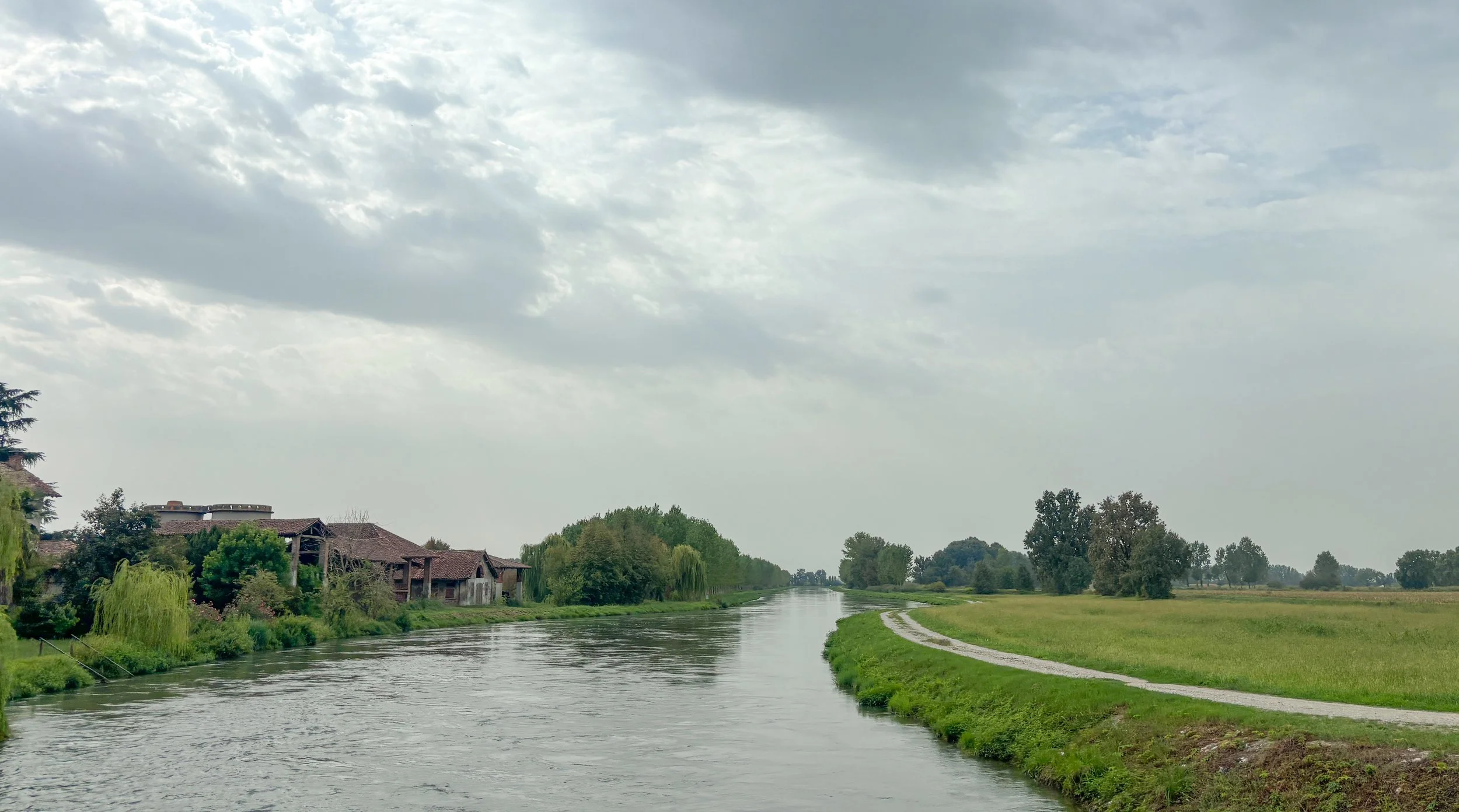
Il Grande Fiume.
Italy’s longest river happens to have the shortest possible name in our language: Po. Two letters, one syllable to describe 650 kilometres of twist and turns stretching from the stone pyramid of Monviso to a marshy delta in the Adriatic, 650 kilometres spent snaking across la bassa, all in the most perfect disinterest of anyone who doesn’t live along its shores (and a good portion of those who do).
The Po inhabits a liminal space in the nation’s collective mind, a terra nullius stretching from Turin to Venice: no one embarks on a riverine cruise along its waters, even if the river passes by some veritable jewels. The Po isn’t the Danube or the Nile: you simply cross it on the way to someplace else, there one moment and gone the next.
There’s a black hole at the centre of the Po Valley, I told my friend and cycling chum Tiziano, and we were headed there.
Day 1.
We expected tropical levels of humidity, mosquitoes the size of hummingbirds and heat that could melt lead; Milan delivered on all three accounts. “I got bitten by a mosquito in the three minutes between getting dressed and spraying the Vape”, I moaned to Tiz.
Lombardy stretched all around us, wealthy and intimidating. Italy’s most populous region roared with industry and trade, busy with businessmen doing deals and driving big cars. It had no time for two layabouts riding bikes for fun, we feared.
We were wrong.
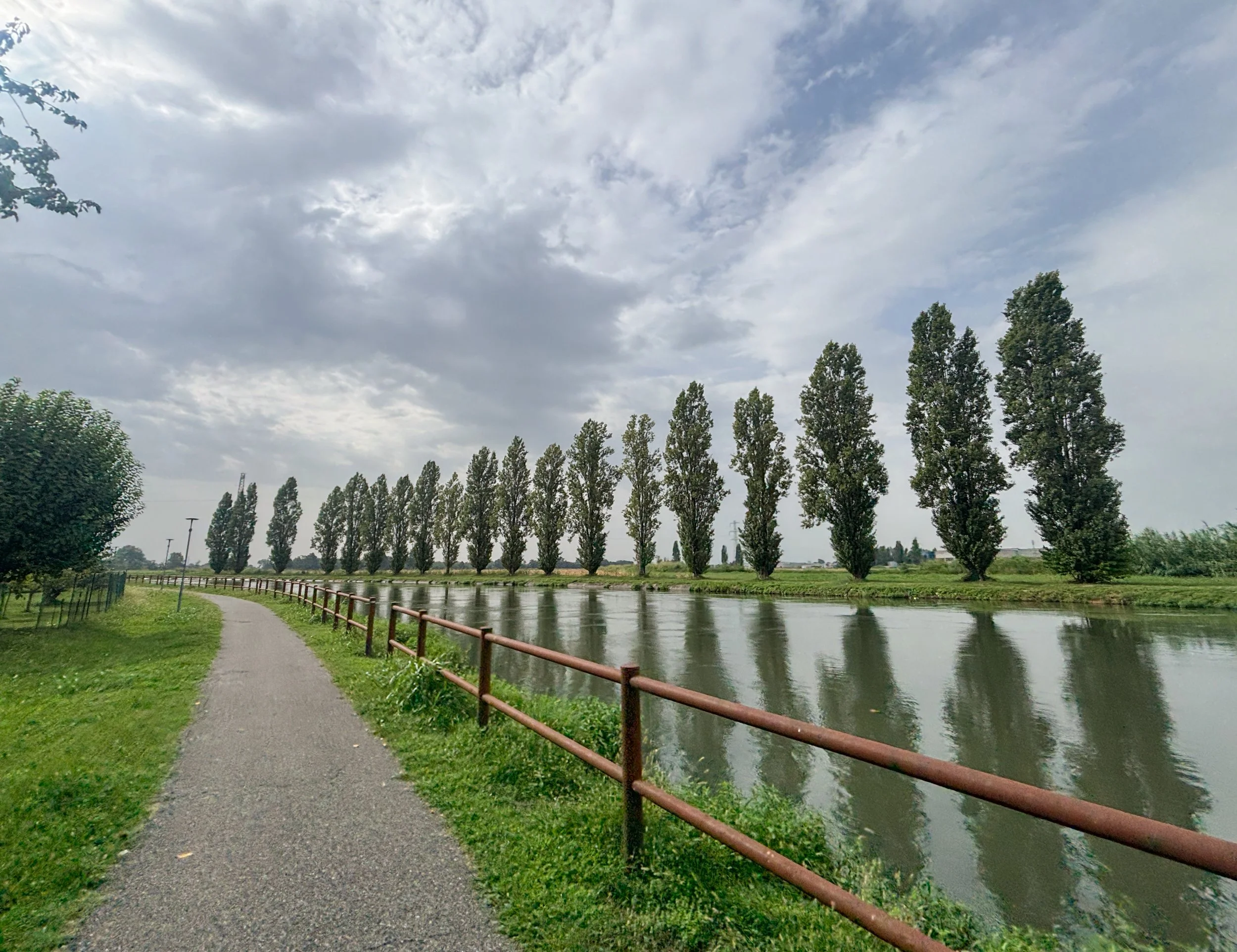
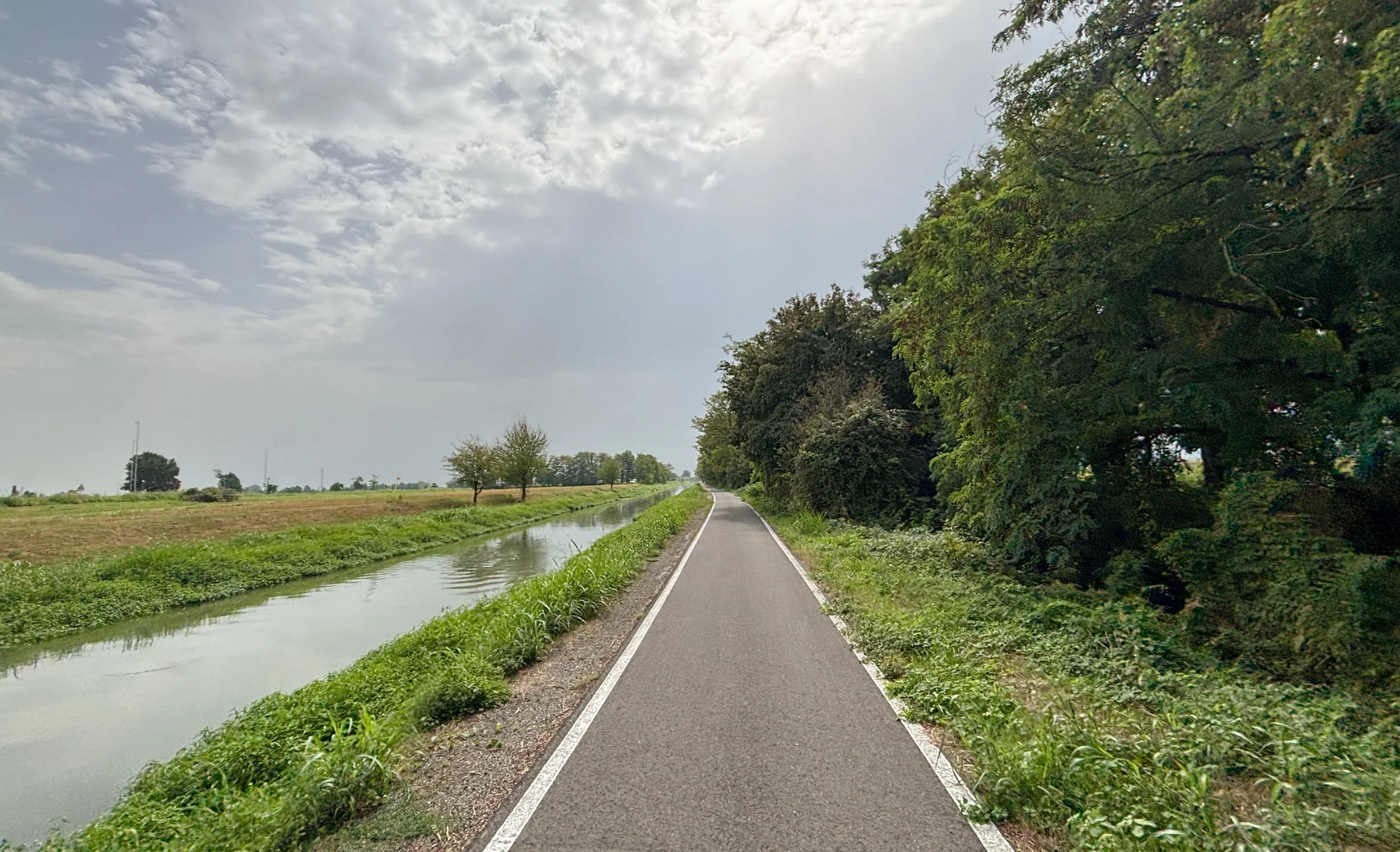
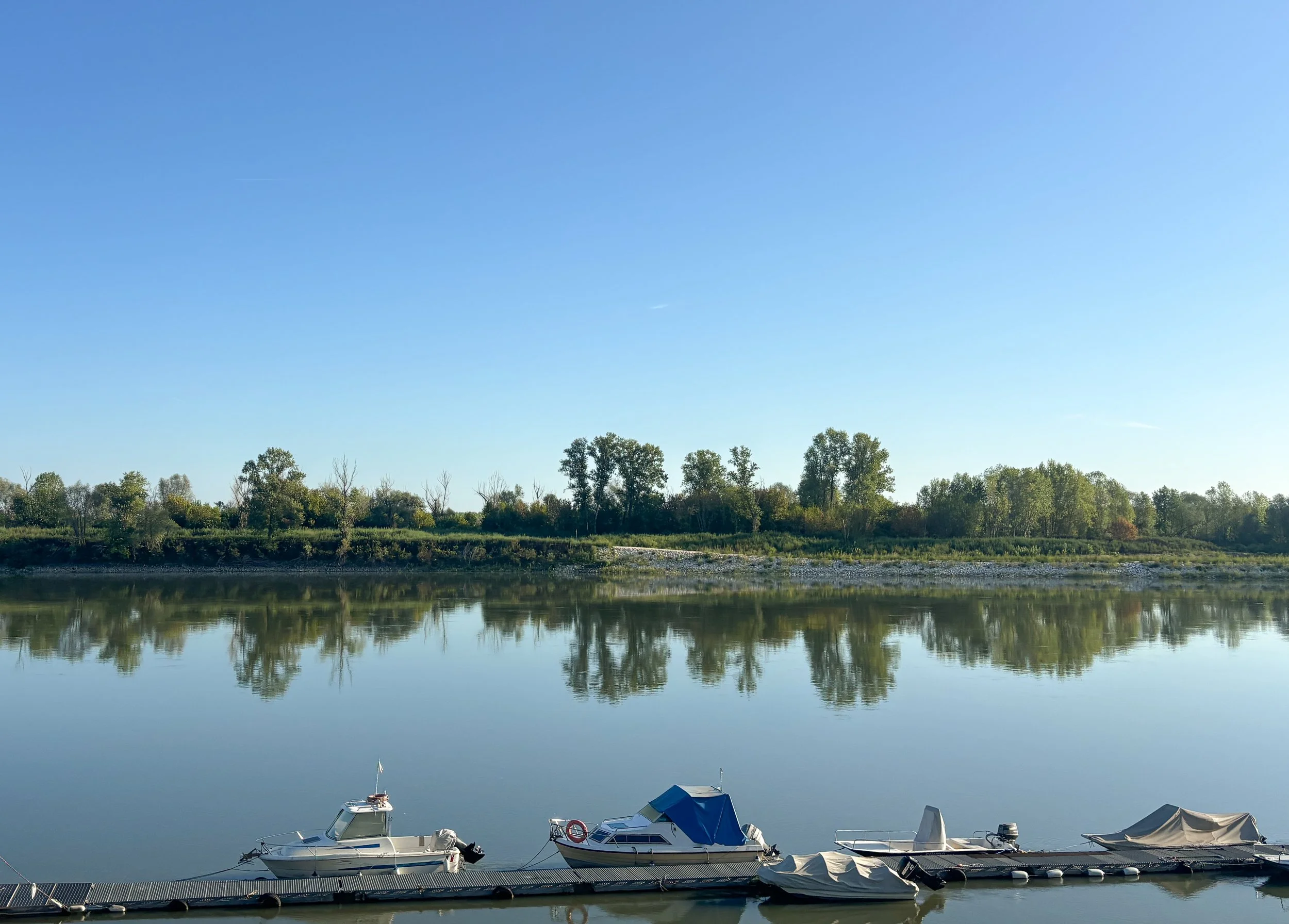
A perfect cycle lane unrolled right after Peschiera Borromeo. Straight as a ruler, blissfully quiet, it ran in agrarian peacefulness right next to the Muzza canal, ducks and a conceited swan our only companions. Every now and then our route would take through a prosperous-looking town and, in those moments, the cycle lane morphed into a bright-red ribbon of perfect tarmac until, much to our surprise, we realised that the Muzza flowed back into the Adda and the latter was disgorging itself into a much wider river. Il grande fiume.
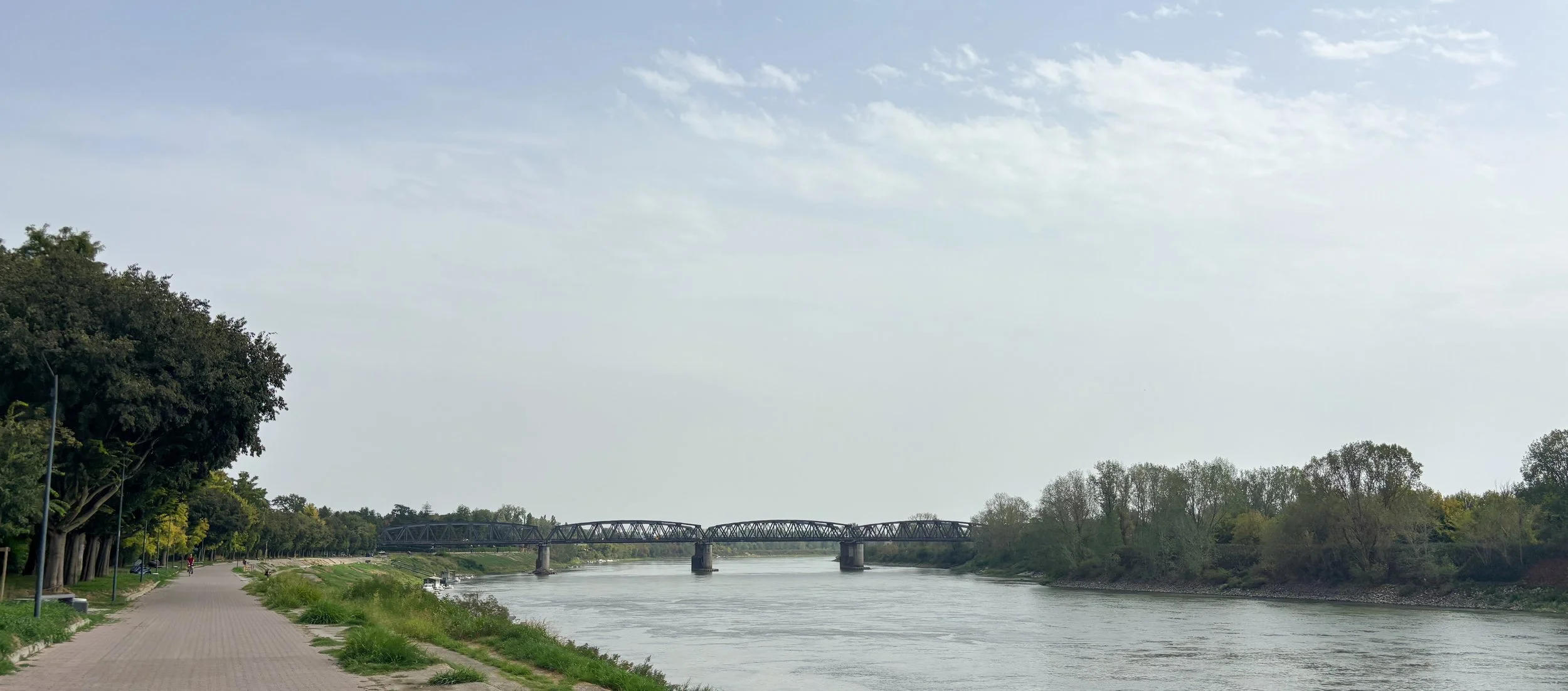
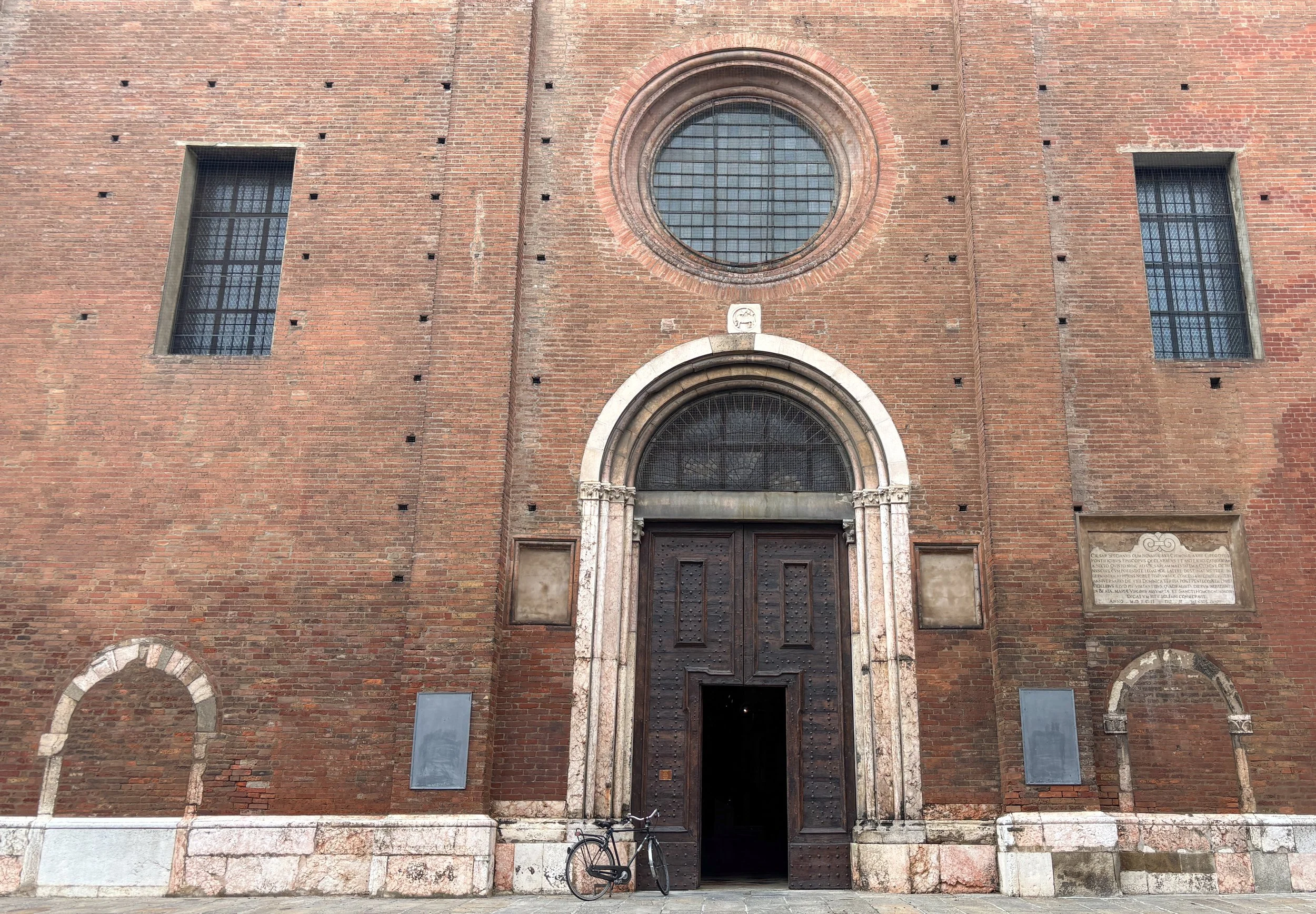
The sky had been promising rain all day. “Here comes the washout” we would tell one another every time a fat drop of water landed on us with a sonorous plop. Yet, it never did. Our straight-line route never bisected the wanderings of the weather systems and now we’d arrived in Cremona, our stop for the night. The city of Stradivari welcomed us with stone-paved streets, porticoes, red brick and ancient marble statues, proud of its medieval heritage, the city that stood up to Barbarossa. Jupiter Pluvius, we told each other, was smiling upon us. Until he didn’t.
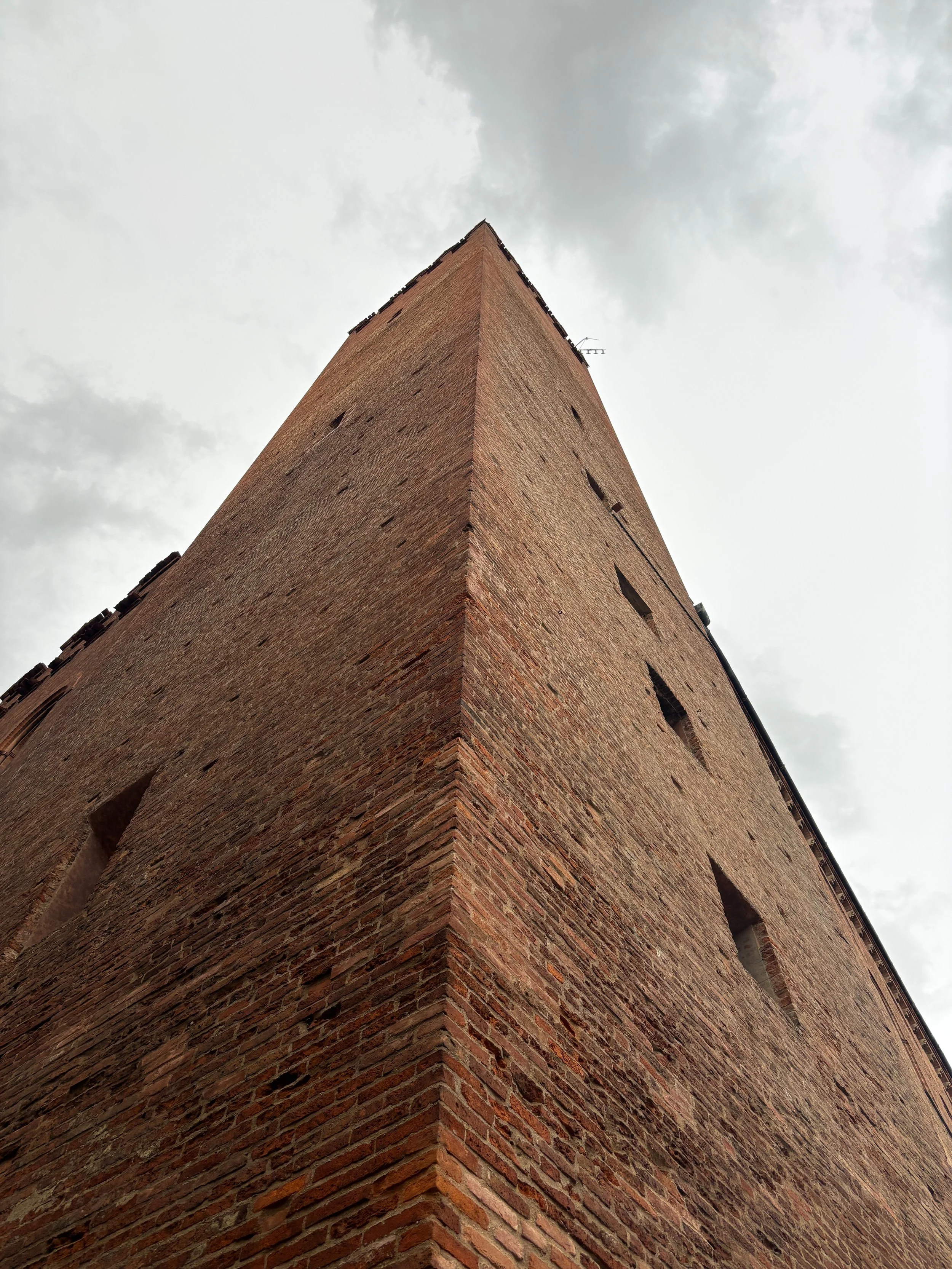
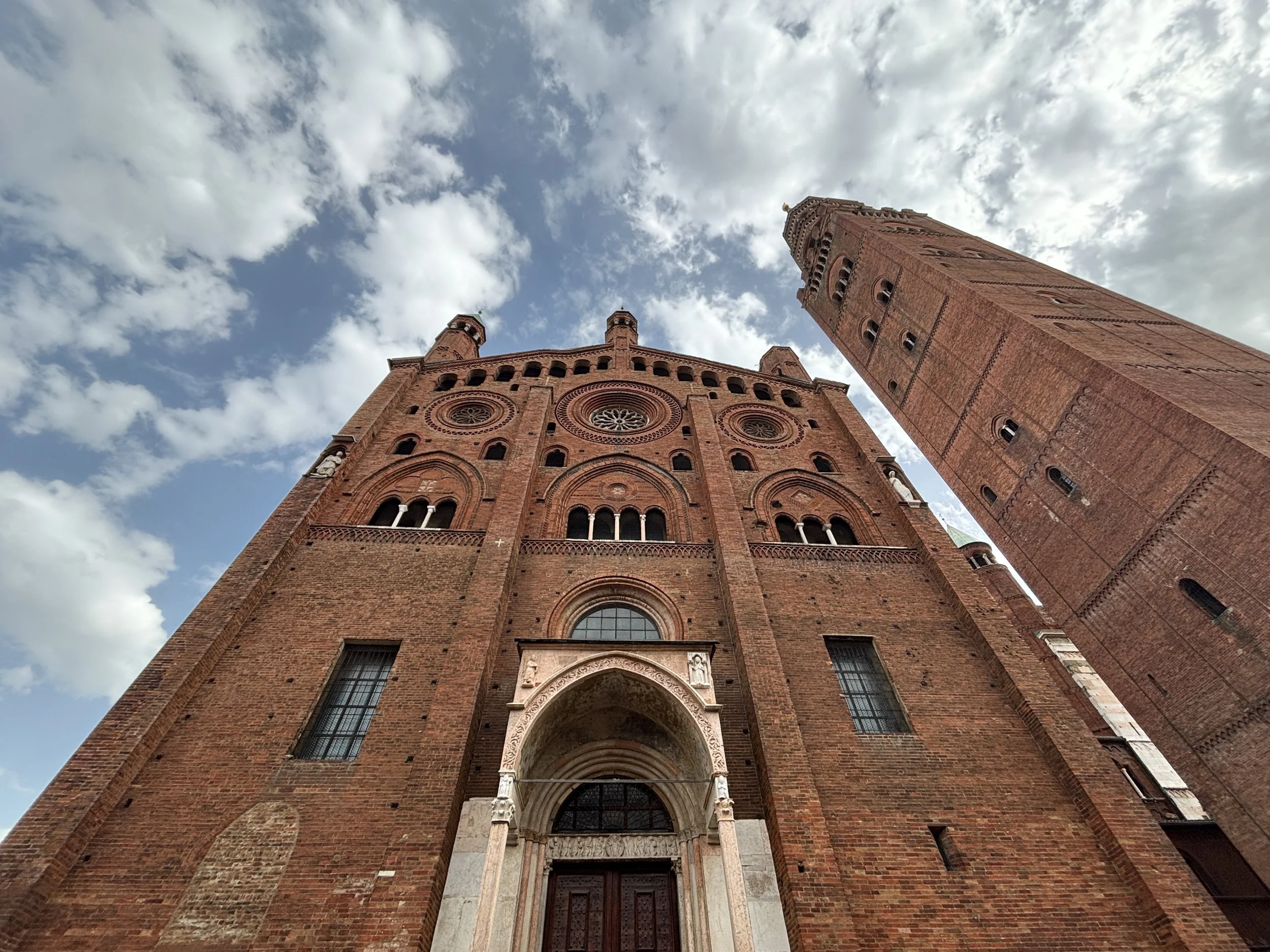
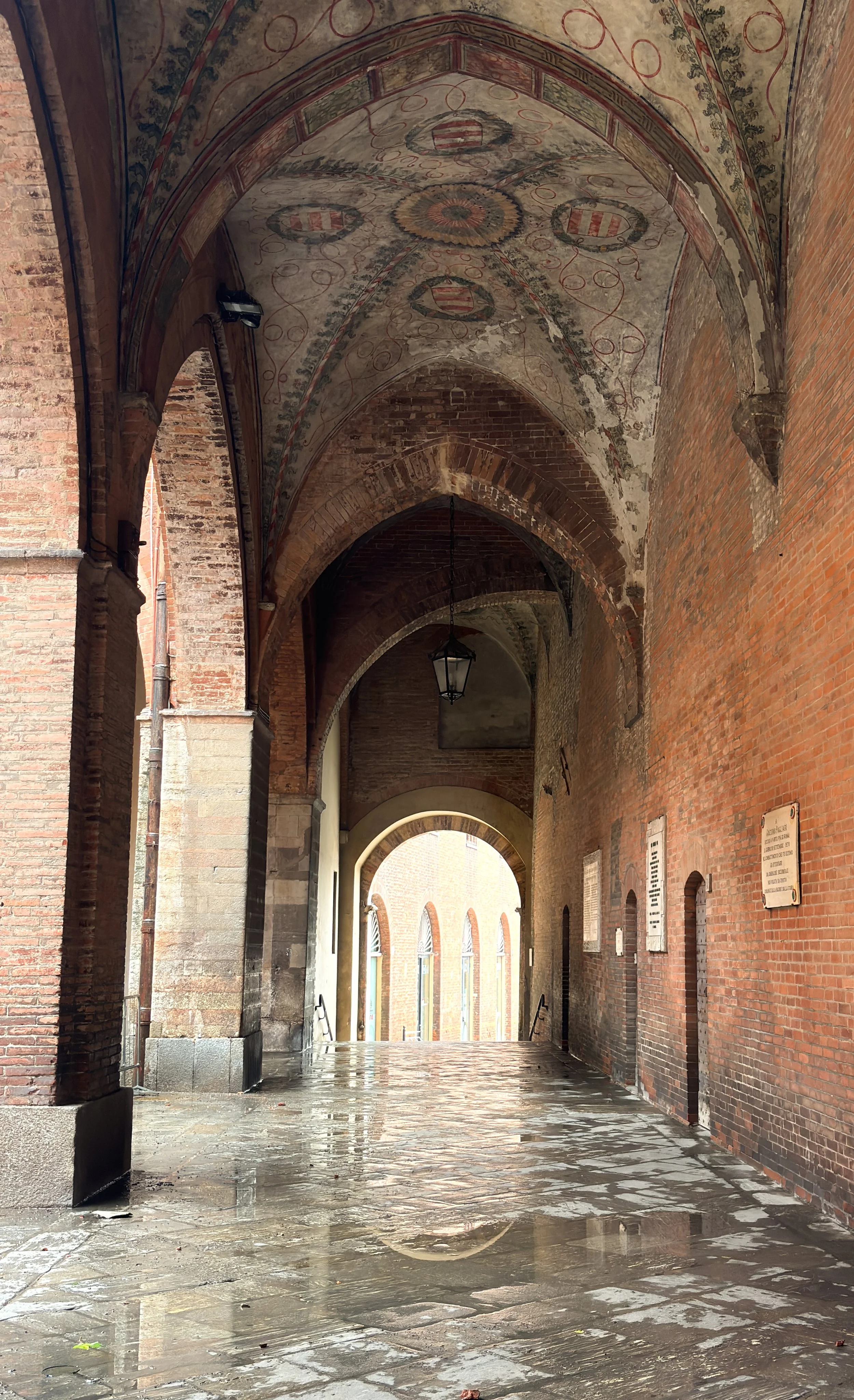
The low-intensity grumble grew louder and louder until it dragged us away from the post-ride cleanup and to the window of our hotel room. “Man, it’s raining oranges” noted Tiz at the sight of the hailstones that the sky, now murky like a swirling glass of ouzo, was throwing everywhere.
The tempest lasted less than 10 minutes, but what it lacked in duration more than made up in damages. When we ventured outside, gingerly, Cremona looked ruffled and bruised. Broken glass, shards of brick, tree branches and dead pigeons littered the streets. The windows of the palazzo del Comune were in tatters. Even the Duomo was damaged.
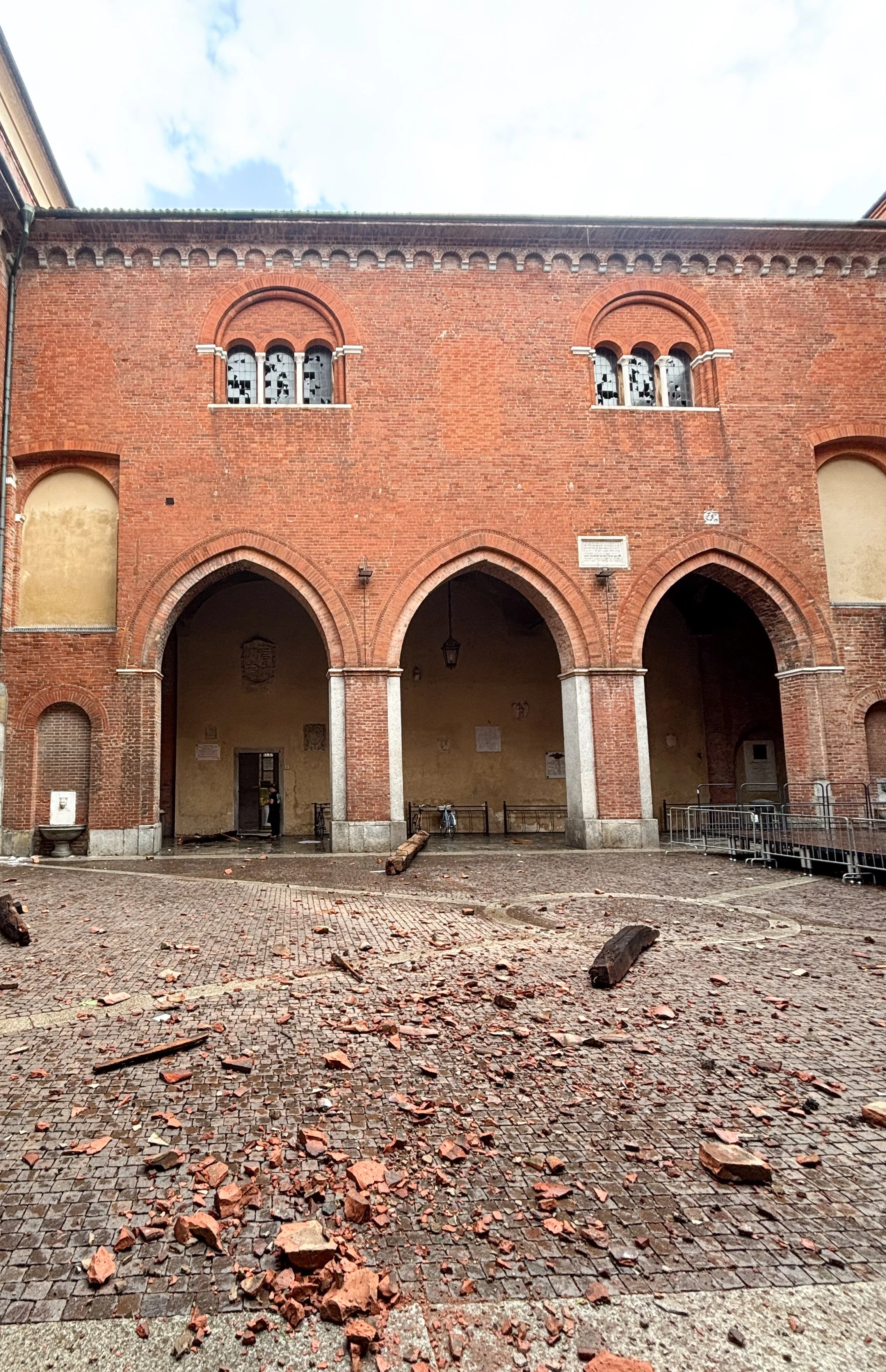
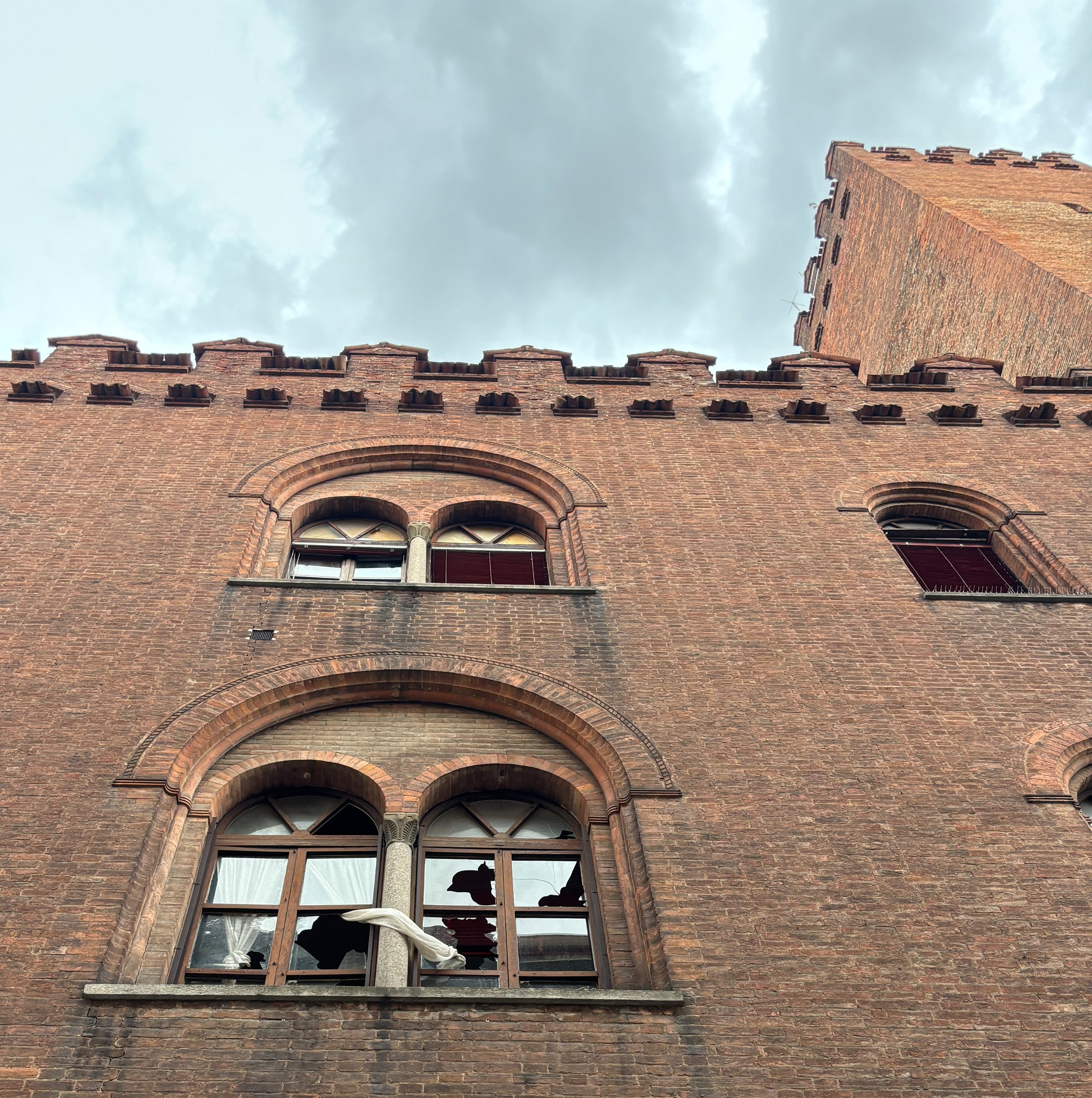
Clumps of people formed here and there, gawking at the damage. No one seemed to have been hurt, and the word “miracle” echoed in at least three languages. Under that anthracite sky we huddled together, forgetful of any man-made division that might’ve set us apart a moment ago. “This isn’t normal” said somebody, and we all agreed. Those three words rippled around the crowd, echoing in ten different accents. This wasn’t normal, as this summer hadn’t been, or the one before that, or the one before. Somebody ought to do something about it, but nobody – of those standing under that sky – could. And so we went to dinner, trying to ignore the signs of looming doom.
Day 2.
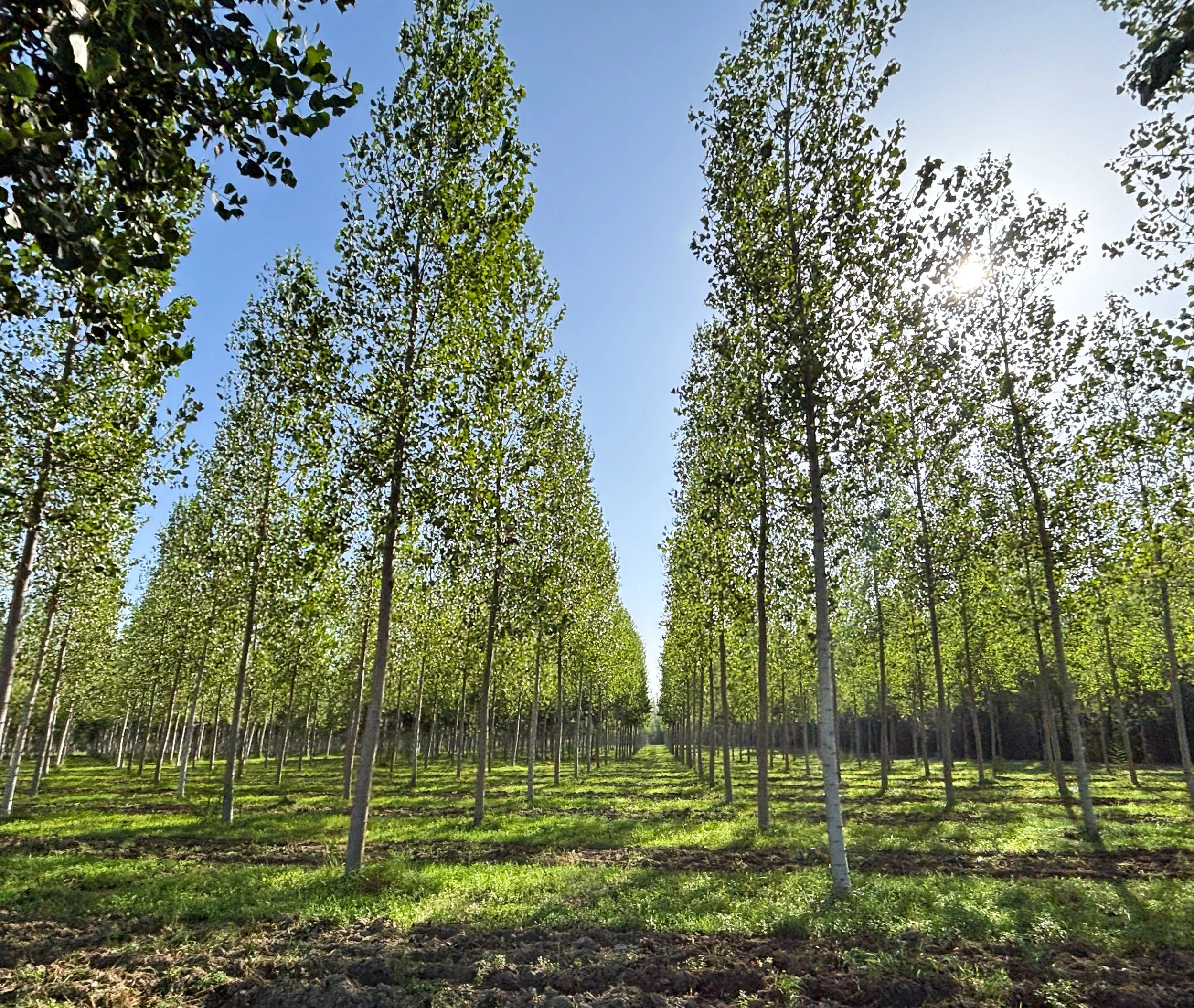
An amethyst sky ran across the entire horizon, where it met the radiant green of ripening fields and orderly thickets of poplars. Grain elevators and bell towers punctuated the perspective, and the road stretched on forever, changing at every turn.
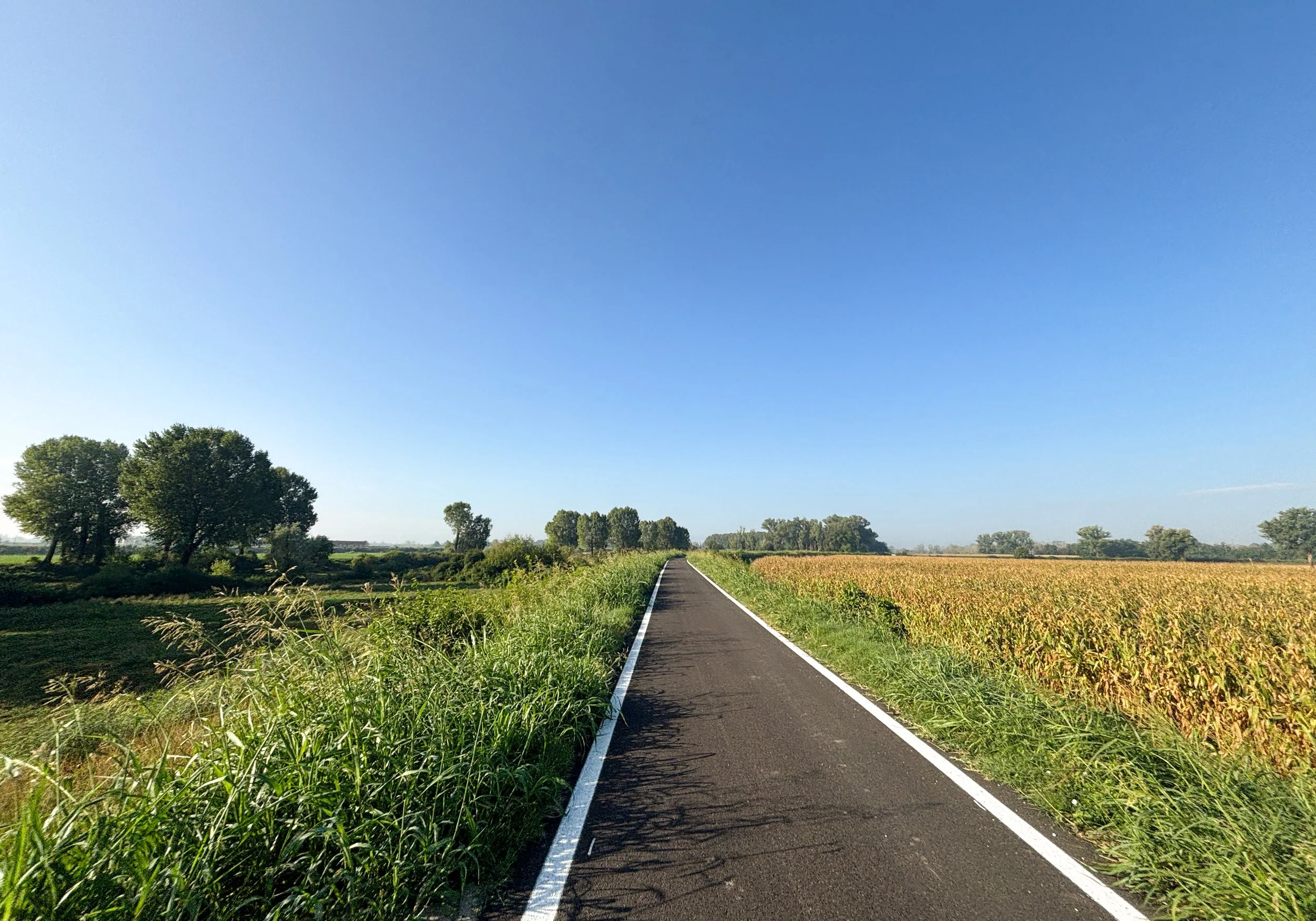
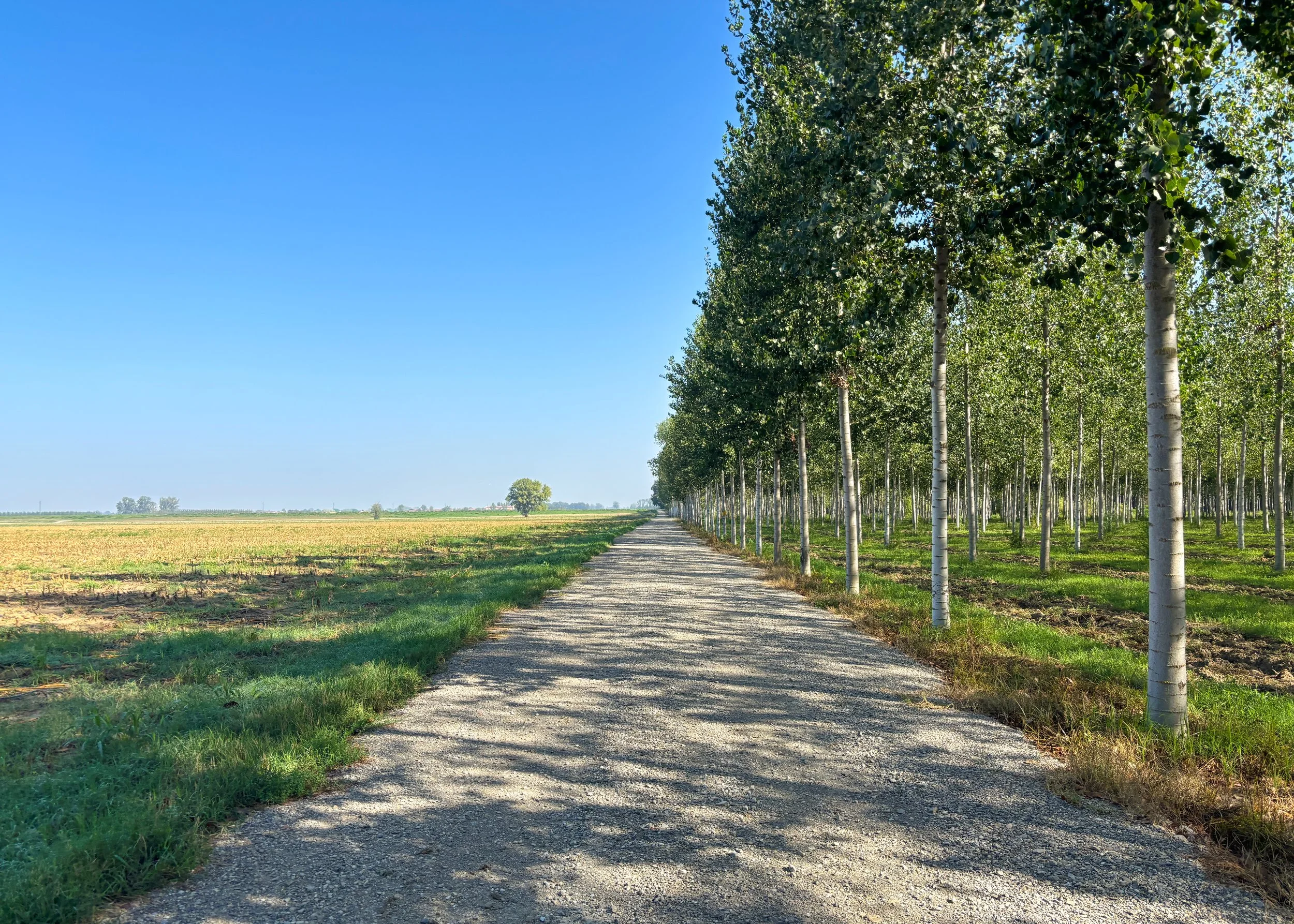
“You know what” I said, “It’s actually quite pretty, the flatland”. Tiz smiled knowingly. I’ve always been a mountains man, eschewing the lowlands, but I was now a convert. We rode through villages with granaries as big as cathedrals, pensioners in tank tops sitting in the shade, local newspaper in hand. Cedrata, a soft drink made with cedars, made a sudden return on the menus of bars and cafes. Sikh men in ornate turbans cycled on the main road of a small village, saluting those getting a coffee outside like dignitaries on a state visit.
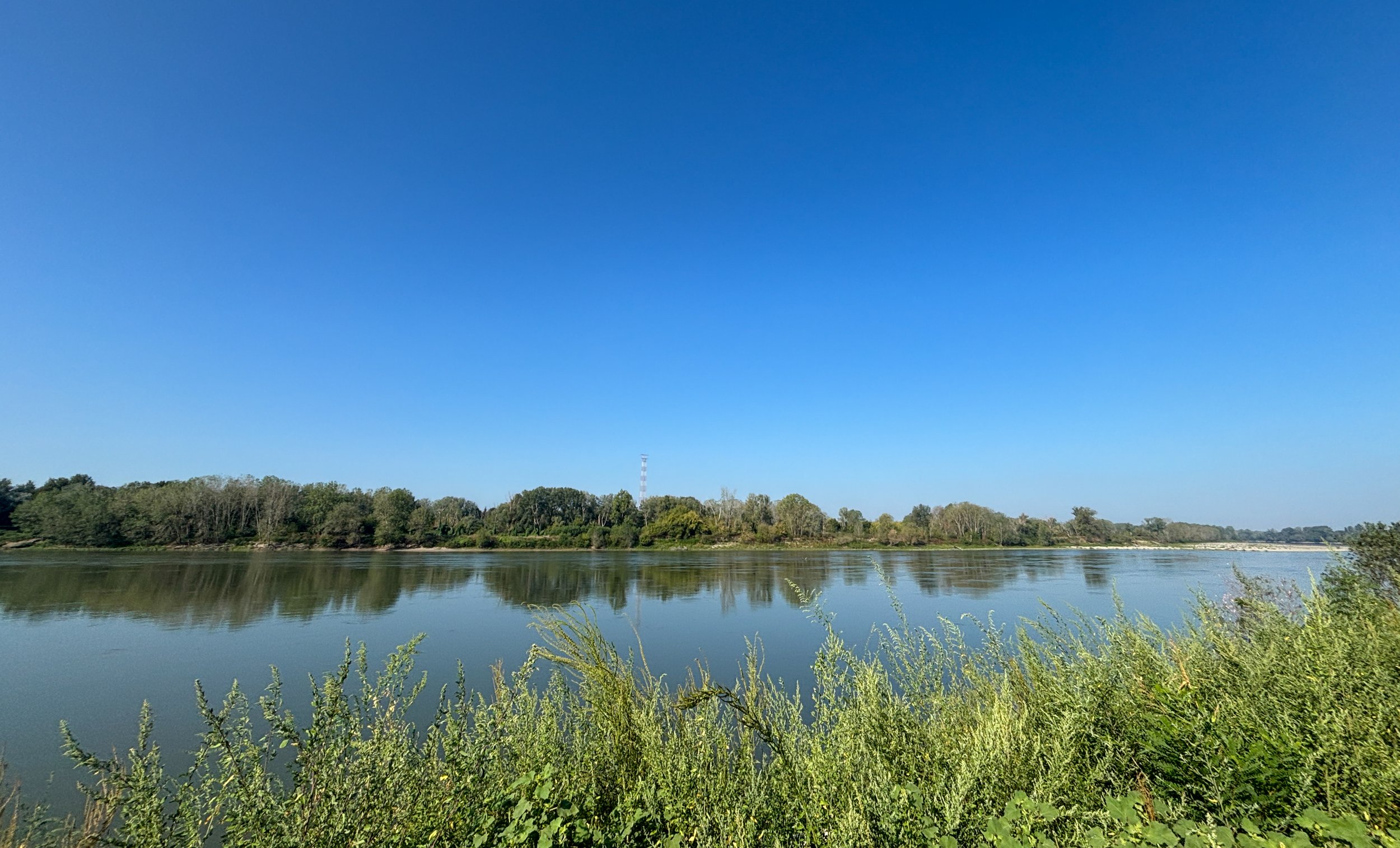
The sun, as local boy Giovannino Guareschi was fond of saying, hammered down on our heads. We pushed forwards, crossing the 45th parallel north, halfway between the Equator and North Pole. Not far from there, in the middle of everything – yet far from anything – was our goal for the day. Brescello.
Eighty years ago, they held local elections here. The first ones after twenty years of fascist dictatorship and five of war. The villagers elected mayor one Giuseppe Bottazzi, better known as Peppone, a communist. The news was received with dismay by the local parish priest, one don Camillo.
This was the stepping stone on which Guareschi built his fictional “little world”, a parva mundi located at the bottom of the Po Valley; invented, sure, yet well known by anyone who lived the comeback years from two decades of darkness. Cities boomed, millions left the back-breaking work in the fields to break their backs in factories and, across thousands of hamlets scattered around this fertile land, communist mayors locked horns with conservative priests.
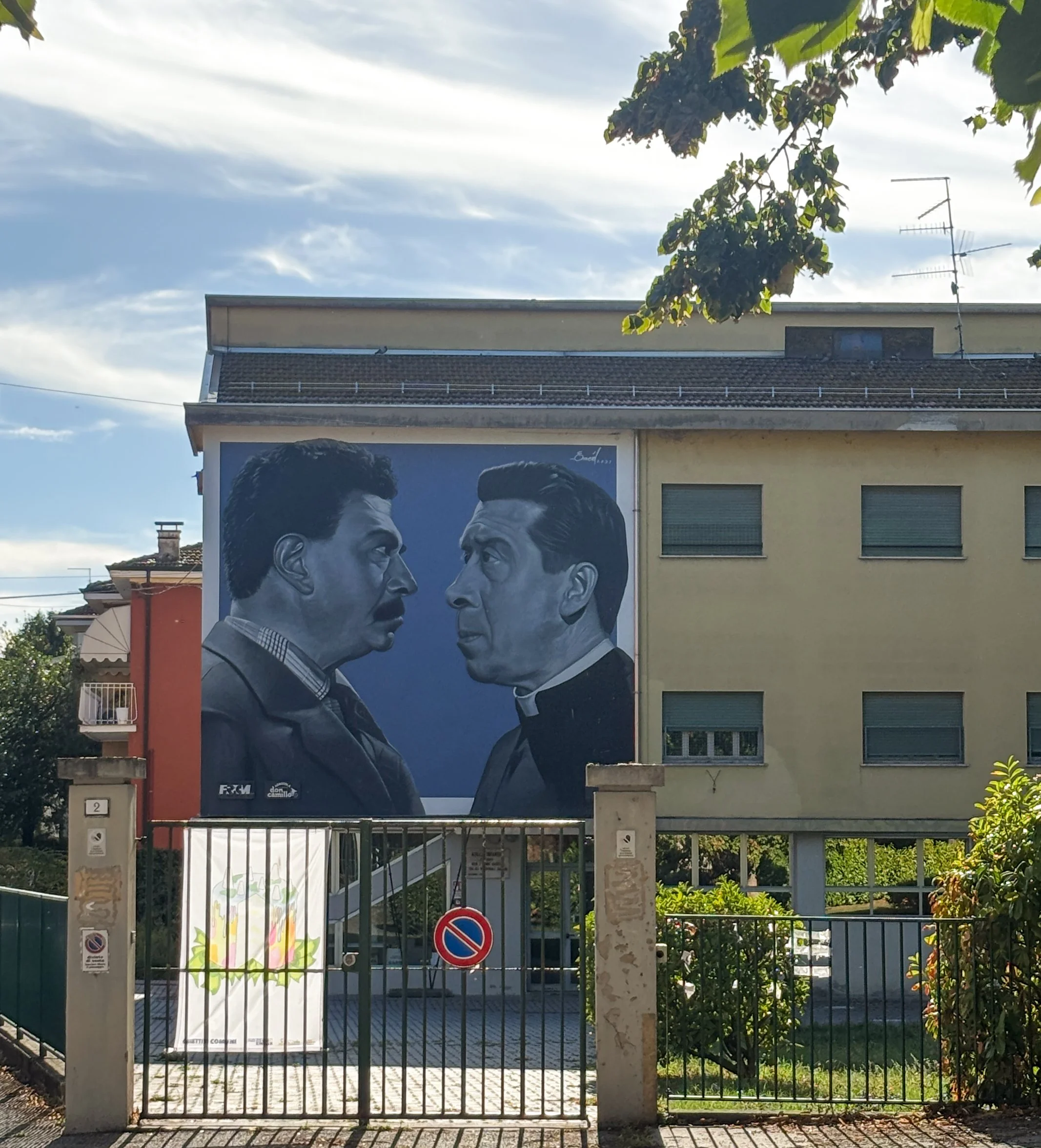
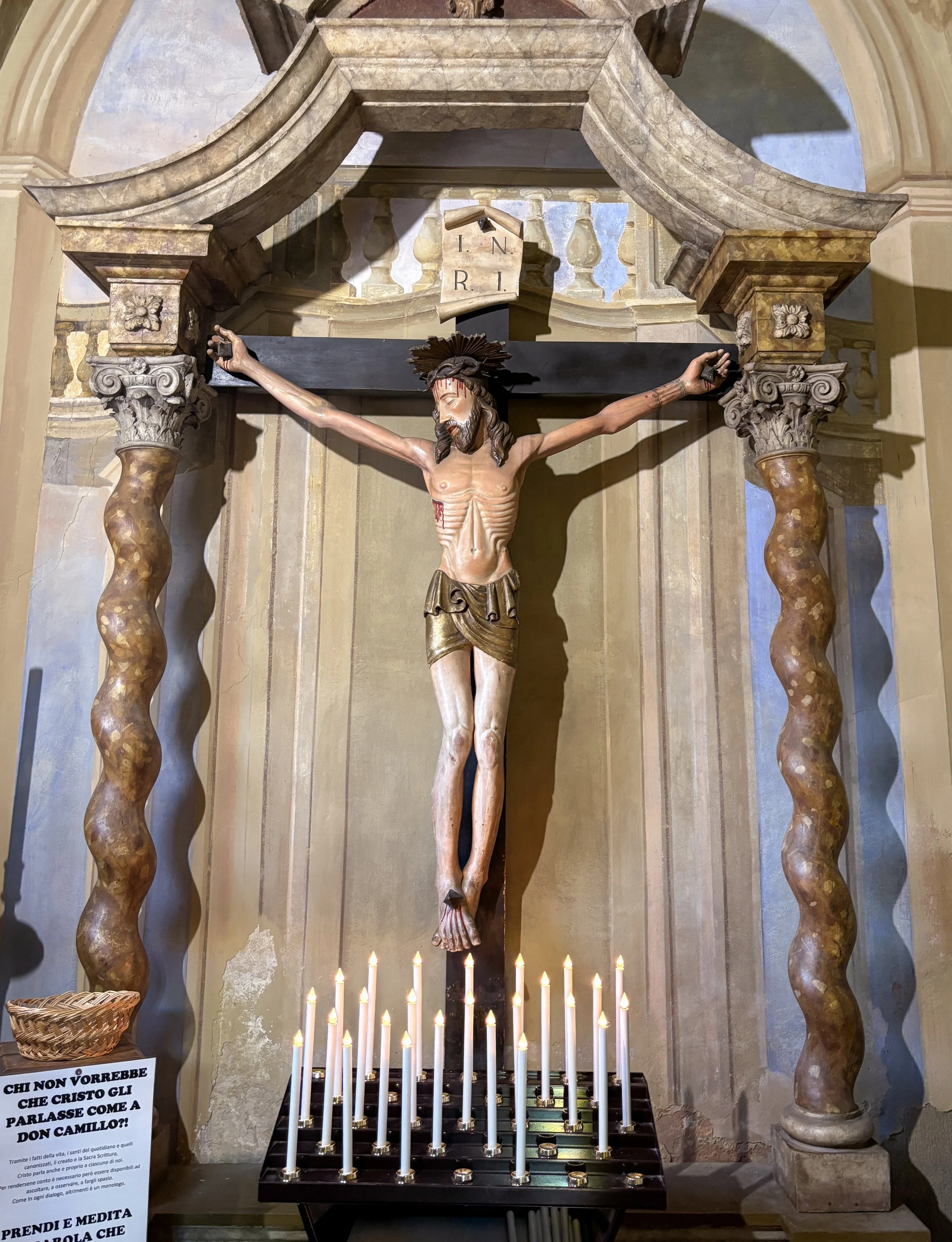
Guareschi’s books were always available at my grandma’s, and I was an avid reader. Fifty years might’ve passed, yet they remained fresh and evocative. His was a magical realism that descended from the Andes and relocated by this muddy European river, tales of struggle and conflict sprinkled with humour, folklore and a cast of extraordinary support characters that included the river – obviously – and a talking statue of Jesus on the cross, a Cristo Parlante that was don Camillo’s guiding light.
The books turned into films, and the films made Brescello a small celebrity. Fernandel and Gino Cervi starred in epic black & white pictures where the conflict was real, stakes high and divergences deep; yet don Camillo and Peppone, our heroes, still managed to pull together for the common good, helping that res publica that years of partisanship and social media have all but demolished. I loved them, and still do. Not because they were perfect – for they weren’t – but because of their foibles, lapses of judgement and good heart: they were real, but sadly gone.
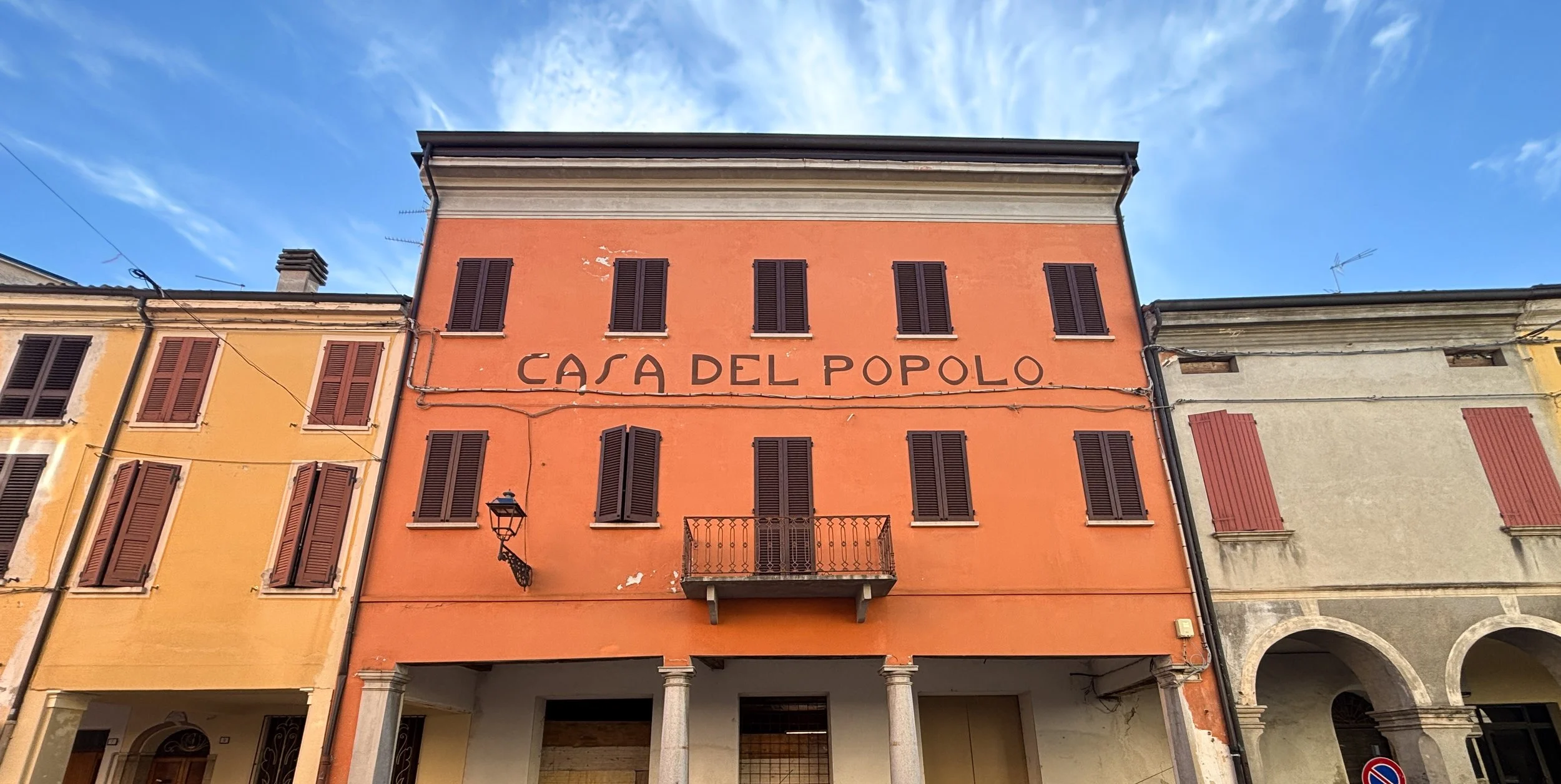
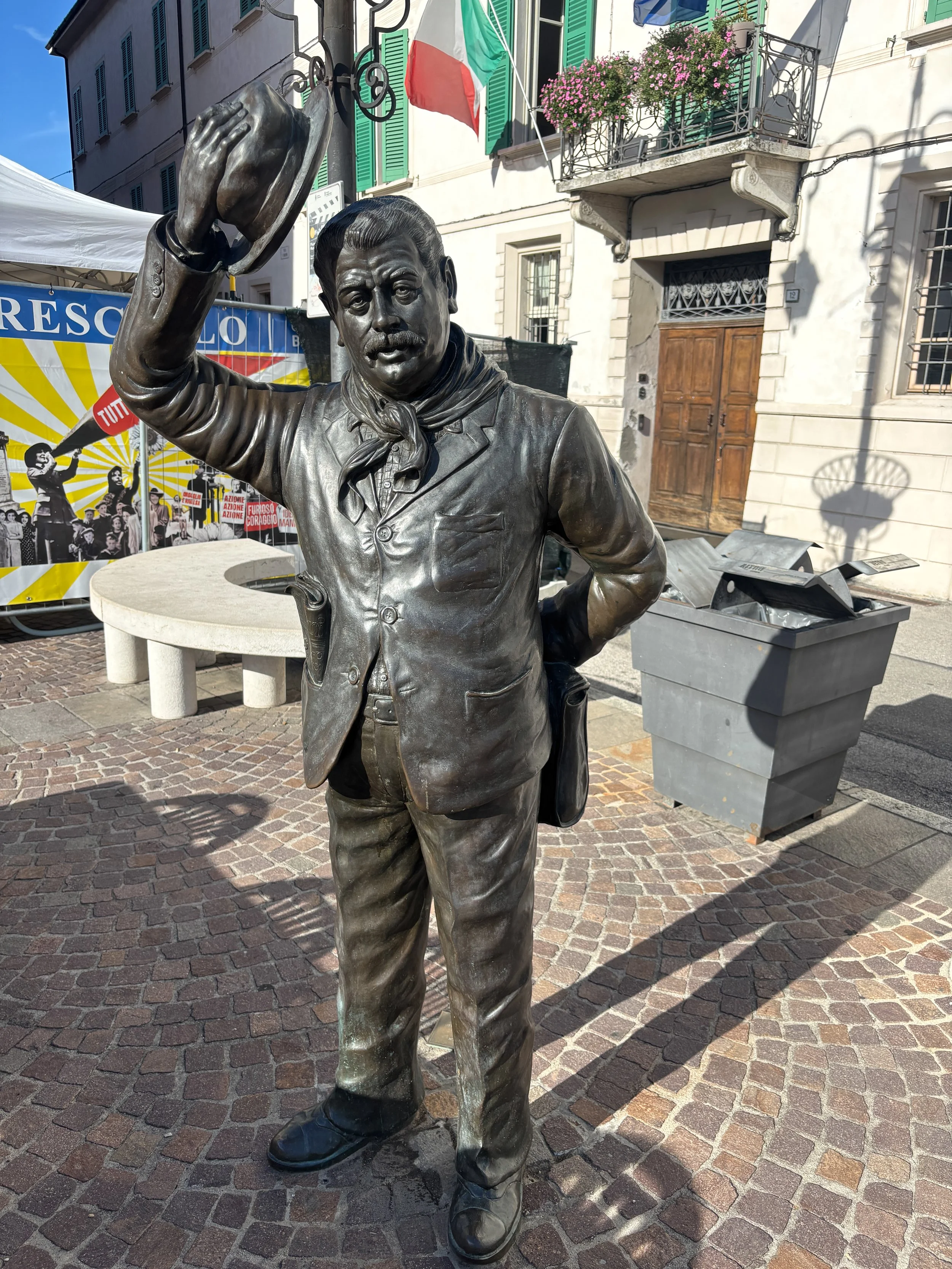
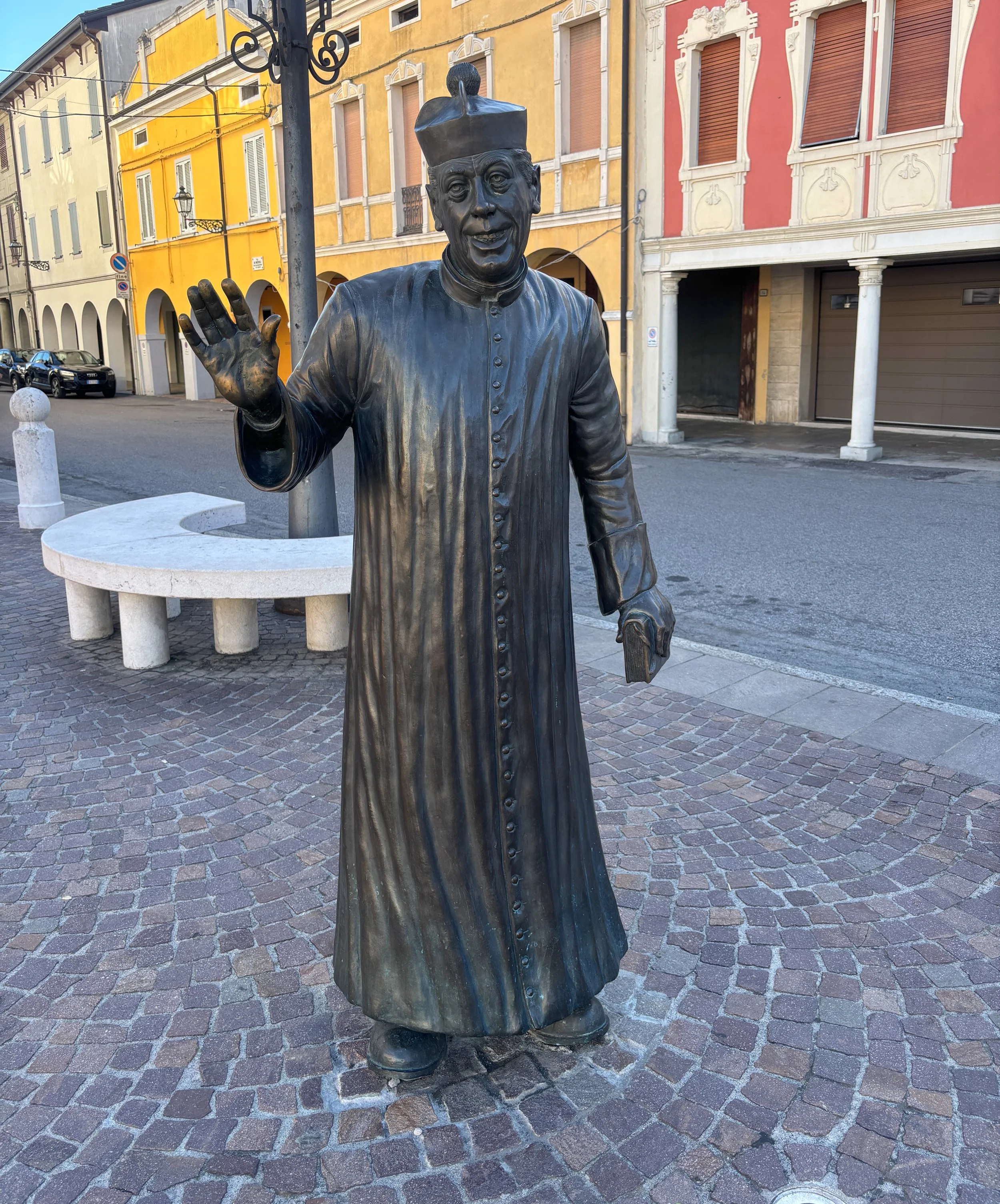
And now Tiz and I were in their village. The church was there, like in the films; here is city hall. A few steps away is the Casa del Popolo, and the museum replete with a tank used in one of the episodes. Peppone’s statue salutes from one corner of the square, and don Camillo’s waves back, sardonically. But the square is full: long tables and chairs, a stage, a hulking generator.
“It’s the saint patron festival”, said the waiter at the aptly named Bar don Camillo. Today was San Genesio, and the hamlet celebrated his saint. A sagra di paese, as it’s the norm in every village. That evening, while people ate tortelli and drank lambrusco, children in sequin jackets danced on the stage and we, having found a kiosk, drank cocktails like it was going out of fashion. At some point, with the sudden clarity of mind afforded by three Moscow Mules in rapid succession, it occurred to me that this parva mundi never ended. I could imagine don Camillo and Peppone, sat at the tables, drinking the fifteenth amaro and smoking a Tuscan cigar.
Day 3.
We parted way with the river shortly after leaving Brescello. Po continued eastwards while we turned south-east, riding along yet another canal. The blue hue of hills broke the flatness of the landscape. We were well into Emilia-Romagna, now, and those were the Apennines.
The lowlands were changing. This was serious agribusiness land: farms the size of factories, grain silos as big as rocket ships, climate-controlled warehouses. Solar panels up top and hundreds of Parmigiano wheels inside. Wealthy, prosperous, well-kept: the countryside was no longer a place you ran away from, at least not here.
Reggio Emilia beckoned, the pulsating sun at the centre of a solar system of eccentricity. This was the land that yielded some of Italy’s rockstars, where you can find a Gurdwara near a statue of Lenin or, as we found this time around, a town called Sesso, Italian for Sex. The town flew by in a whirl of baroque churches and lush pavé. Tiz tried an olive oil and parmigiano ice cream, which he claimed to be great. I hedged my bets and ate a peach. Modena wasn’t too far away.
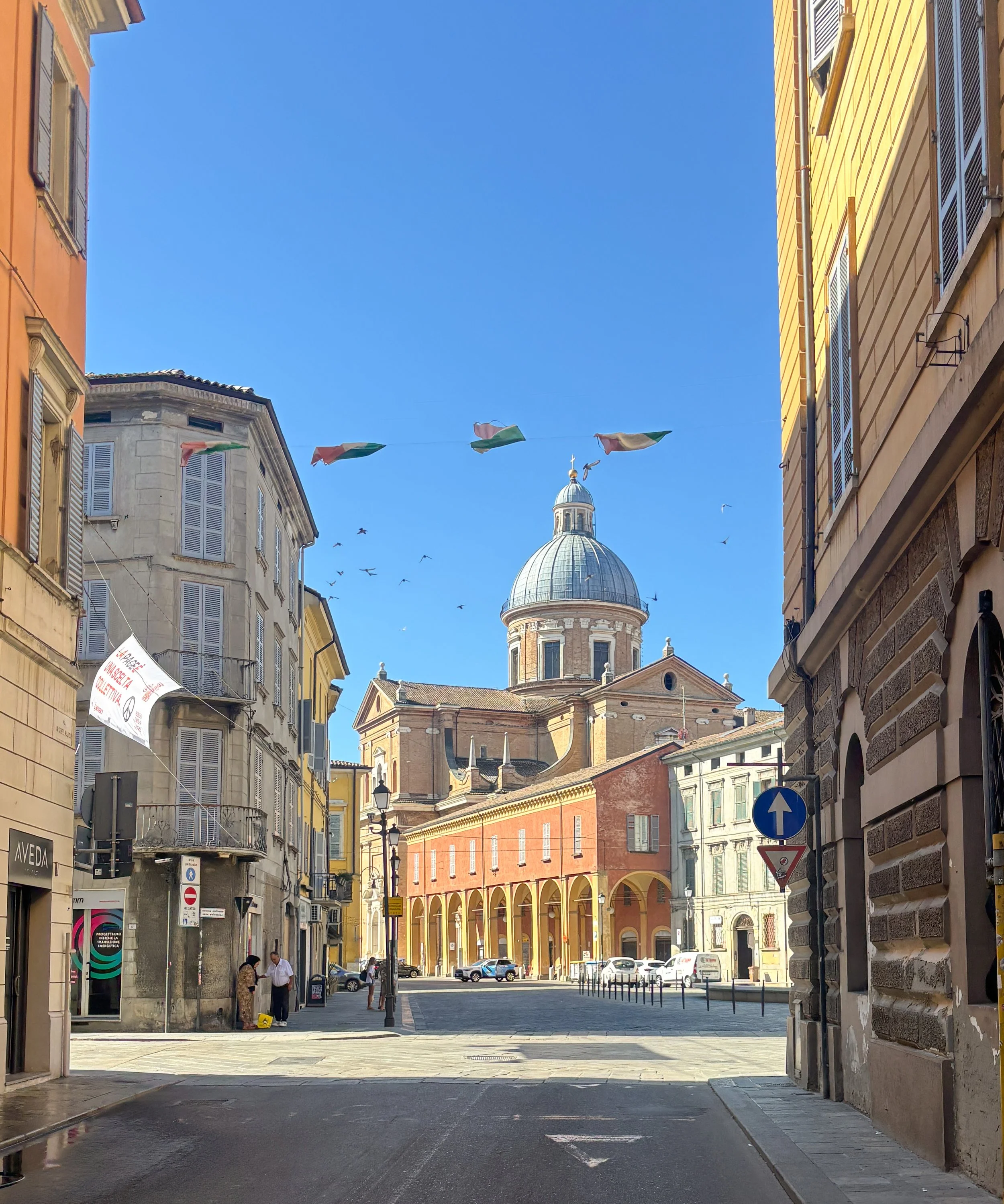
There, in the city of prancing horses and racing bulls, we found people we hadn’t seen in three days: tourists. A group kept on repeating a dance routine outside the Duomo, for the benefit of their TikTok accounts, and more seemed to be following them. Guided by an unseen hand we turned three corners and ended up at a restaurant for lunch: there were bikes outside, and the place was indeed called La Bicicletta. Right at home with friends, we immediately started talking about trips done, trips planned and trips imagined until, alas, it was time to reach the train station to get back to Milan.
In a corner of my mind I knew that, out there, Po was still flowing east. Il Grande Fiume was out there, heading to its delta. And I wished I could join it there.