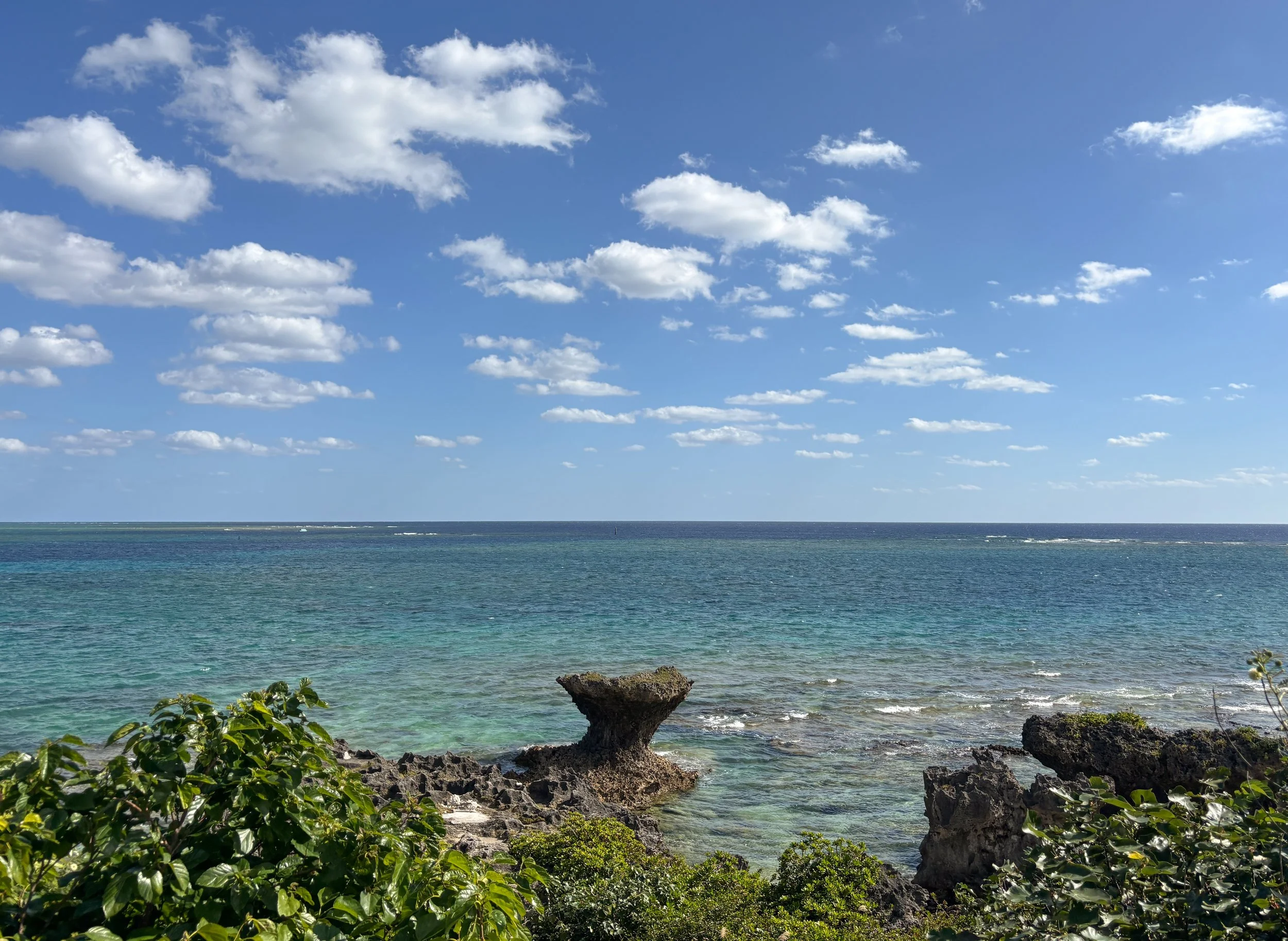
Fighting the tide.
Darkness washed over the Dude.
I hadn’t indulged in a White Russian spiced by Mr Treehorn but as 2025 passed the baton to whatever we’re in now, I just felt that line from The Big Lebowski inside my ribcage. A black tidal wave, held at bay only by the flimsiest of sea walls. A dyke so pathetic that no Dutch boy would stick a finger in it to plug a hole and save Amsterdam. Yeah, as I left for Okinawa I couldn’t deny feeling that way.
The warmth of that big blob of light in the sky helped – where have you been, by the way? – but no amount of sunshine seemed to be powerful enough to dry the backwaters of my consciousness. Maybe it was the constant boom of tiny fighter planes crossing over our heads: every day, groups of F-16s, F-15s and the incredibly loud F-35 would roar out of Naha or Kadena airfield, while Marine helicopters grumbled in and out of Futenma. Taiwan is round the corner. Today, those military airplanes were just training and dropping a penny in the noise pollution swear jar; tomorrow, they might be fighting World War III.
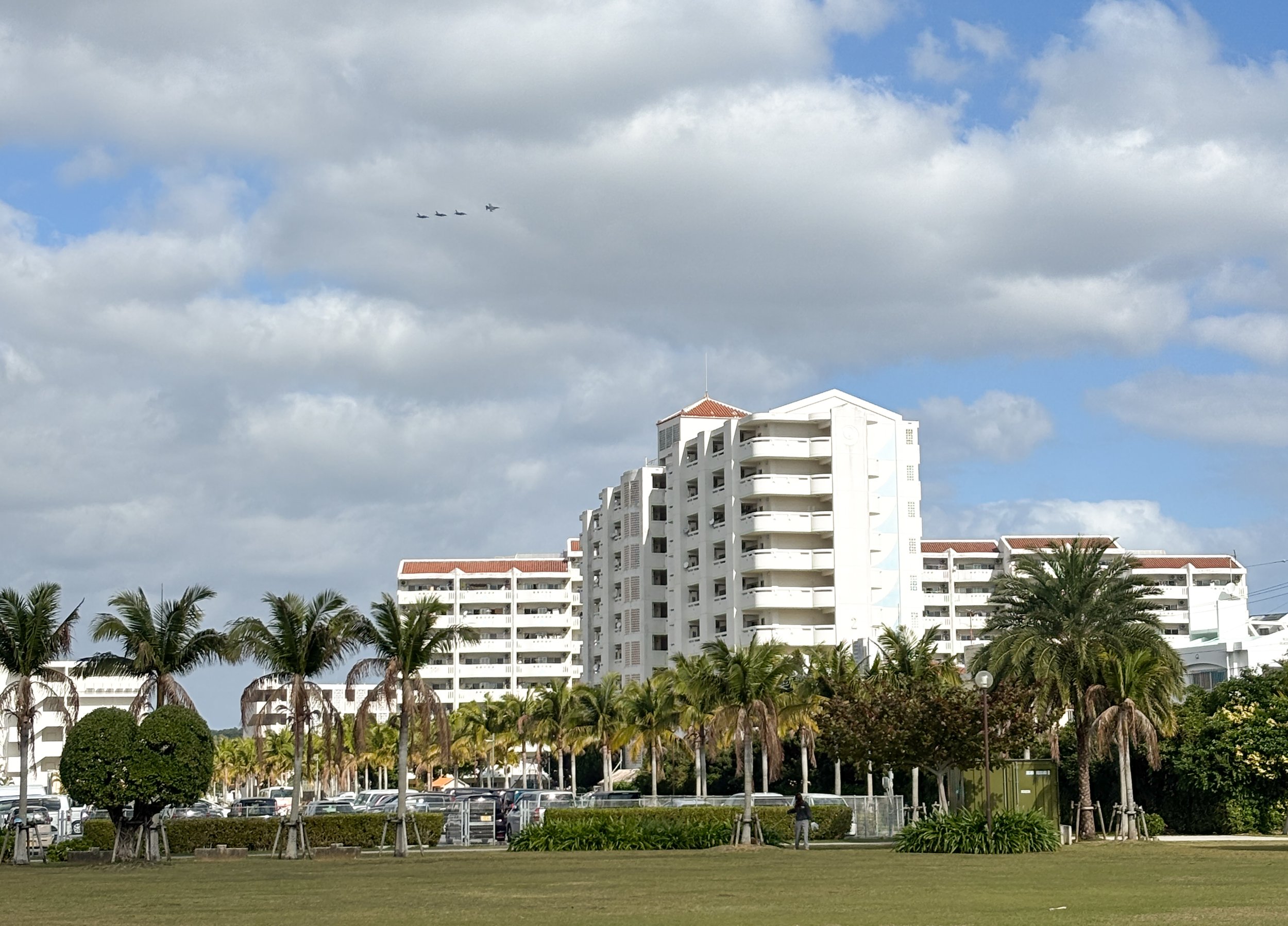
Therein lay the fallacy of my plan. I plotted my escape from the posse of septuagenarians that are running (and ruining) the world by heading into a flashpoint for two of the aforementioned old men who ought to retire but haven’t.
If WWIII is just a possibility, however terrifying, the second global conflict is a tangible memory on this island. The ridgelines where Marines and Japanese soldiers killed one another with such proficiency are now host to homes, parks and a monorail where every station has its own jingle; but here and there are what could be mistaken for burrows, except that they are closed by metal grates.
Those were bunkers, eighty years ago. I visit one of the main ones and flee at the sight of hundreds of scrapes left in the white-washed walls of one room. Those, a sign explains, are the traces of the hand grenades used by the last Japanese soldiers to take their own lives.
Things looked bleak. I don’t know if they were darker’n a black steer tookus on a moonless prairie night, to continue with my Dudeism, but they surely weren’t improving.
Until they started doing so.
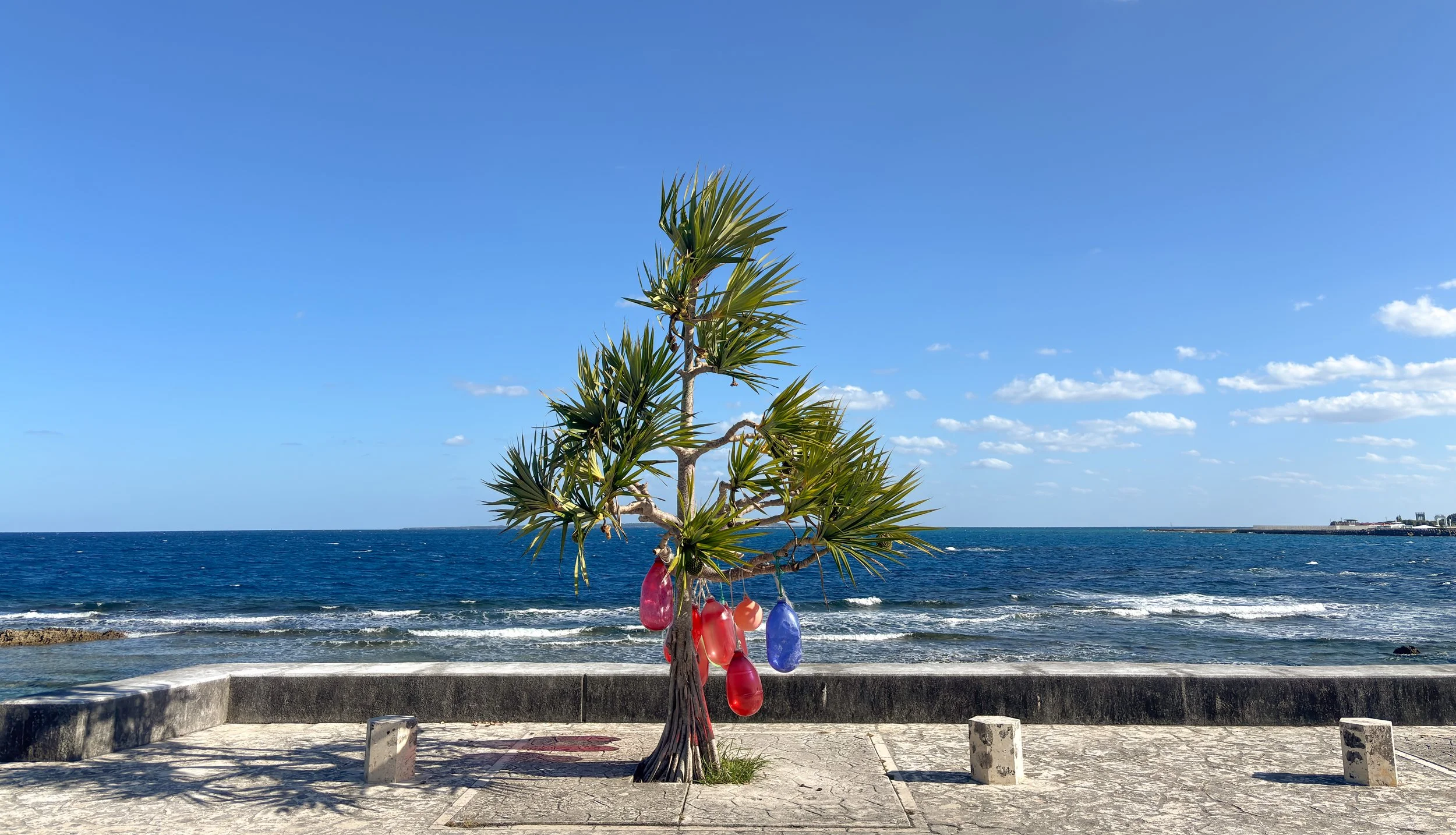
I needed somebody who knew about creaking bottom brackets and knew how to fix bikes. John in Okinawa was all that, in that delightful American way that makes me wonder how such a country can also produce Dick Cheney and Stephen Miller. He also was the first person I met to fist-pump in the air and exclaim “Raaaad!” when I told him he’d fixed the ailment that stopped me from cycling. Thanks to his prowess I was back on the bike – the reason I’d come all this way – and, I guess, in the right frame of mind to learn the lesson that was around me all along.
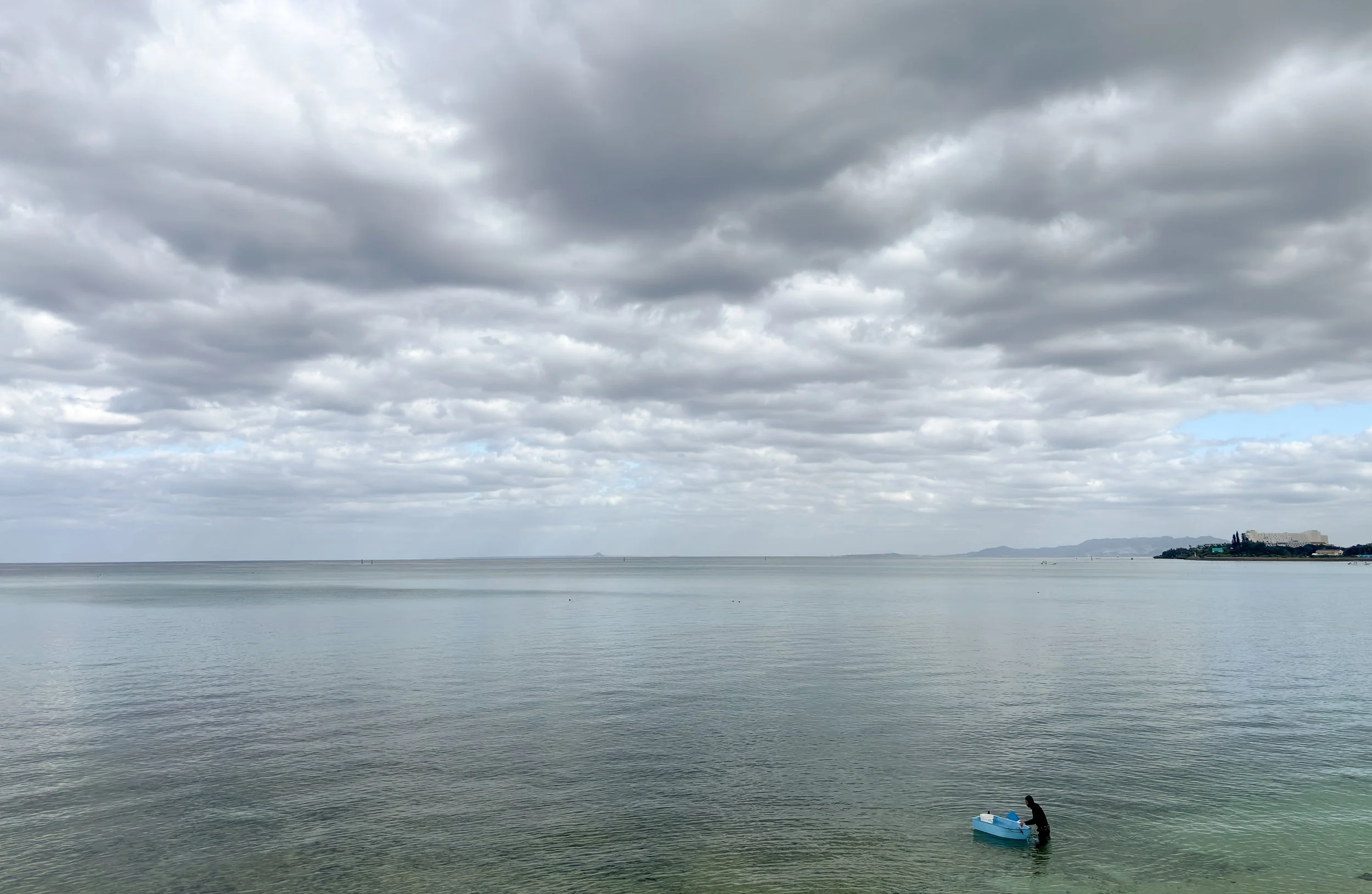
A man in a wetsuit was standing in the shallows, collecting sea urchins. Around him the world buzzed like a hive of caffeinated wasps, but he didn’t care. Trucks trundled along Route 58. A big prop plane landed in Kadena, and a civilian airliner took off from Naha. The man contemplated the water and, every now and then, picked up an urchin.
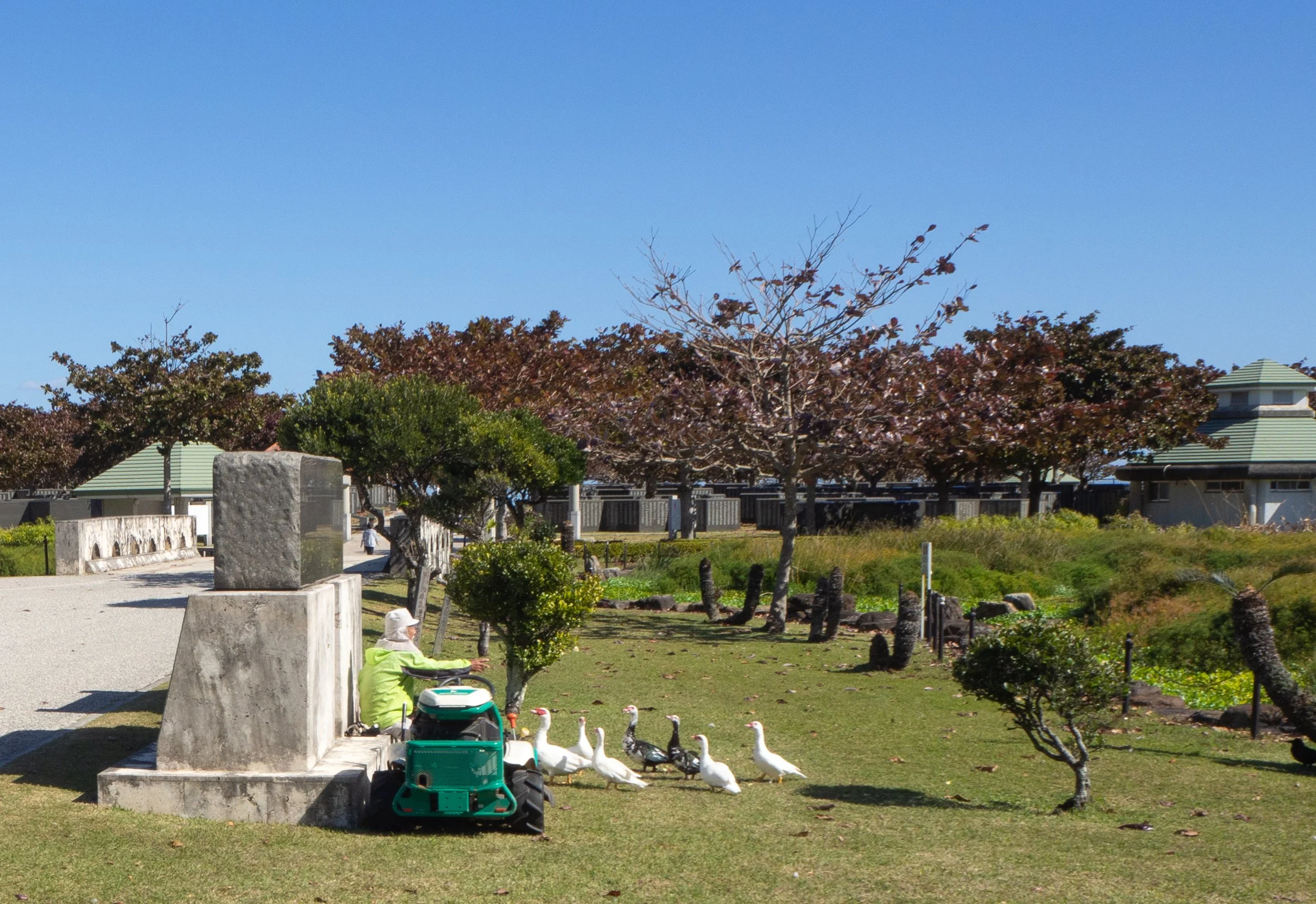
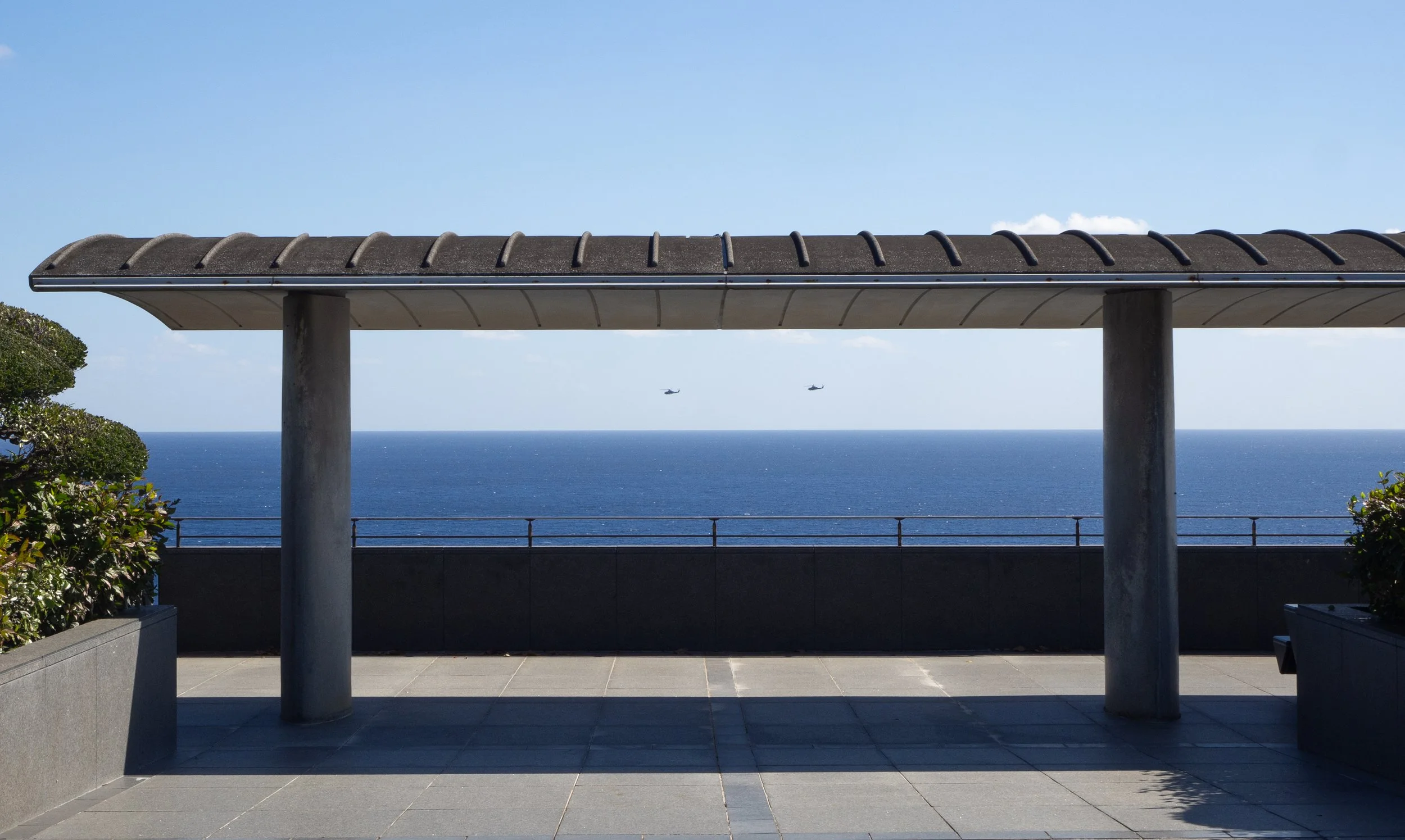
Another man sat by his lawnmower in the Peace Memorial Park in Itoman, feeding a very attentive audience of ducks. Around the man were the names of the 250,000 people who died here in the last war; above him passed two helicopters, training to fight the next one. But there he sat, serene as the Maitreya Buddha I saw in Thikse, and continued handing treats to his crowd of feathery friends.
There is a lovely soba place somewhere near Naha’s Makishi public market. You have a mural of Che Guevara on a building nearby and, once inside, a blackboard proclaims that Soba Is Life!
It’s odd how a bowl of Okinawa soba can attune a fellow to thoughts he, thus far, considered alien. But such is the power of a bonito broth and a gently braised chunk of pork belly, I suppose.
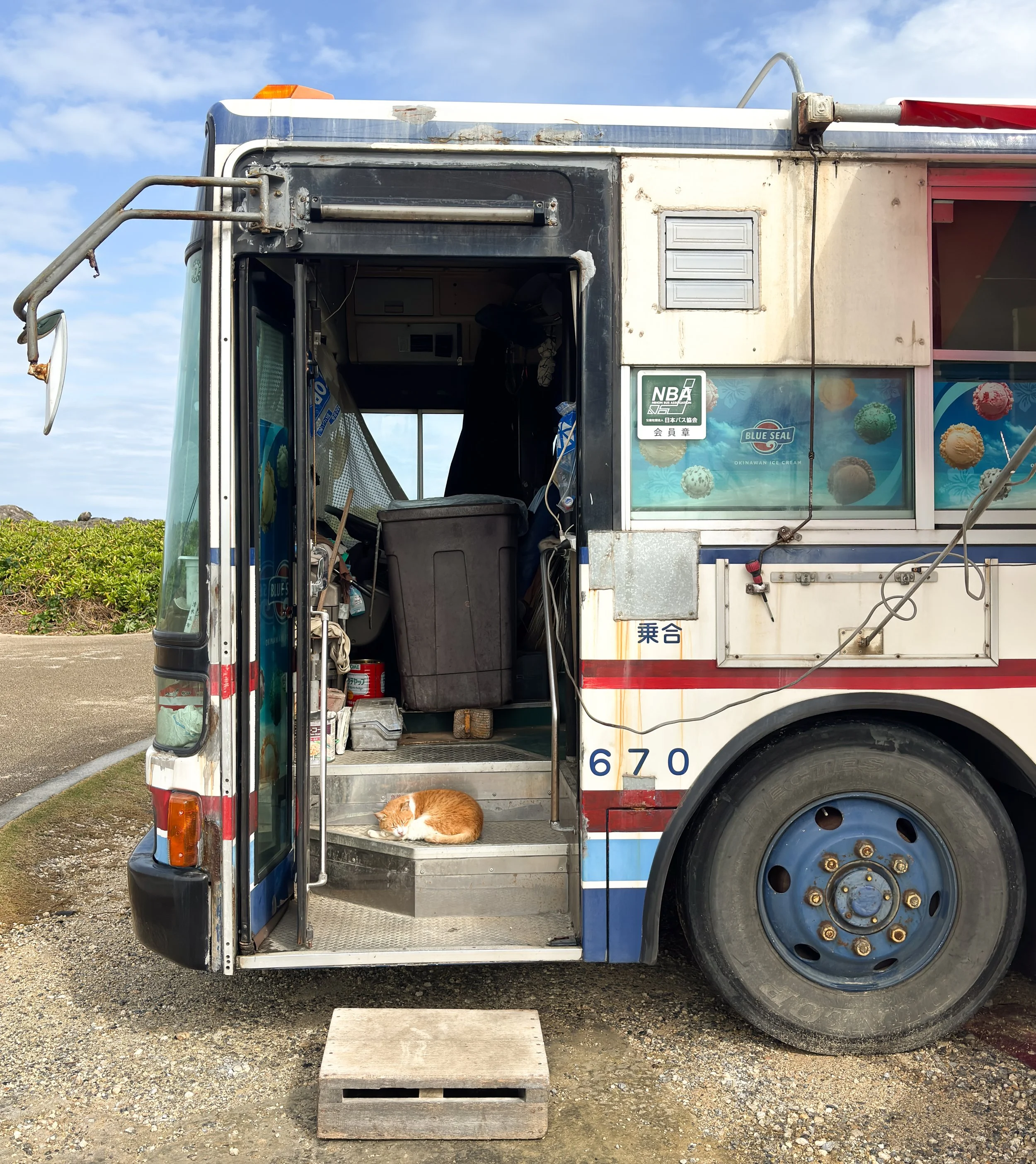
It’s hard to be a person governed by logic right now, I thought as I ate a fishcake. There I was, thinking linearly in terms of premises flowing into a conclusion while, all around me, it’s stupidity selfishness and rapacity that drive every decision. That, I realised, was the darkness threatening to wash over me. All the Dude ever wanted was his rug back, and all I ever wanted was for those in power, be them presidents or middle managers, to use some goddamn logic. And constant failure on either front was driving me mad.
But maybe it needn’t. Phone in hand, I wandered along paths I’d seldom ventured, lifting the lid over schools of thought hailing from lands well attuned to be living in interesting times. I browsed pages not fit to be crammed into the tiny screen of an iPhone, chasing a hunch. Until I found it.
The poet Du Fu lived in the 8th century AD when the Tang dynasty convulsed into a decade of turmoil without precedents, a properly prodigious conflict that wrecked China for decades to come. One day, he wrote
The nation is destroyed
Mountains and rivers remain
And that helped.