Escape the towers: travels in rural Japan.
Skyscrapers.
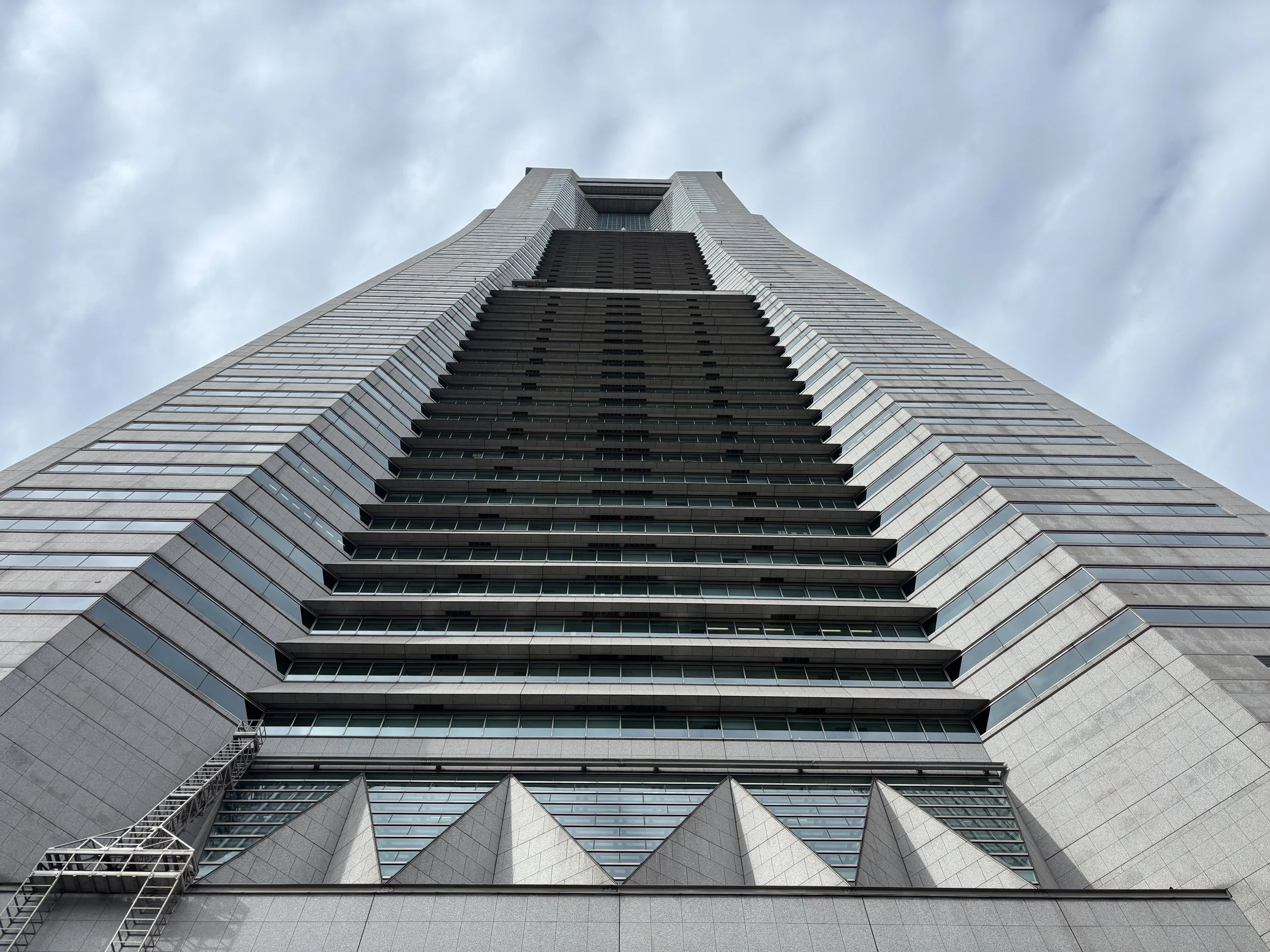
Gleaming towers of crystal and steel, marvels of architecture and engineering, avatars of humanity’s progress. I didn’t want to see one for as long as possible.
Fujiyoshida.
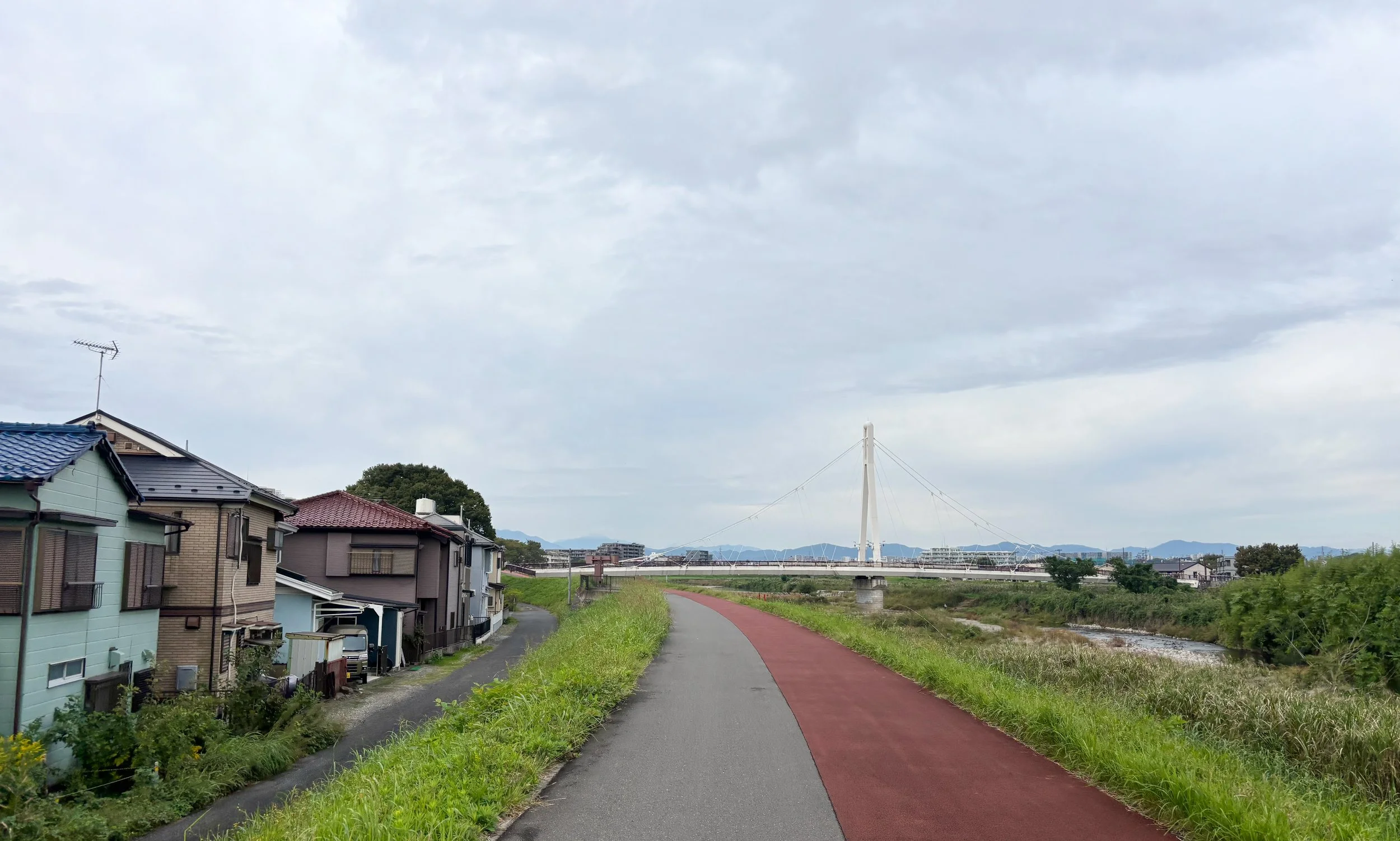
Leaving Tokyo is easy once you find a river. The Tama banks are, as it is the norm in Japanese cities, spacious and lush. Danchi tenement blocks and the dense warrens of jotaku houses stop abruptly before the banks of a river, as if prohibited to move an inch further by a magic spell, and give way to cycle lanes, baseball courts, playgrounds and rows of cherry trees.
The air is full of the delicate scent of osmanthus and a stream of cyclists is flowing in my opposite direction. I breathe in perfumed air and pedal at a leisurely pace away from the airport, away from the city, away from the office towers that seem to draw in everyone else. I’m happily unemployed and it feels like I’ve just discovered the secret of the good life. If only I could work out how to balance the outgoings from my bank account! Perhaps the rows of golfers, driving balls downrange like Henry V’s longbowmen at Agincourt, know how.
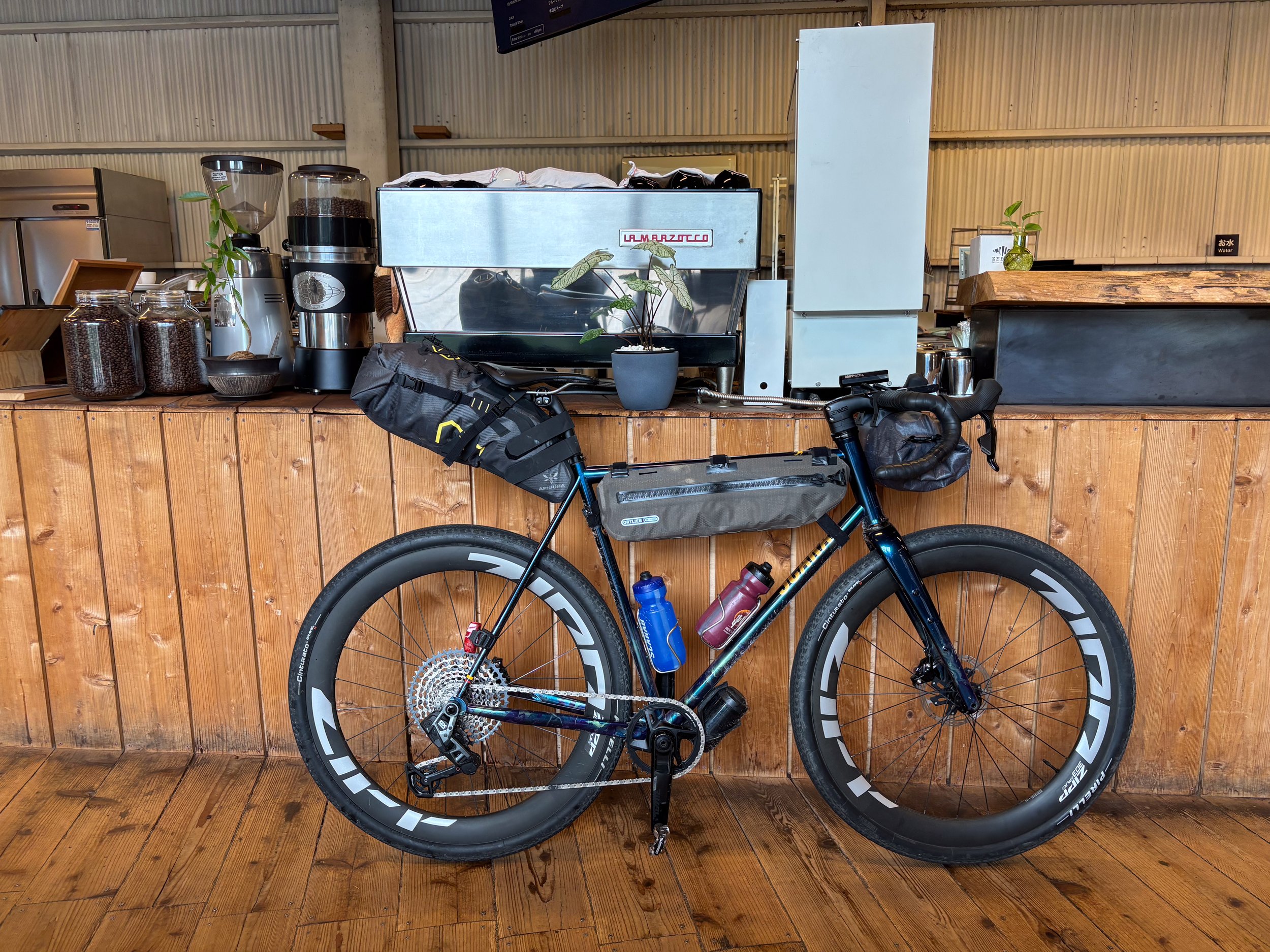
When the Tama and I part ways, the road climbs. I stop for a coffee at a place where my bike is invited in as if it were a customer, and shortly afterwards I make my acquaintance with a Japanese institution: the rindō forest road.
Japan’s infatuation with infrastructure has its downsides – schools too big for the rural communities they serve, for instance – but yields an unexpected boon for the cycling traveller. Roads are constantly improved and shortened through a dizzying array of tunnels and as a result the older thoroughfare sees very little traffic. Cycling paradise.
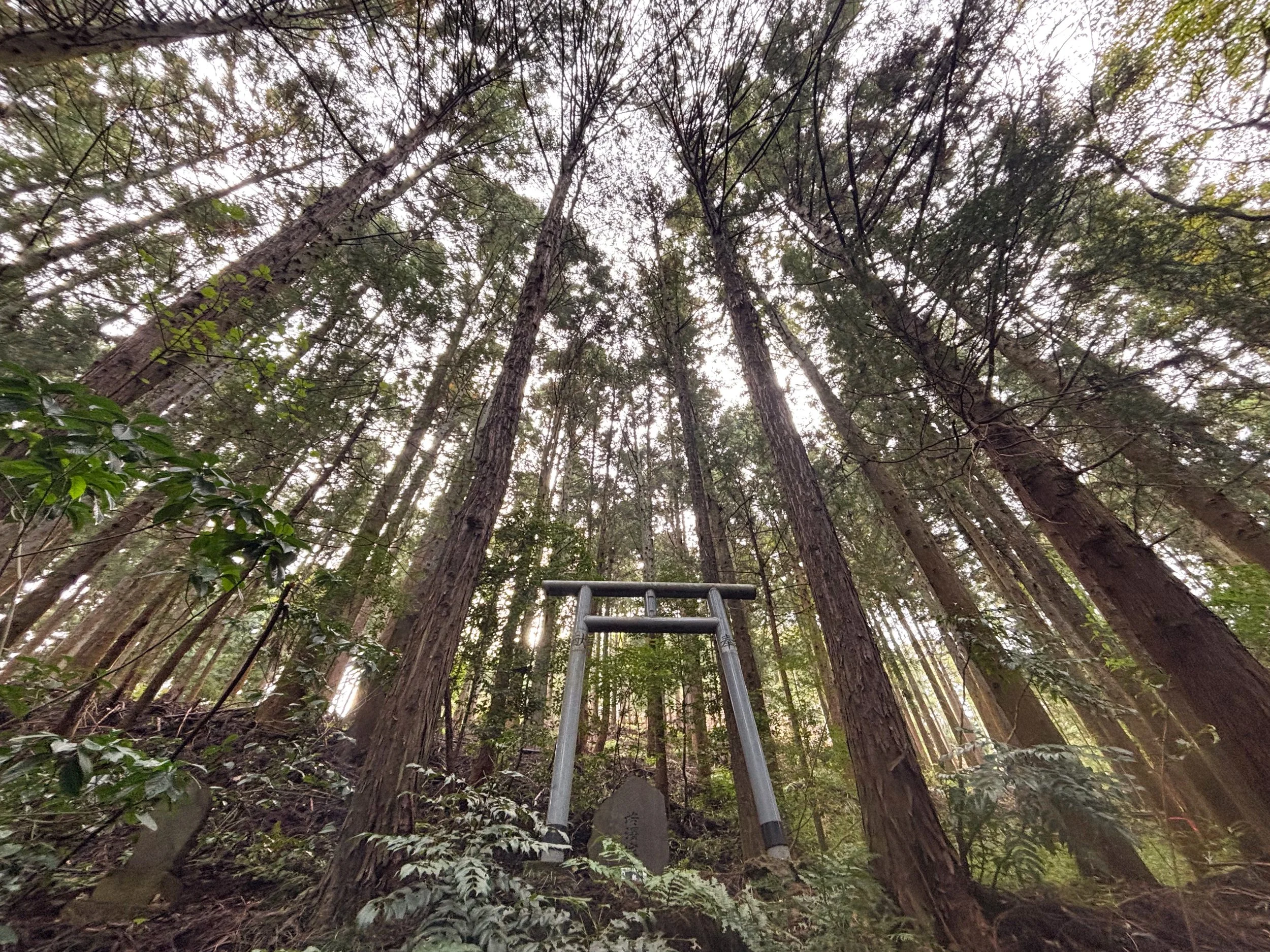
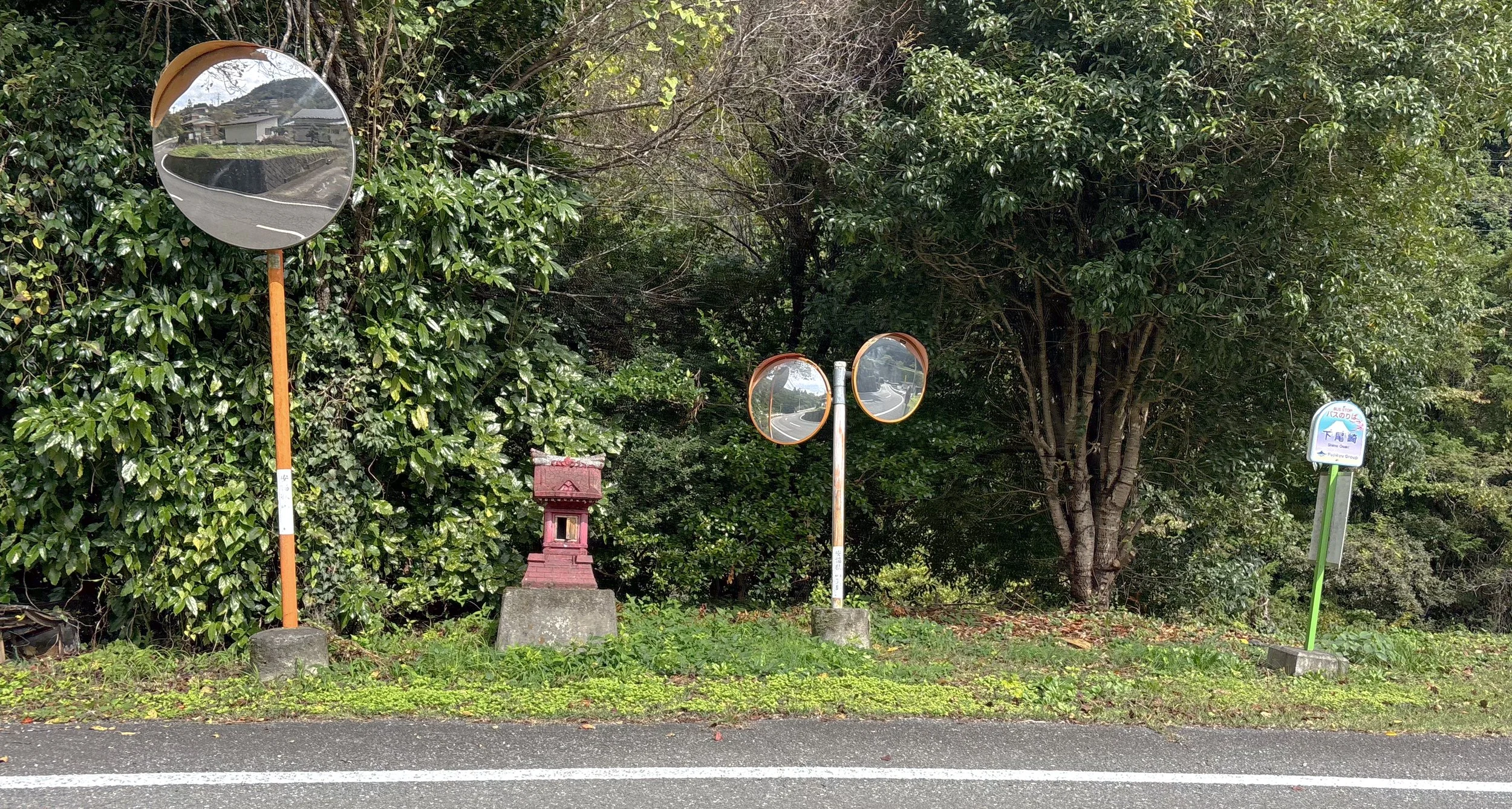
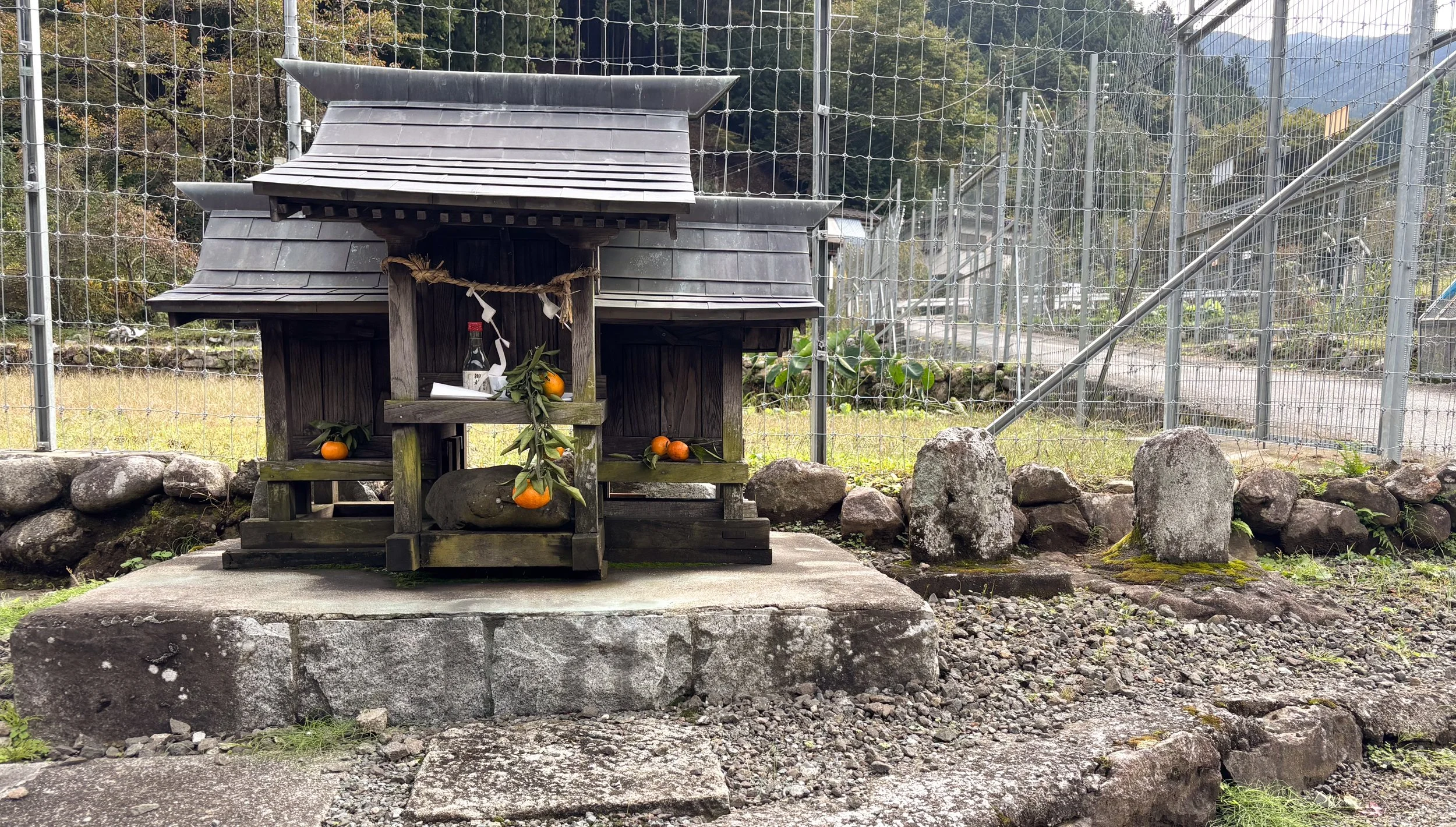
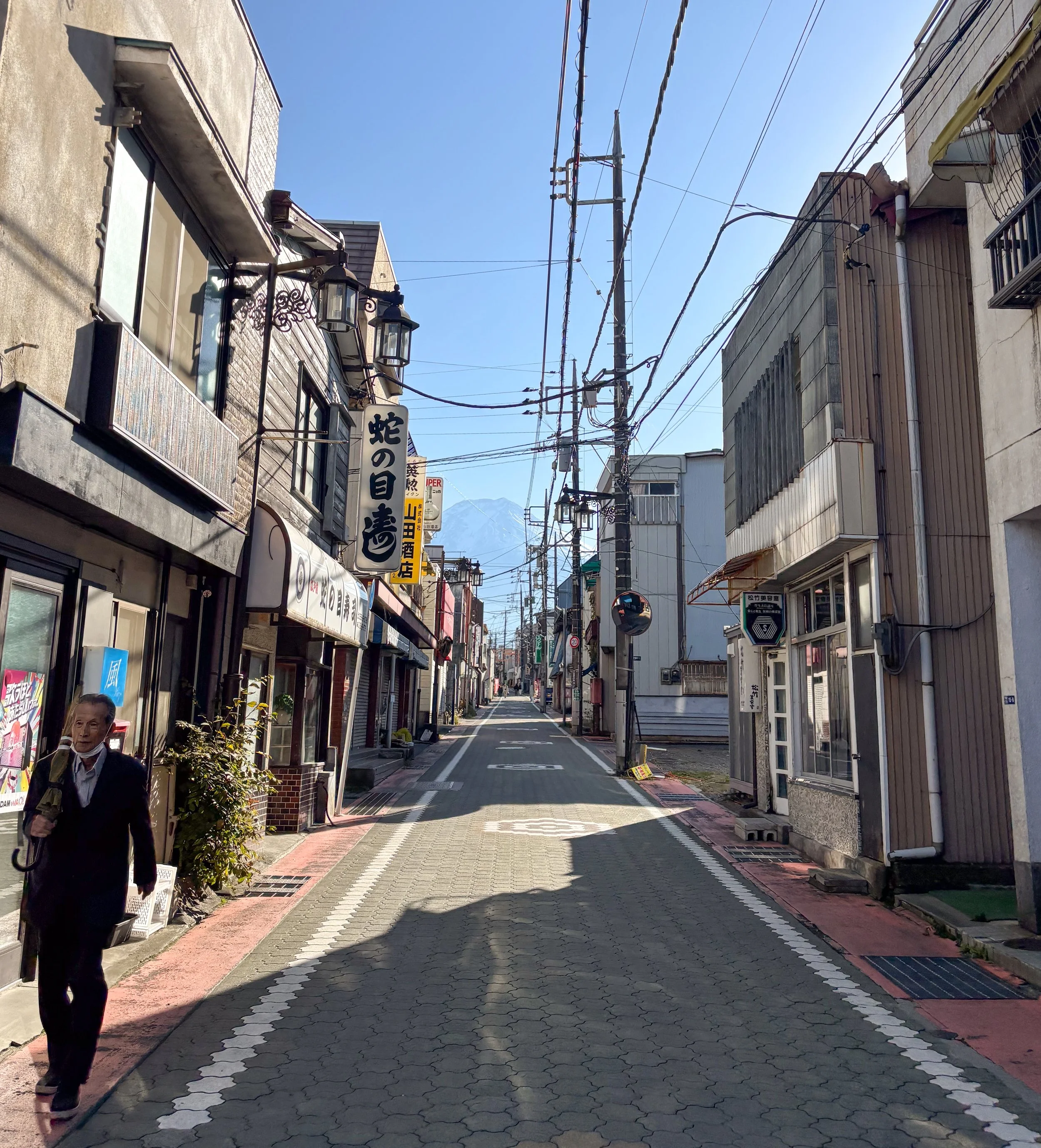
My first rindō climbed steadily through thickets of cedars, past sleepy villages with little roadside shrines adorned with persimmons and clementines, before delivering me right in front of the mighty Fuji, so close that it felt possible to stick a finger into its snowy flanks.
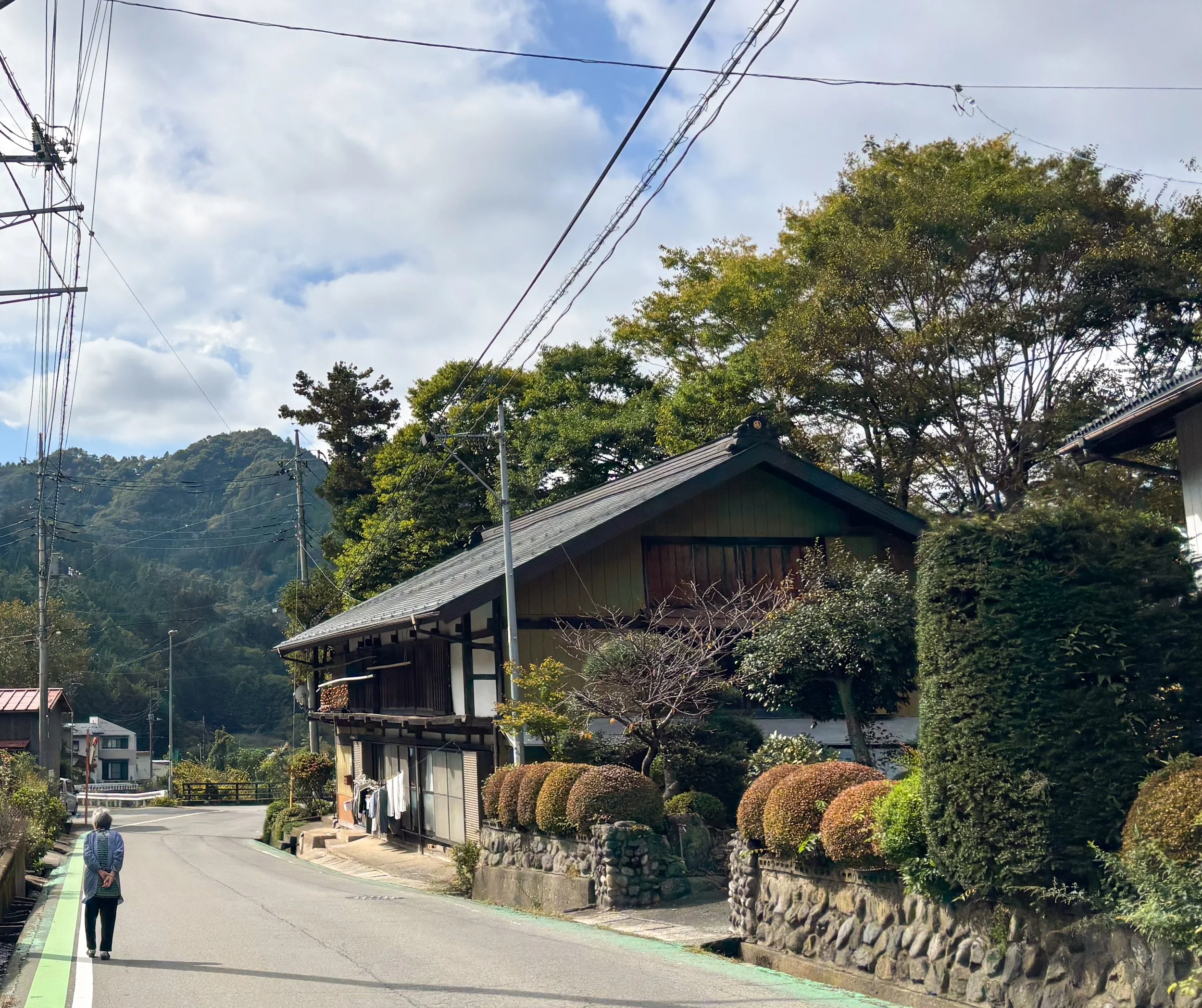

Fujiyoshida, a town of some 50,000 people, was a tale of two cities. Tourists mobbed the railway terminus that led to Akurayama, the multi-storey pagoda that features on every guidebook. But, elsewhere, it was empty. As the sun set I enjoyed dinner in Japan’s answer to your typical Marriott hotel restaurant. Then, in the hostel I found for the night, I became acquainted with two features I was to become familiar with in the days to come: sliding paper doors and paraffin heaters.
Kobuchisawa.
The consensus, amongst the Japanese patrons of the hostel, was that today was going to be a beautiful day, and that the tunnel on route 137 was dangerous. Neither assertion proved correct.
Lake Kawaguchi brooded under a sky the colour of lead and low clouds hid the mountains from view. A faint drizzle was falling and, as I was fastening a snack to my saddle bag, an American woman pointed at my bike and exclaimed “Don’t tell me you’re travelling on that” with a tone of offense at the idea.
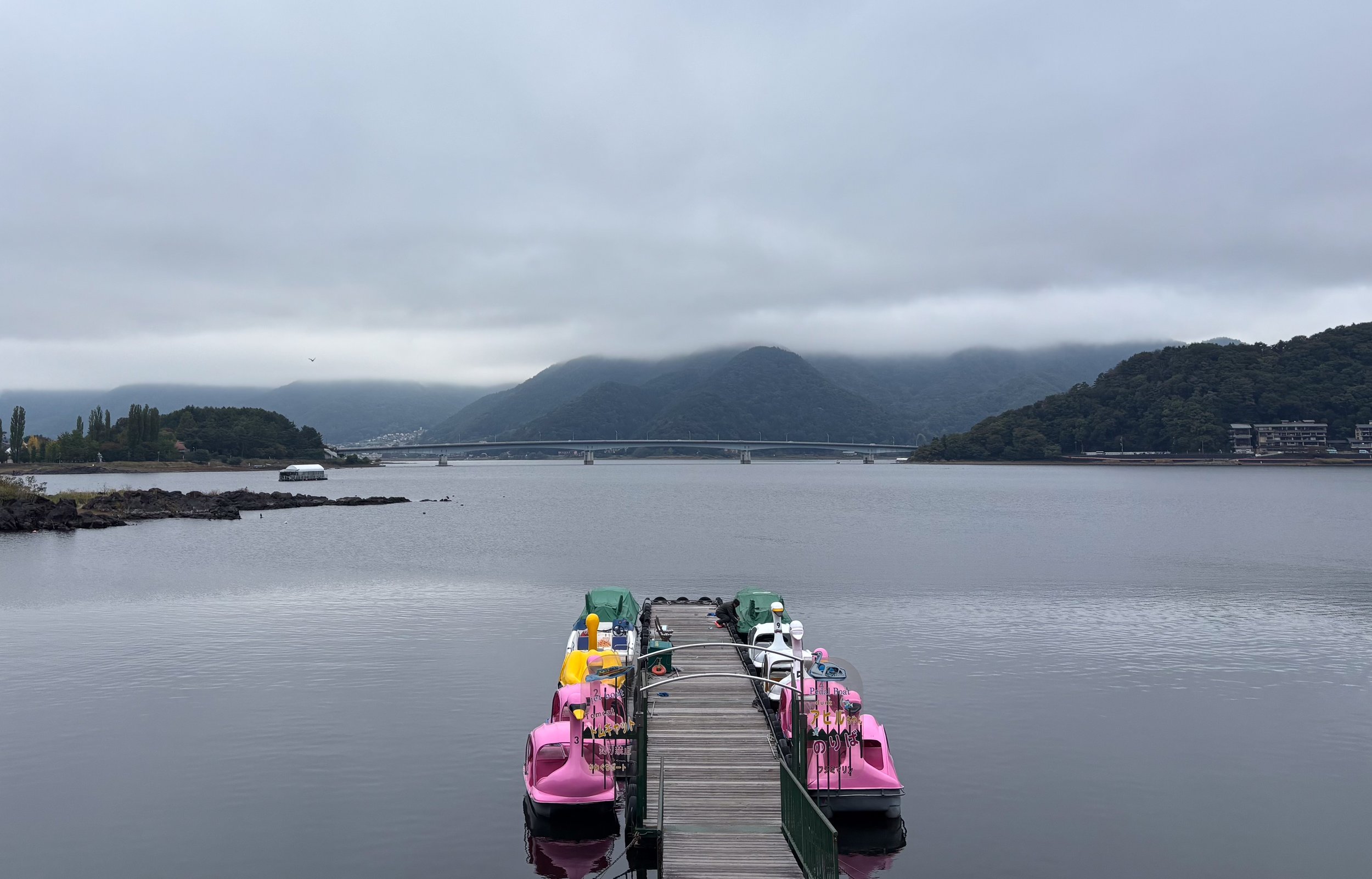
My plans involved a long, steep climb up a rindō road to a noodle shop with great views, but it all seemed pointless in that kind of weather. So, I found myself on route 137, the one I was advised not to take, and then the tunnel that, I was assured, was going to be the end of me. I emerged, unscathed, to find sunshine, yellowing rice and the sort of warmth that is an invite to ride in short sleeves.
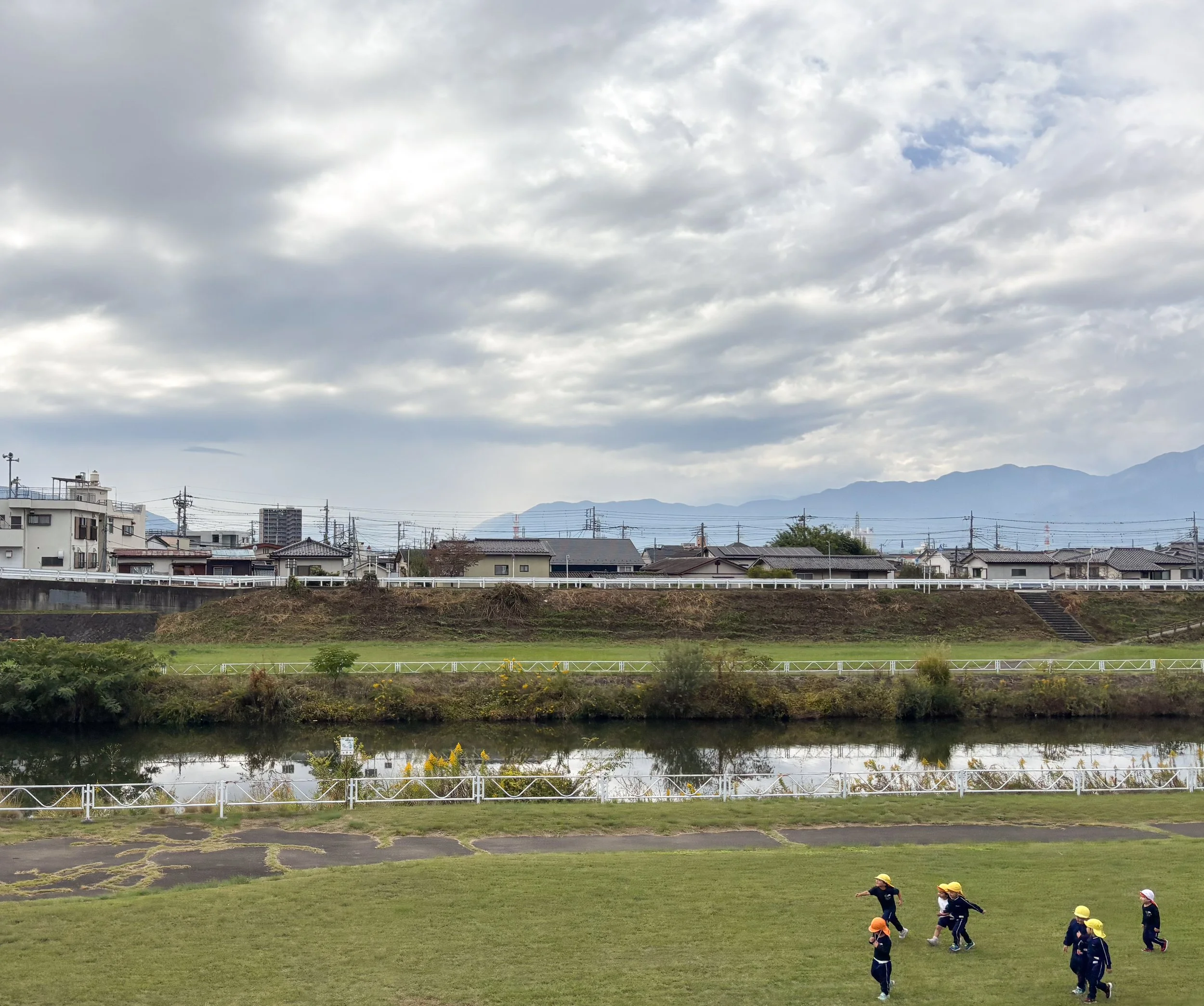
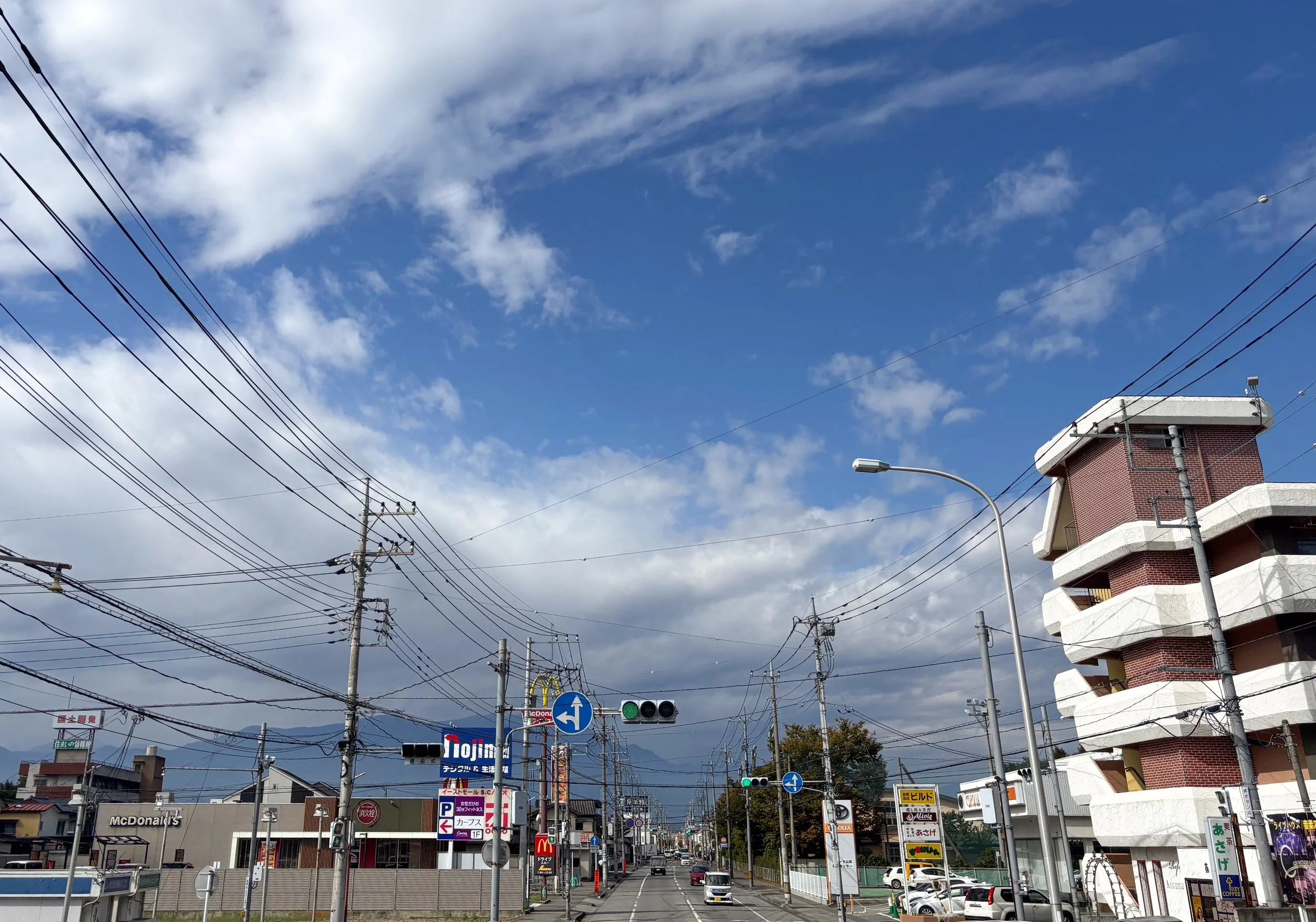
Kofu was an enigma. The town lay at the centre of a wide valley and managed to be both unsightly and charming. It featured long, drab stretches of roads cluttered with a forest of poles – light poles, telephone poles, electricity poles, sign poles, you name it – flanked by boxy stores. Fast food joints, drugstores, the omnipresent kombini triad. It looked a bit like the outskirts of Charlotte in North Carolina, just better. For while it was ugly, it exuded an air of care, of pride, of community. Manicured shrubs. Not a piece of litter, anywhere. Children playing in a park, little figurines with yellow hats with bear-ears. A lorry driver waved and bowed as he gave me right of way at a junction.
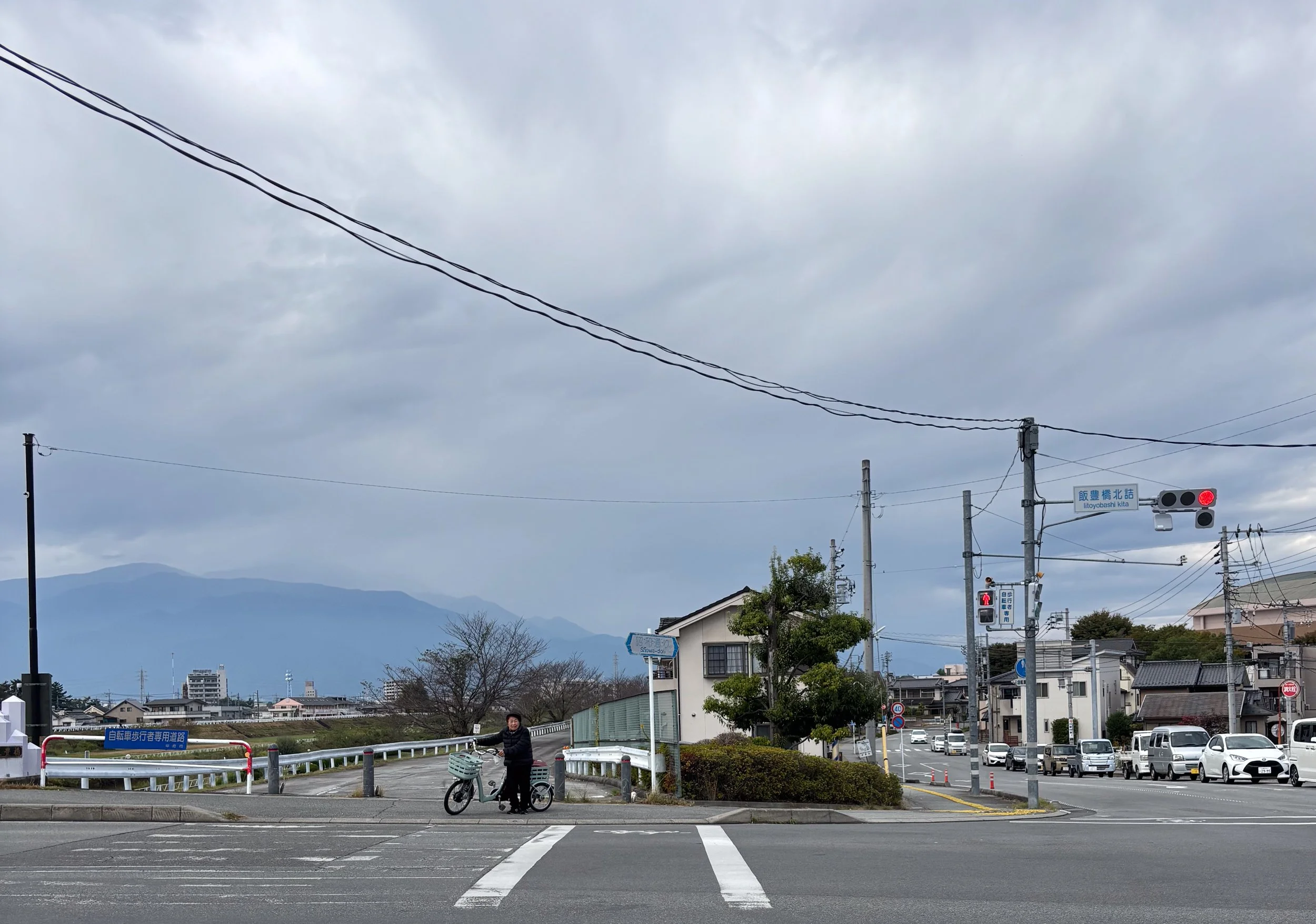
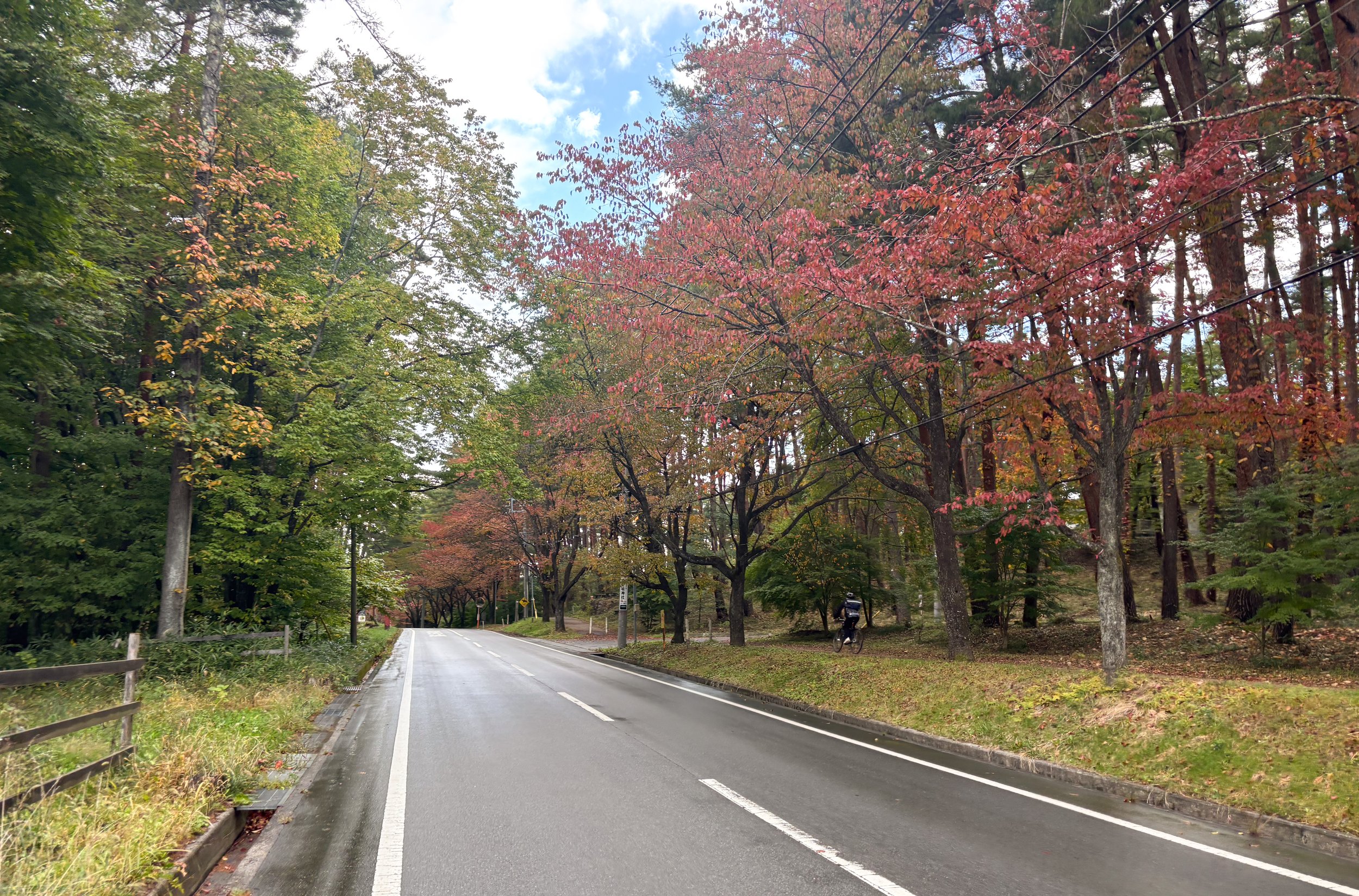
Then everything changed again. The road morphed into a murderous false flat, wind picked up, clouds crowded the sky. Rain started. Kobuchisawa was a village of some 6,000 souls scattered along woods that belong to the Pacific Northwest, and it was odd in that endearing way that only Japan can muster. There were log cabins, a Canadian-themed horse-riding camp and, quixotically, a Keith Haring museum. Behind it was my hotel. Its prime function, I suspect, was to be a shrine to jazz: later, glowing in the everlasting warmth of an onsen bath and a good meal, I asked the half-Japanese, half-Ohioan bartender if she wouldn’t mind putting on Minoru Muraoka’s rendition of Take Five. Not only she did, but my G&T was on the house.
Magome-Juku.
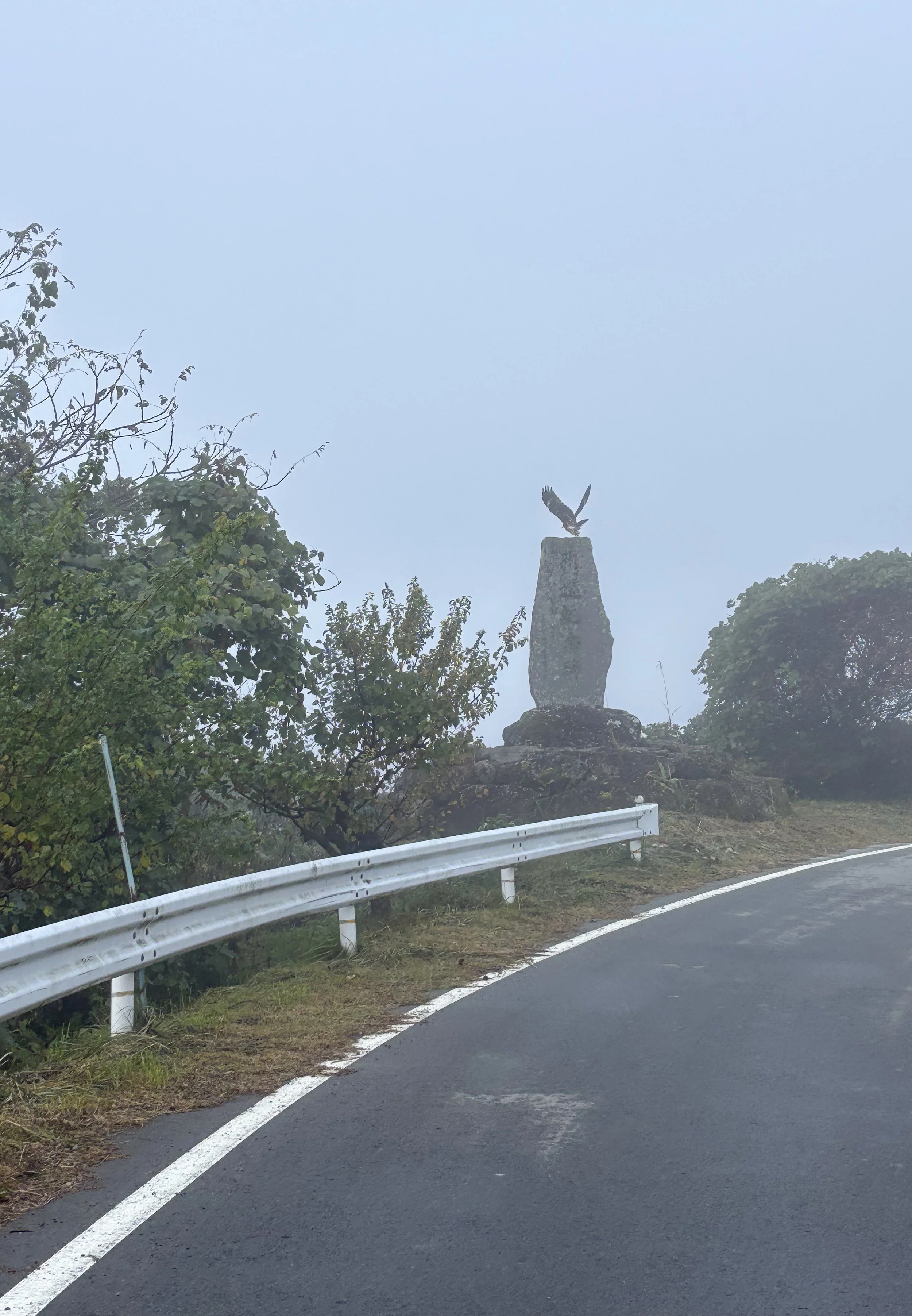
Rain is forecast, today, and with my kit still soggy from yesterday’s downpour I decide to cheat. A quick ride downhill will deliver me to the train station and from there, I figure, it’ll all be easy. It’s foggy and quiet, this morning, and my efforts to whistle Belle and Sebastian’s The Boy with the Arab Strap only result in a bird flying away in outrage.
Trains, in Japan, are a breeze. But taking a train in Japan with a bicycle isn’t and that’s due to a devilish concoction called a rinko bag. Think of a parachute, replete with the world’s least practical shoulder strap, in which you need to wrap your bike after having detached the front wheel. If it sounds idiotic it’s because it is, or so I was thinking outside of Sakai station. Then a fellow cyclist, a young lad with a Marin mountain bike neatly wrapped in a similar rinko device, appeared and helped me out.
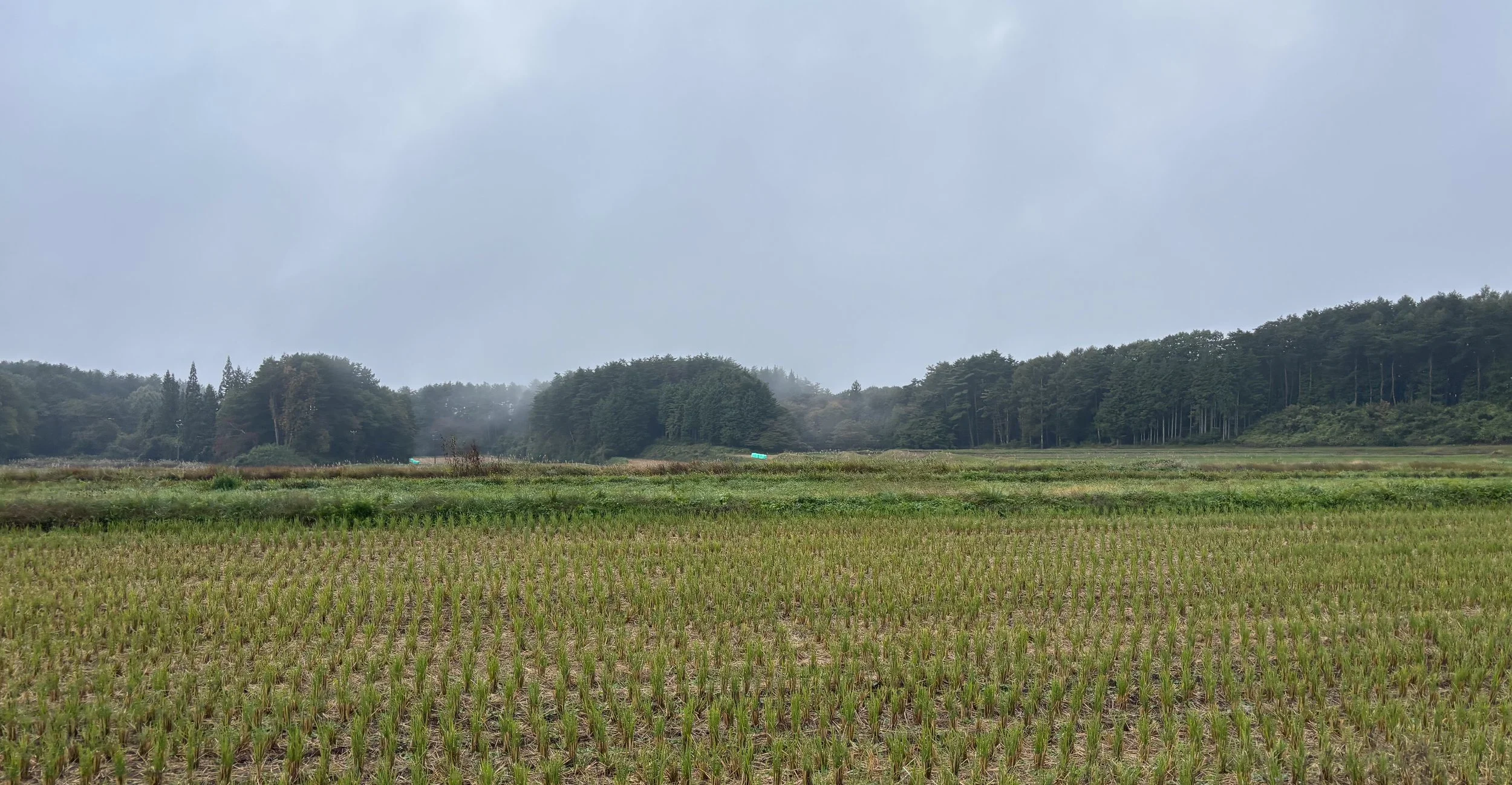
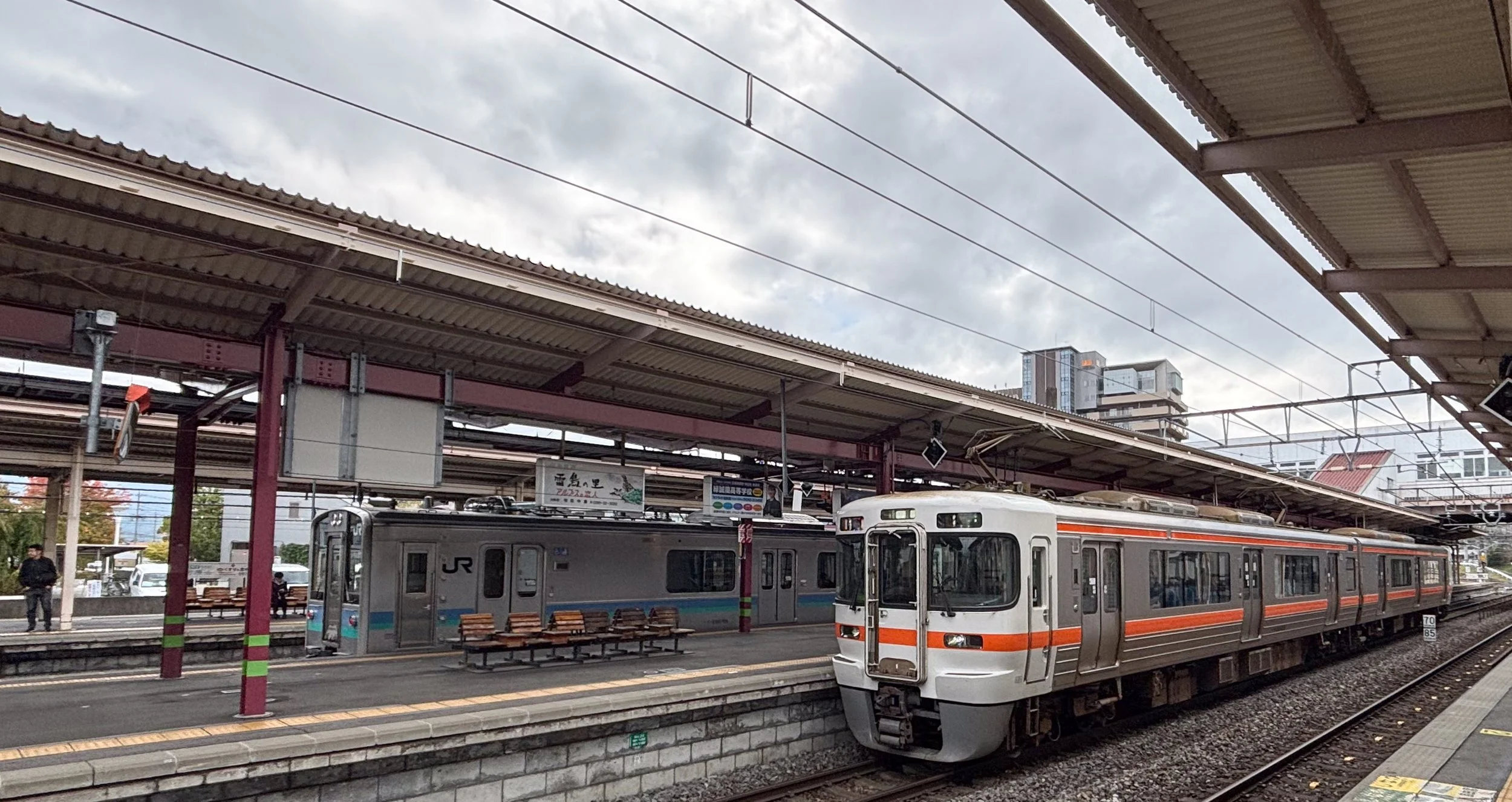
I surfed on a wave of kindness all the way to Nakatsugawa. A gentleman welcomed me to Japan and chatted with me for a little while. A member of the station staff at Shiojiri, where I changed trains, held the barrier doors open for me so I could pass with ease. A lady on the next train moved her bulky bag so I could wedge myself in the vestibule of the otherwise full carriage. And it was in that benign state of mind that I arrived at Magome and, there and then, decided to stay for longer than I thought I would.
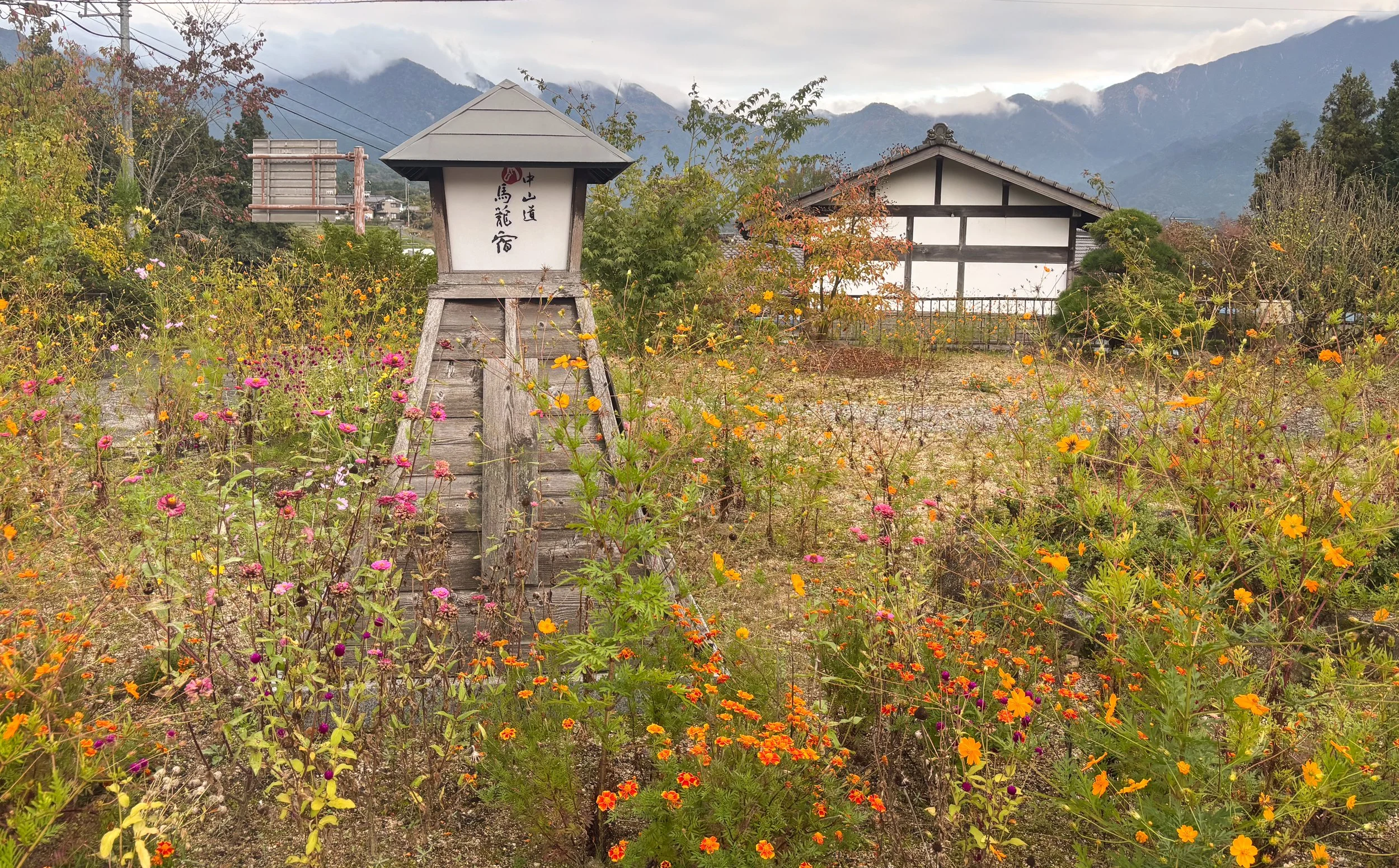
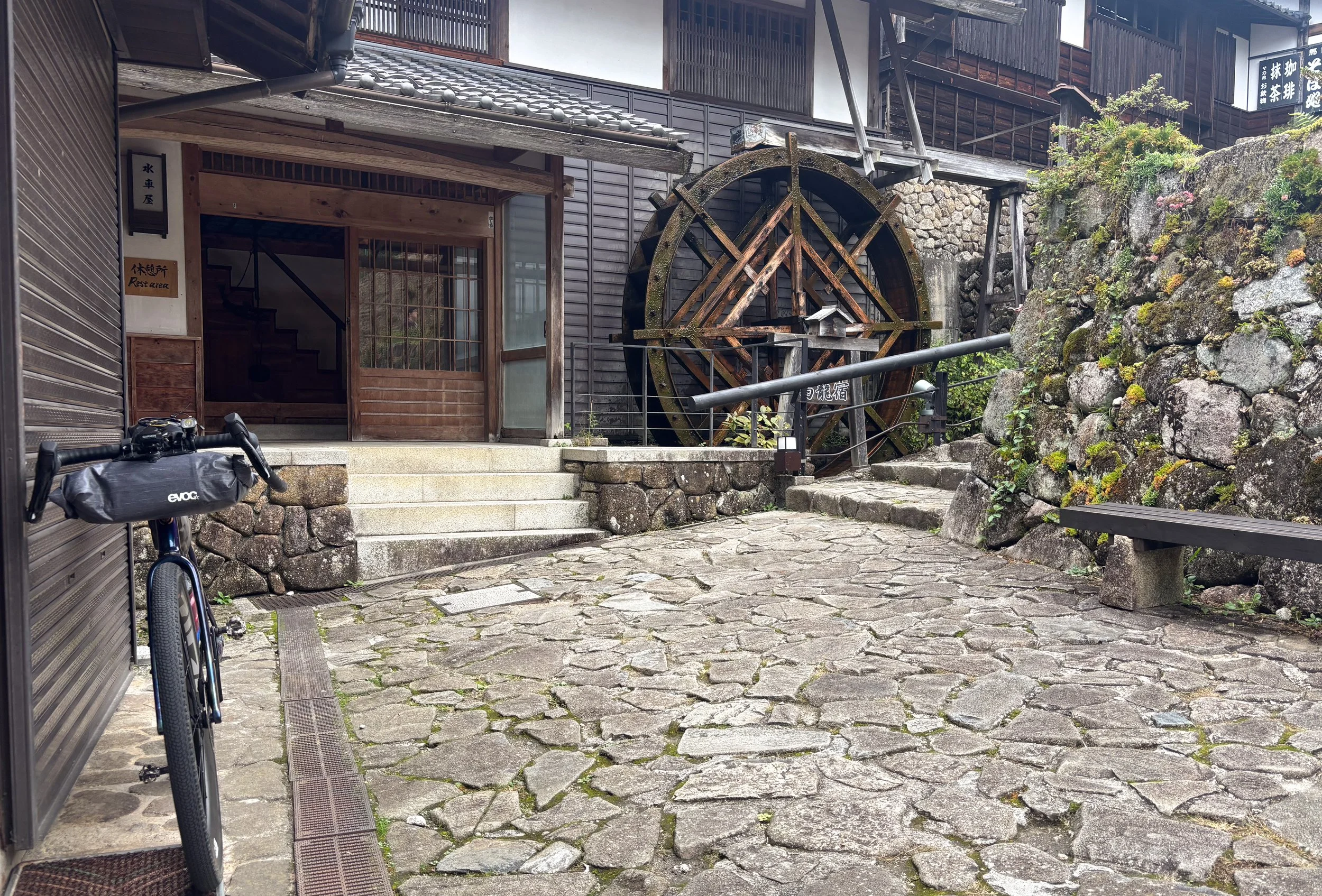
Maybe it was the novelty of sleeping in a former school, a delightful and cheap hostel where I had the opportunity of staying in the old principal’s office. Maybe it was the beauty of a village that had barely changed since the days when Hiroshige depicted it in his Ukiyo-e prints. Or maybe it was the moment when I stood at the edge of the village at dusk, fading light glowing over the quiet rice paddies and the distant ridges, and a tidal sense of peace, of contentedness, almost knocked me off my feet.
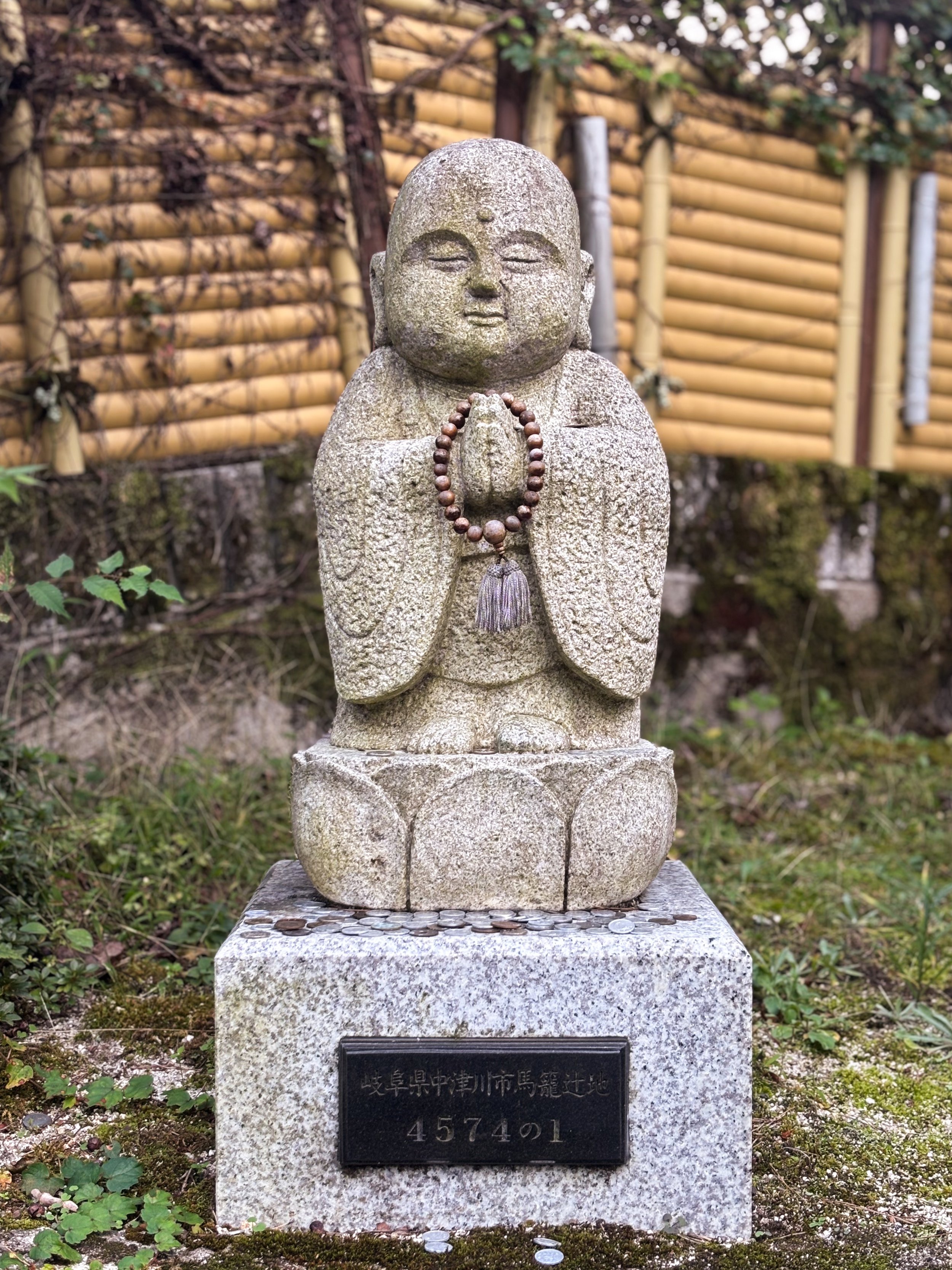
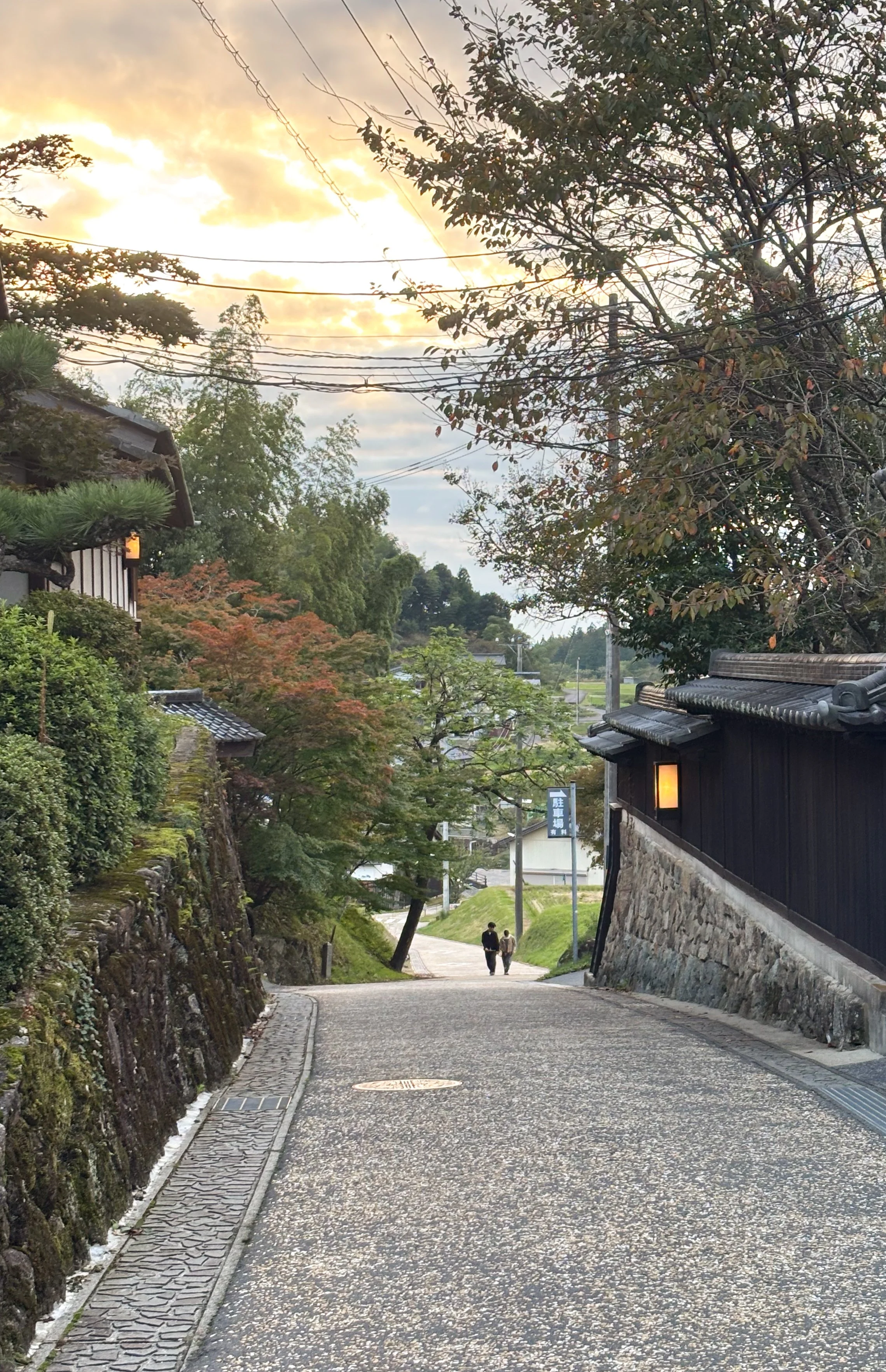
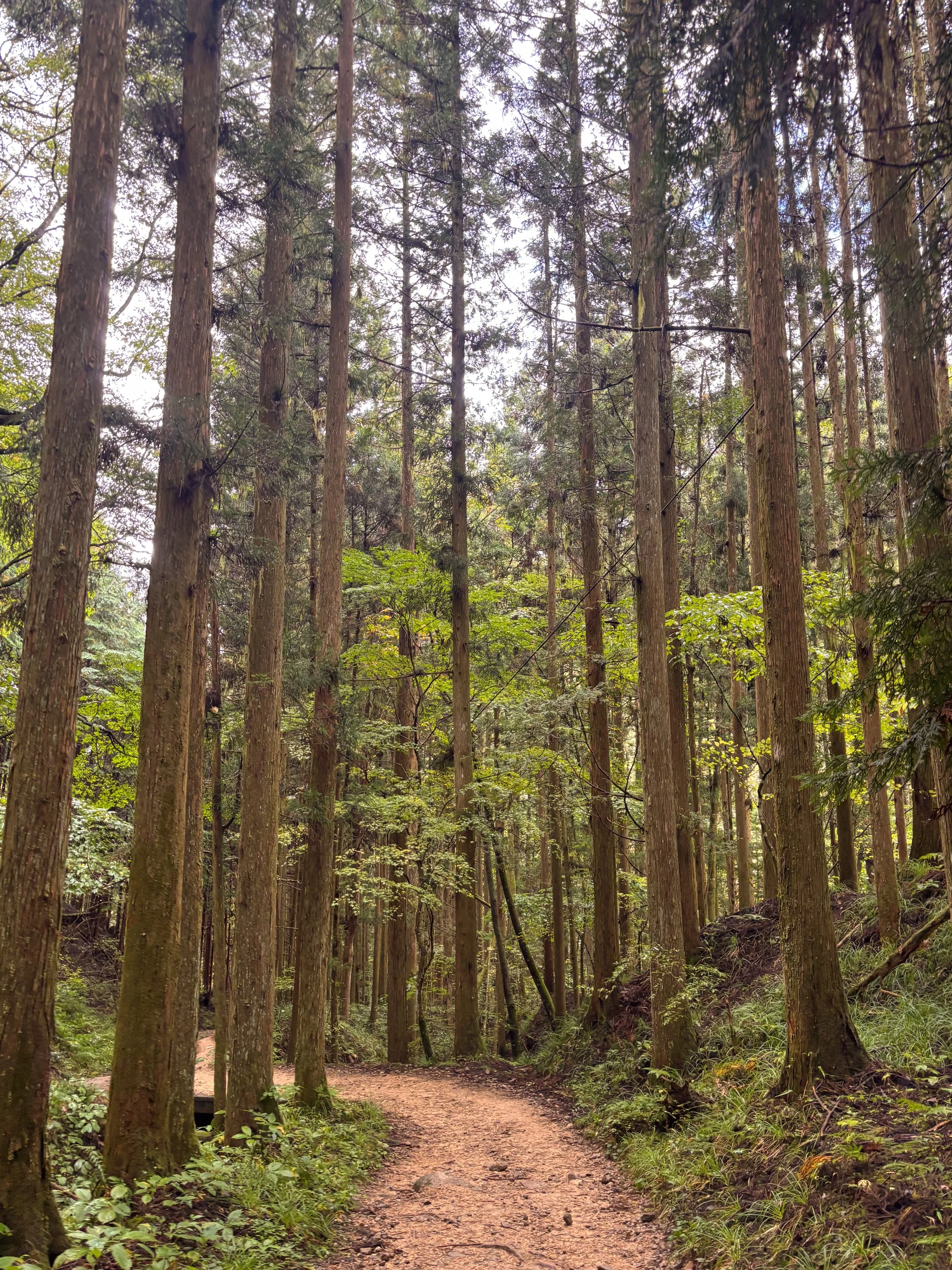
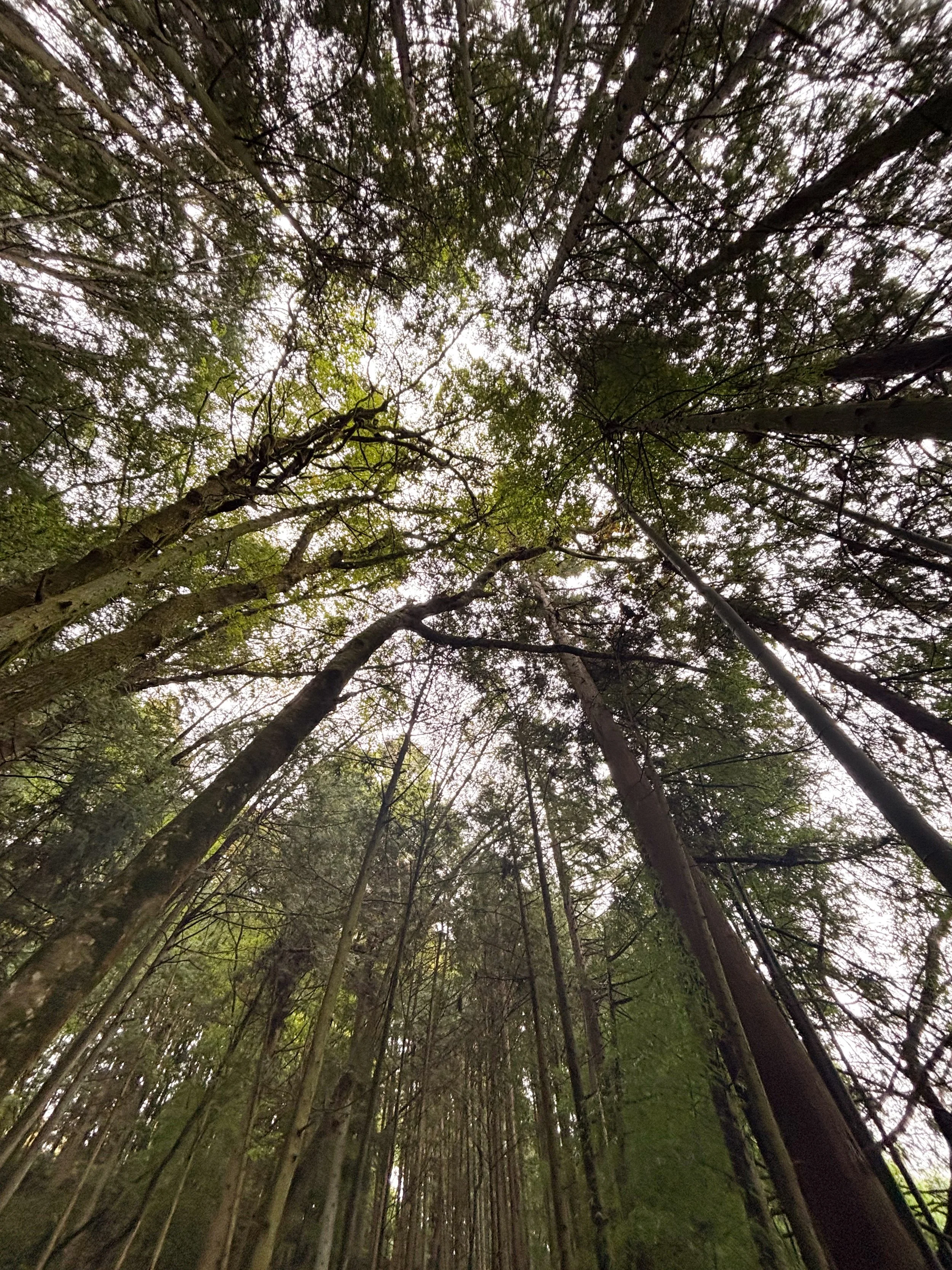
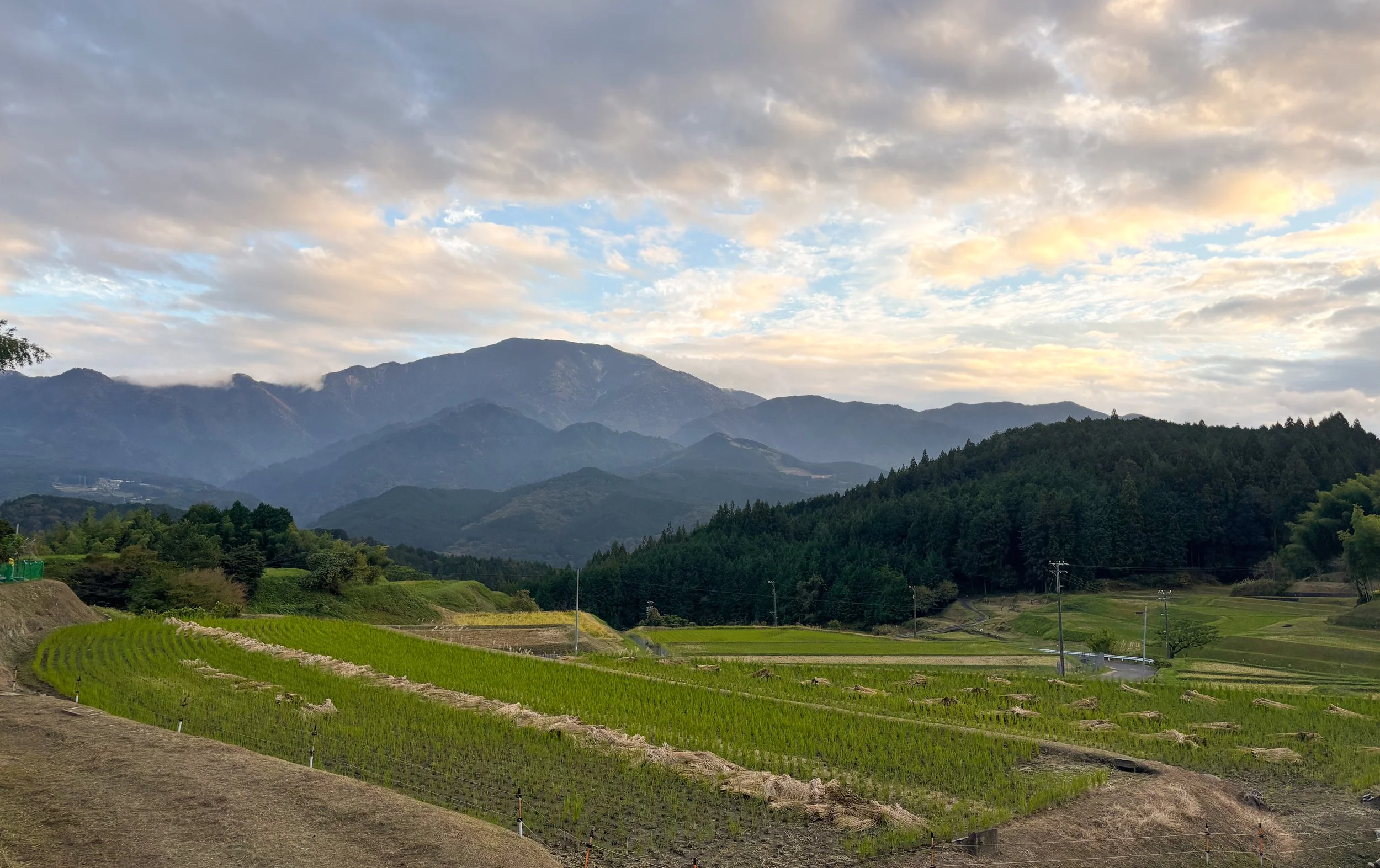
Whatever it was, I decided to stay for longer, roaming the halls of the school, walking the cedar forests, looking at the clouds surf over the pine trees and, on one occasion, helping a freshwater crab cross the road from one stream to the other. My karma, I thought, would get a good boost out of that action.
Hida-Osaka.
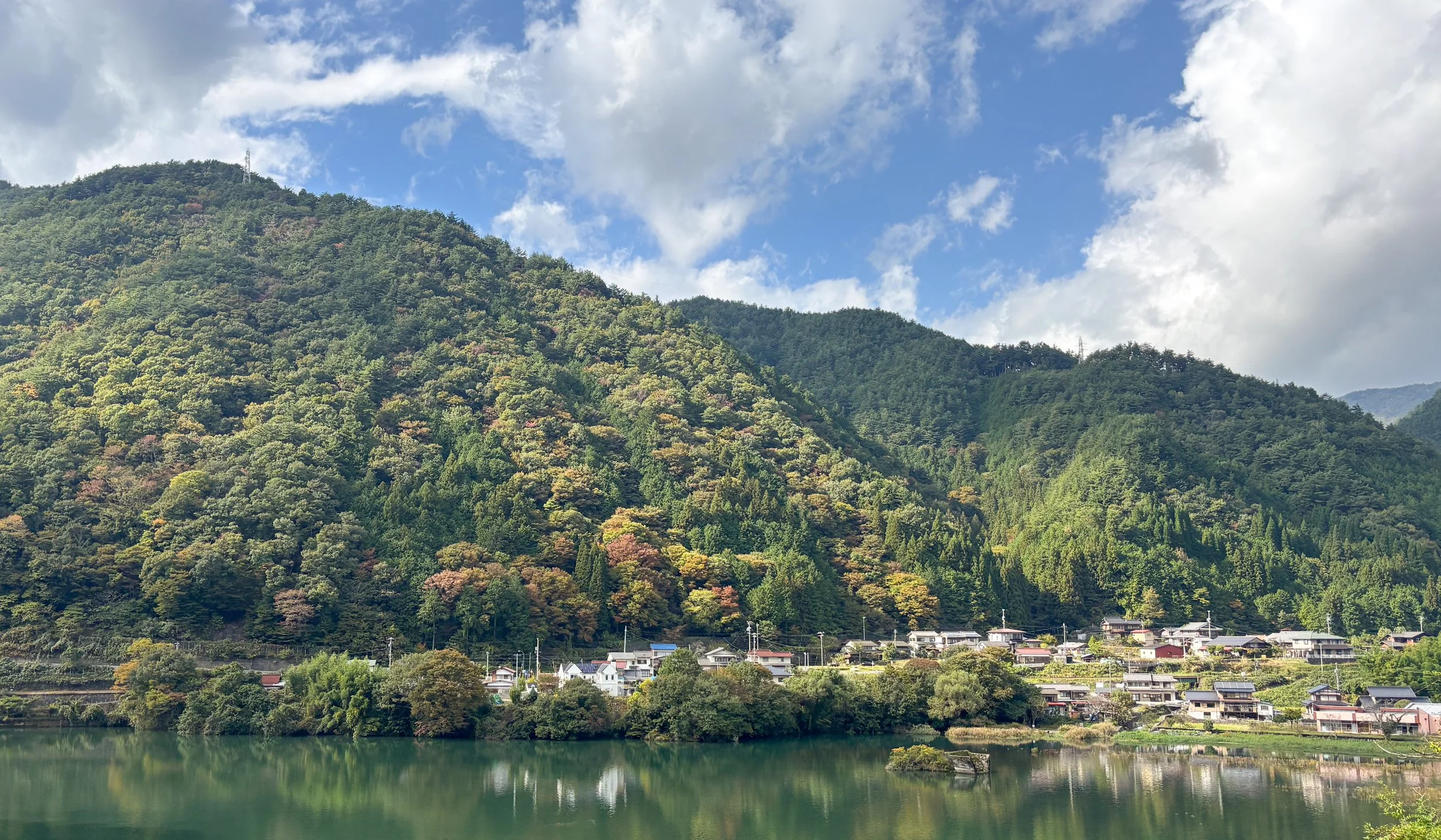
I left Magome on a crisp, sunny morning of the kind that give you a spring in your step and a smile on your face. Up and down the road goes, until it settles on following a river that’s bouncing on rocks and small rapids past the onsen town of Gero.
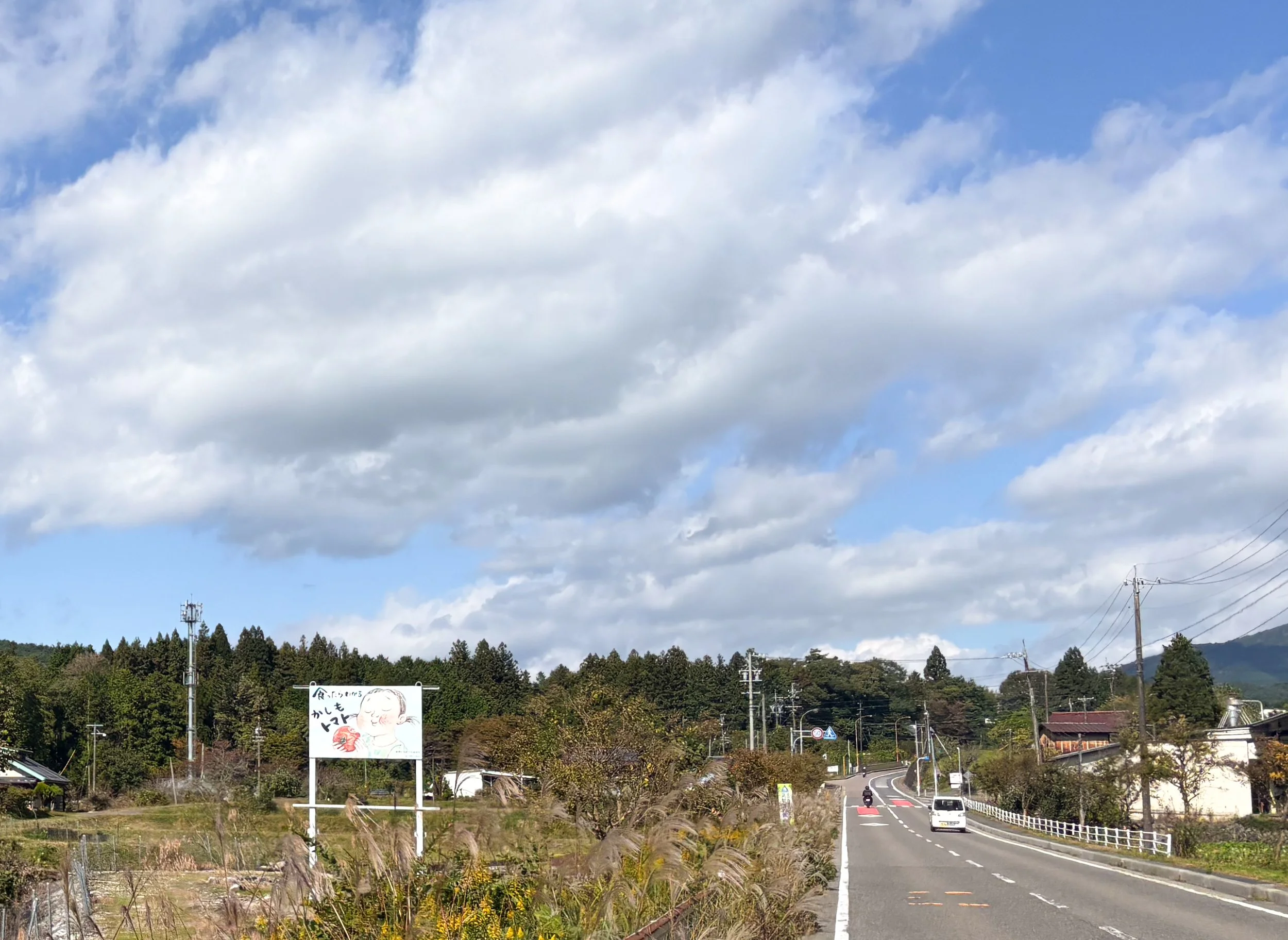
Gero has seen better days, or so I thought upon passing through it. Maybe it was because I didn’t pedal through its main thoroughfare and all I had to see were the back of its buildings, faded façades never meant to be seen by a tourist. Or maybe it was the weather, which at that time had turned moody again, but I didn’t feel like stopping. But then a headwind picked up, carrying the sweet aroma of coffee being roasted. Ignoring the alarmed beeps of my Garmin I went off-piste, nose up like a bracco, until I found Green House Café where jazz played and coffee was prepared in alembics by a crew of alchemist.
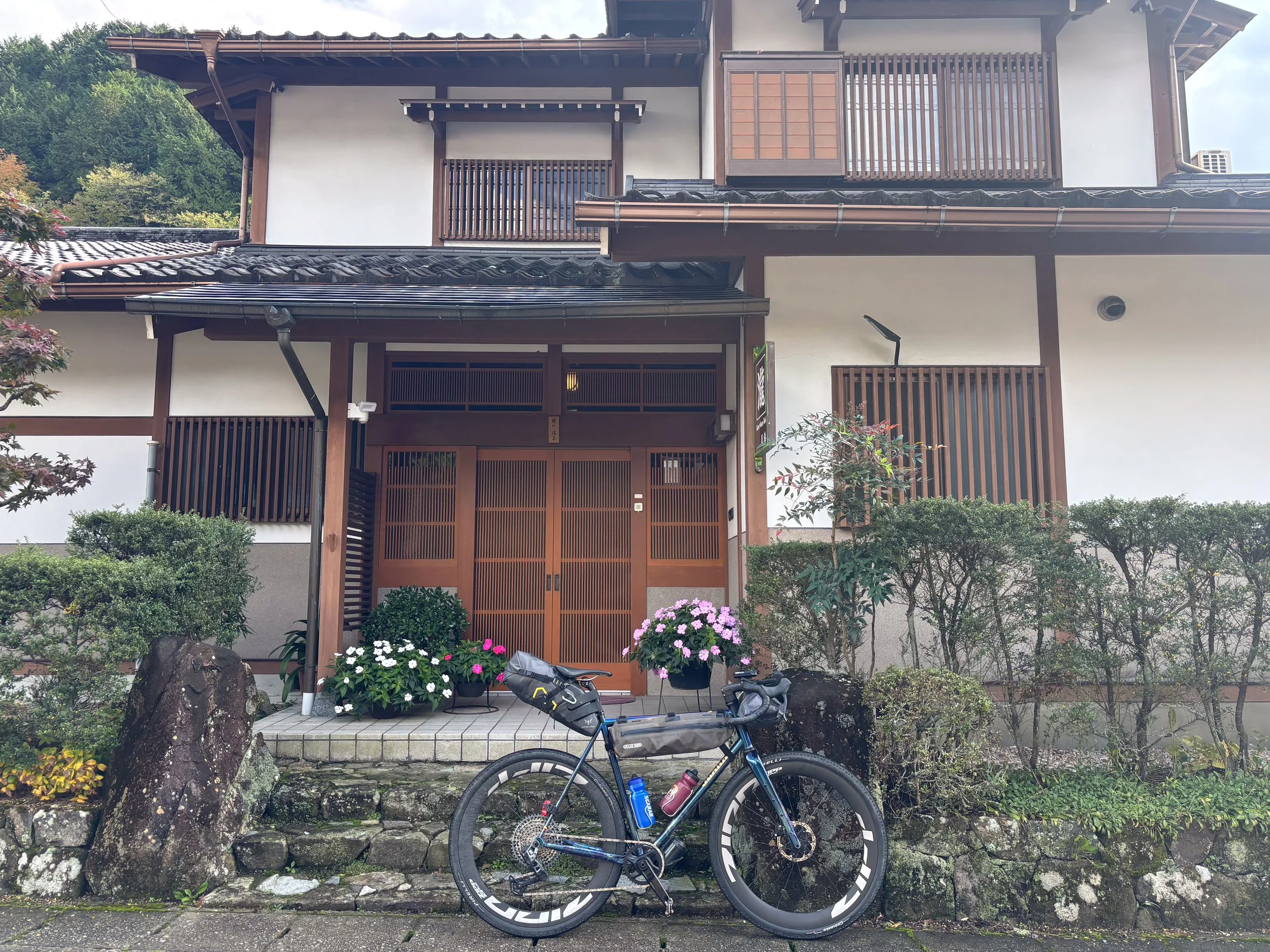
I’d be surprised if Hida-Osaka had more than 300 inhabitants. Among them, living in a handsome minka house on the right bank of the river, just past the Lawson, are Keiko-san and Jinpei-san. They’re my hosts for tonight.
Their house smells of flowers and of the faint scent of igusa tatami mats. There is a stream nearby, you can hear it gurgling somewhere behind the little allotment where Jinpei-san grows his vegetables and Keiko-san trims the shrubs. There is a shrine, a formal sitting room, my room, Jinpei-san’s studio and a kitchen and bathroom. Upstairs are the rooms where the couple lived with their two daughters before they finished school and moved out to start university.
Keiko-san is a right character, full of grandmotherly concern for how little luggage I’m carrying and for how thin my clothes are. “It’s so cold in the morning” she worries. Jinpei-san is older, quieter but full of that silent kindness that makes the world a much better place. Later that afternoon I returned home to find a bowl of cherry tomatoes on the low table that stood in my room. They were from Jinpei-san’s allotment and they were delicious. I popped in the kitchen to say thanks and, before I knew it, I was invited to the table, a can of Suntory highball was placed in my hands, a bowl of rice appeared and, despite all the barriers of language, we laughed well after the sun had gone down and commuters had come home.
The next day I left on tiptoe, for I aimed to catch the first train to Takayama and I didn’t want to wake anyone up. But Keiko-san was already outside, standing by my bicycle in her apron and thick cotton jacket, two warm onigiri rice balls in a zip-loc bag and the sort of goodbyes that only a grandma can give.
Inotani, Nanto.
Character building. That’s the only way to describe that day.
The forecast called for rain early in the day, and I thought I’d outsmart it by doing a bit by train. But one does not fool Iuppiter Pluvius, and indeed the heavens opened exactly as I jumped on the saddle outside Etchū-Yatsuo station.
If I climbed, things were going fine. But at some point I ran out of mountain, the road pointed down and I was freewheeling downhill. That’s when things got cold, very cold, and very fast.
I spotted a sign for coffee and performed a semi-decent Scandinavian flick to stop right in front of it. The building, as it turned out, hosted the Nanto-Toga branch of the city administration, a post office, a drugstore and quite possibly the local Rotary’s club. No one, among the four employees who sat (and didn’t seem to be doing much) at their desk in the office-cum-pharmacy, seemed to find it odd to see a lanky foreigner, drenched to his bones, march in on clicking cycling shoes and pay 250 yen for a coffee. They even invited him to their staff rec room, a tatami-matted alcove with a table and some old TVs, to drink the beverage and change his socks.
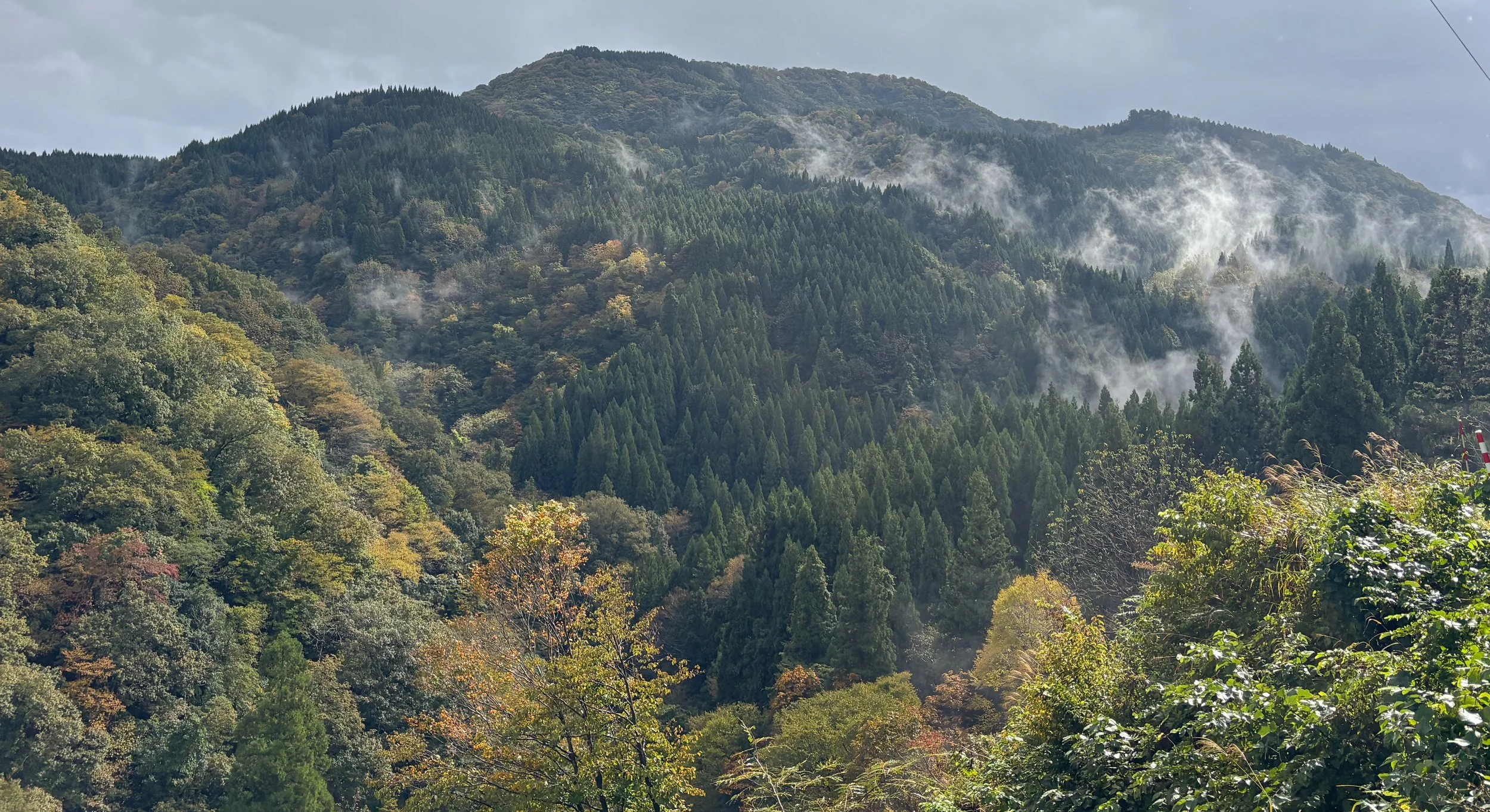
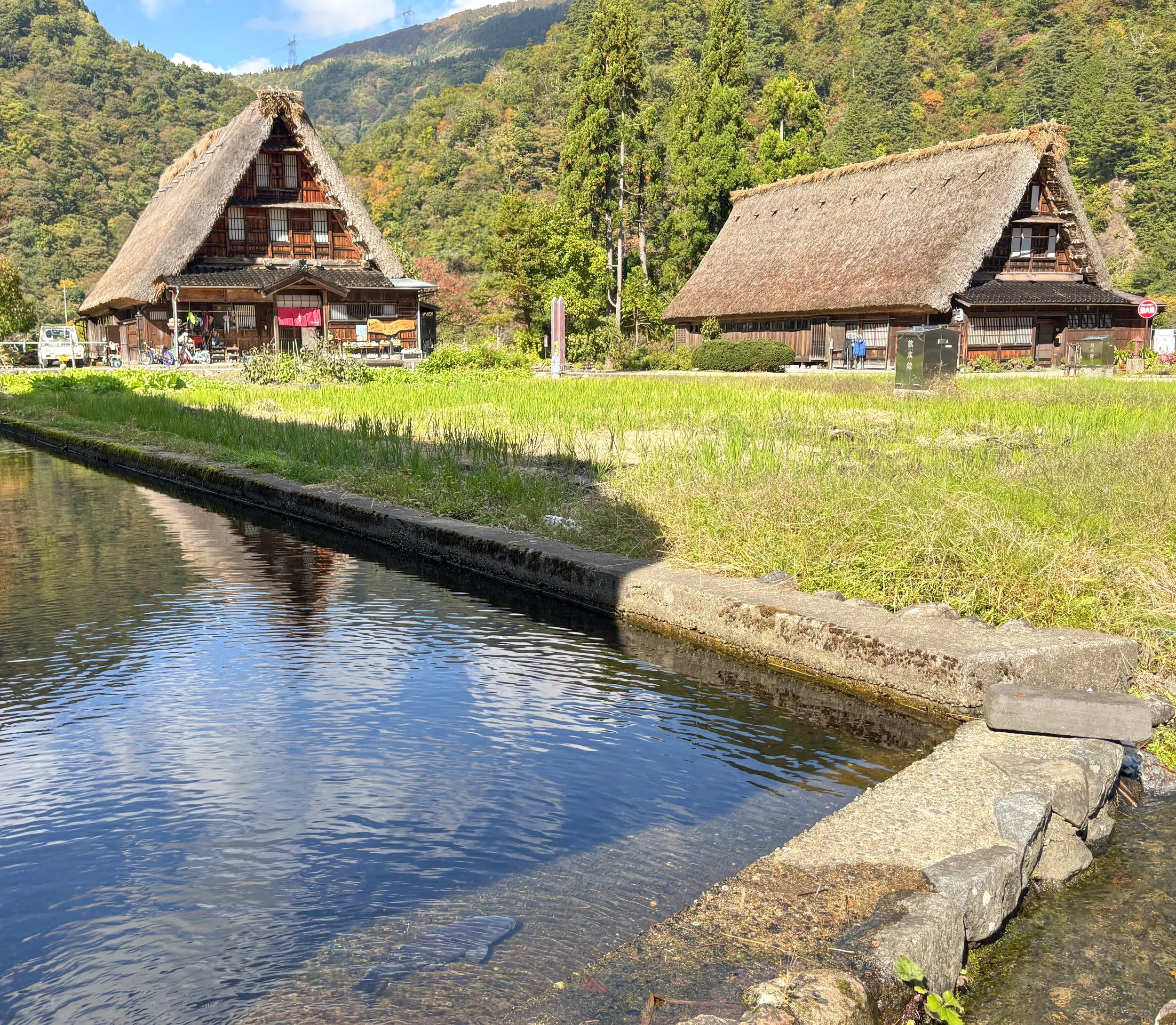
Still, it was all worth it because the marvellous valley of the Shō river beckoned. This was the land of Ainokura and Suganuma, two of the rare gasshō-zukuri farmhouse villages, and I couldn’t wait to be back. Takazuri Inn sat on the other side of the valley in a hamlet so small that it inhabited that twilight zone between village and ‘collection of houses’. The only inhabitants I saw regularly were the owners, Kota-san, his wife Kumiko-san and their five-year old son Toichiro. Occasionally I would nod at an elderly gentleman who cruised around in a mobility scooter and, once, I saw a young girl play the drums in one of the other houses.
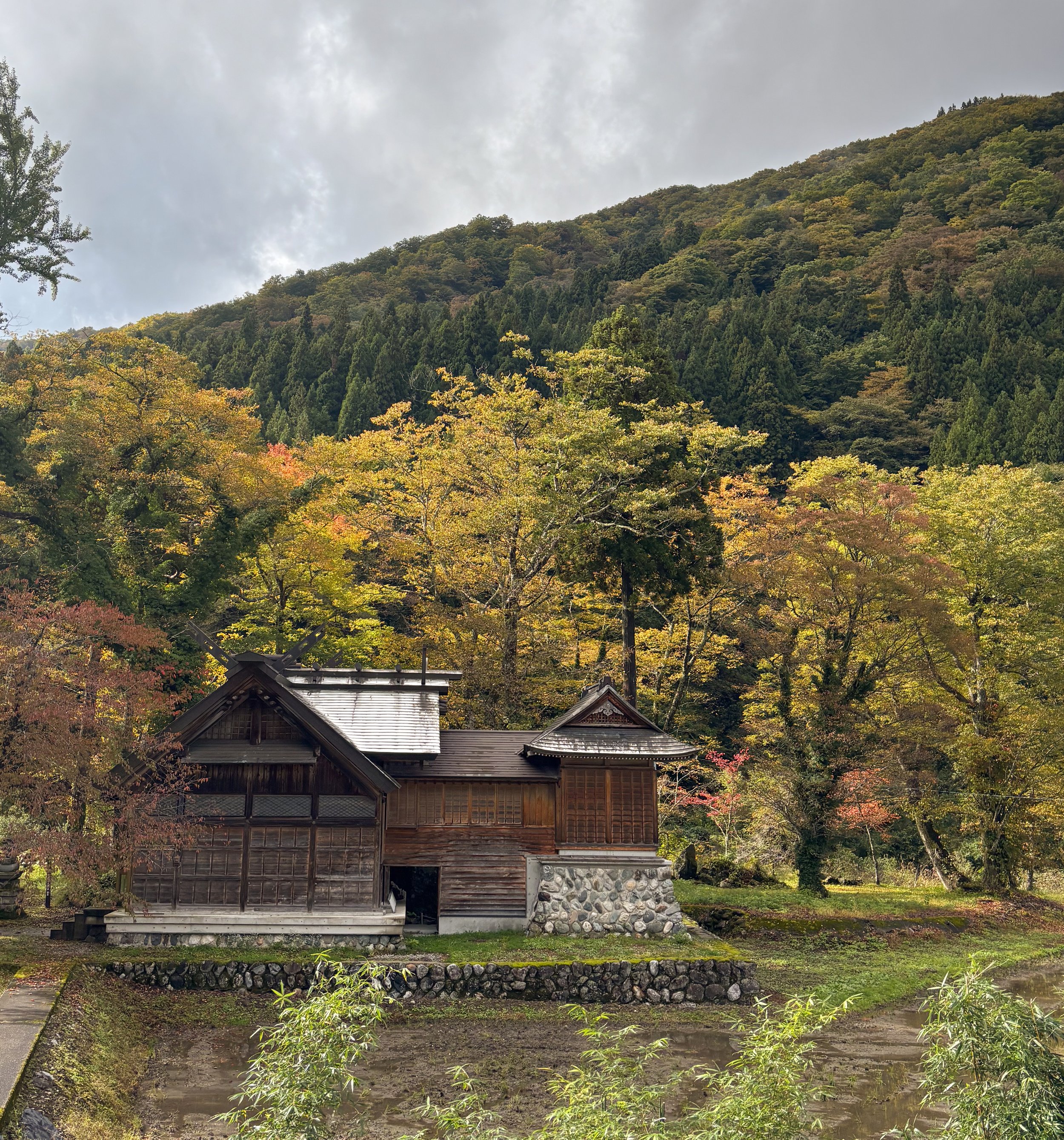
Again, plans were remade as soon as I got there. The moment I saw Takazuri’s common room, with its homely feel, fridge full of Johana beers and seemingly endless supply of great company, I elected to stay for longer. And so I did, helped by a few days with blue skies, warm temperature and the newfound joy of riding around on a bike not laden with bags.
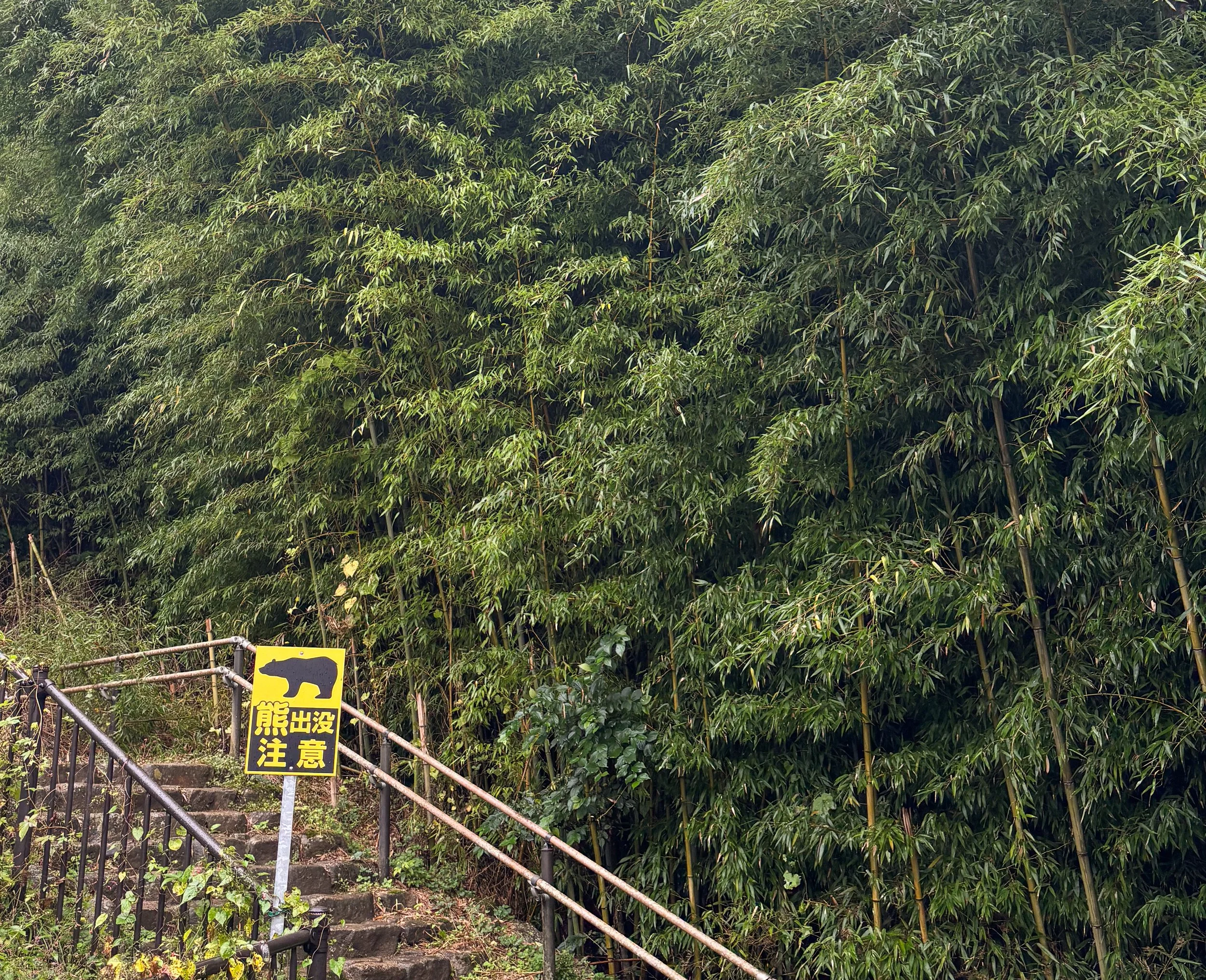
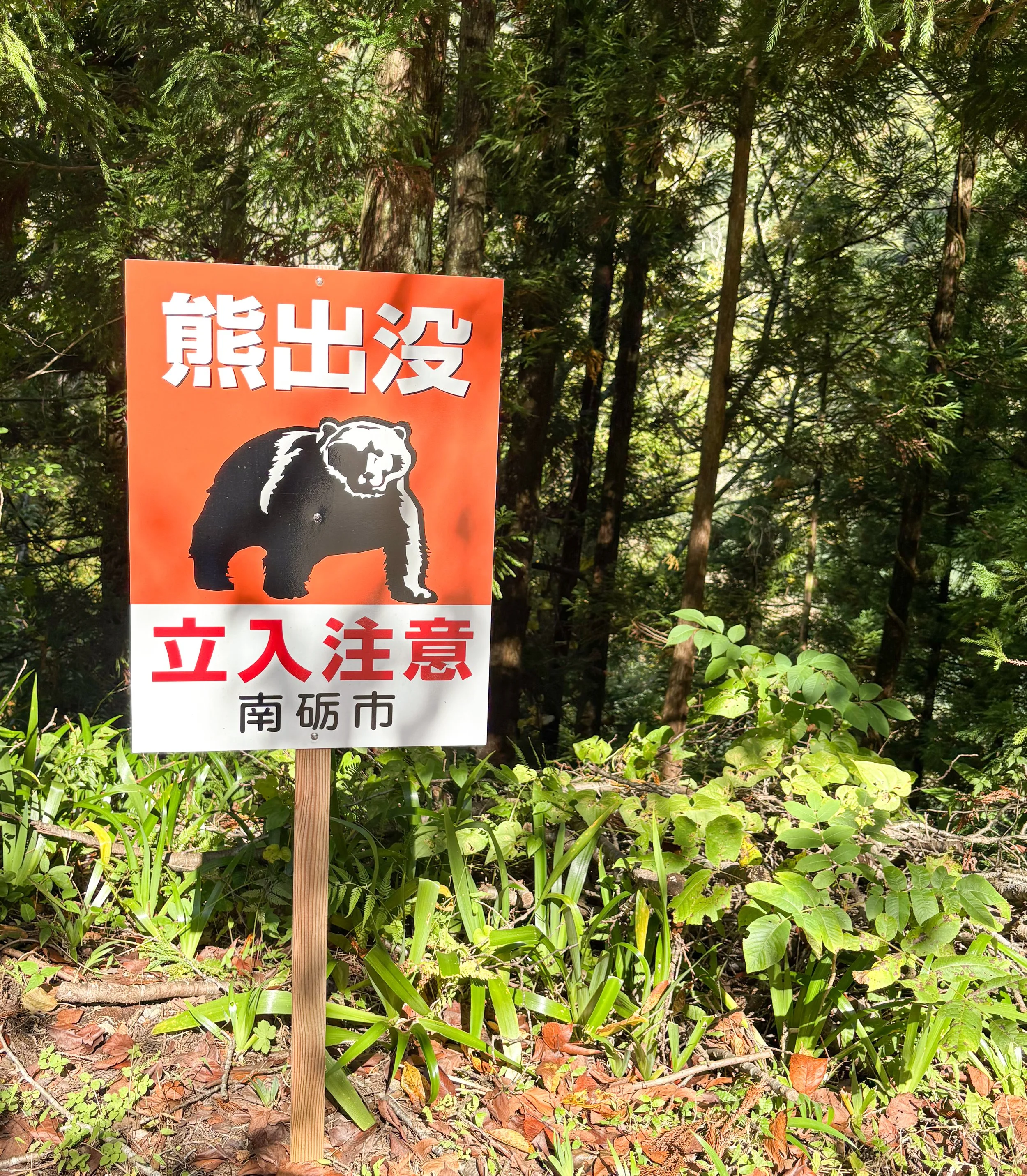
I rode aimlessly between the villages, catching oblique glances by Western tourists who were being bussed around, and seeing how little had changed since my fist visit two years ago. The kids I remembered saying hello to had grown, and the gentleman who’d given us a lift to Johana when the bus failed to arrive had a new Mazda, but apart from that it was all as I remembered it. I explored the backroads and found rindō lanes that were well on their way to be reclaimed by nature. Bear signs were everywhere, and every tourist was commenting on the news of bear attacks in Akita prefecture, so I took to singing every time I ventured into the woods. The idea was that my rendition of Bob Dylan and Kurt Vile hits would be so bad that no ursidae would countenance remaining within earshot.
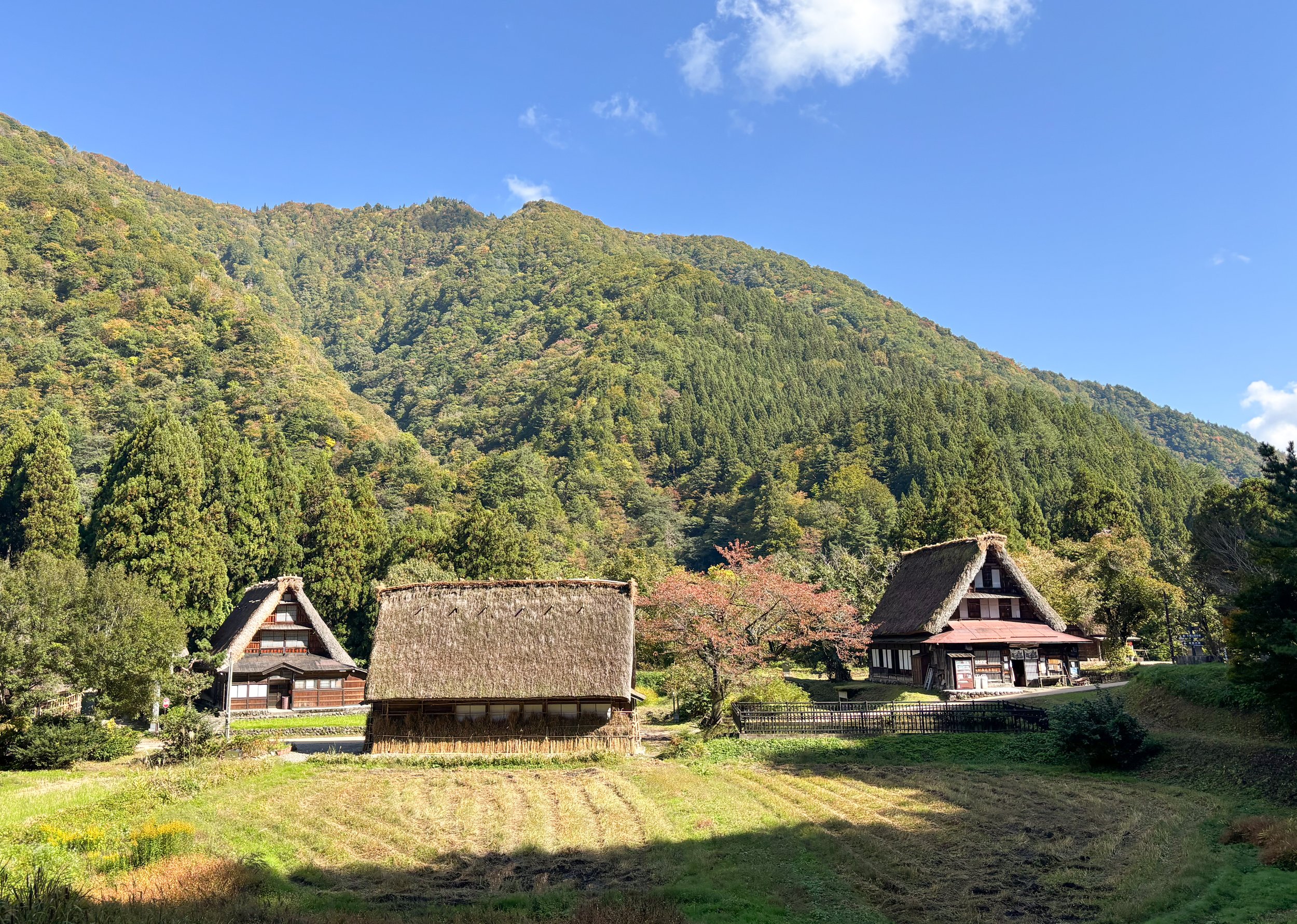
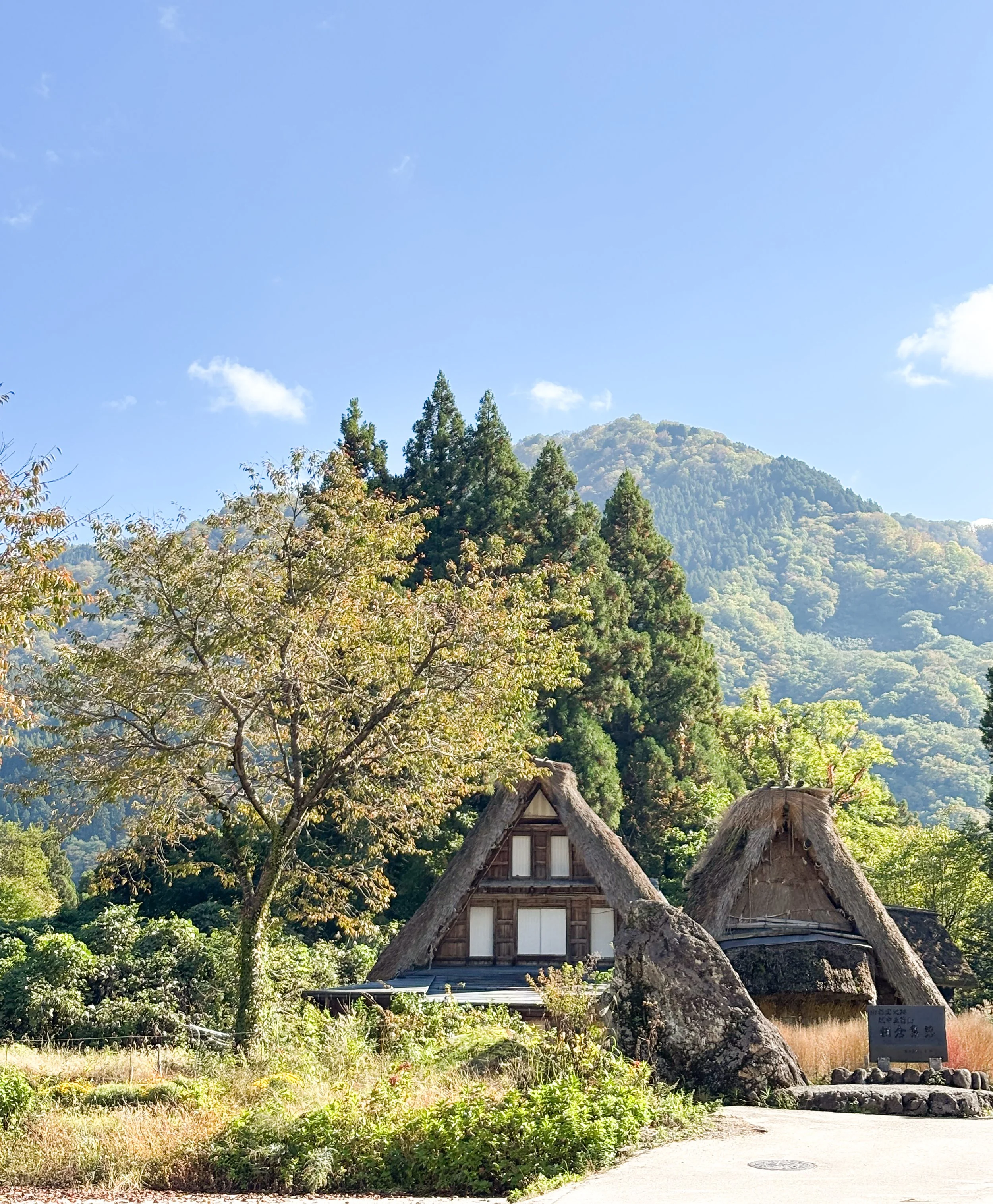
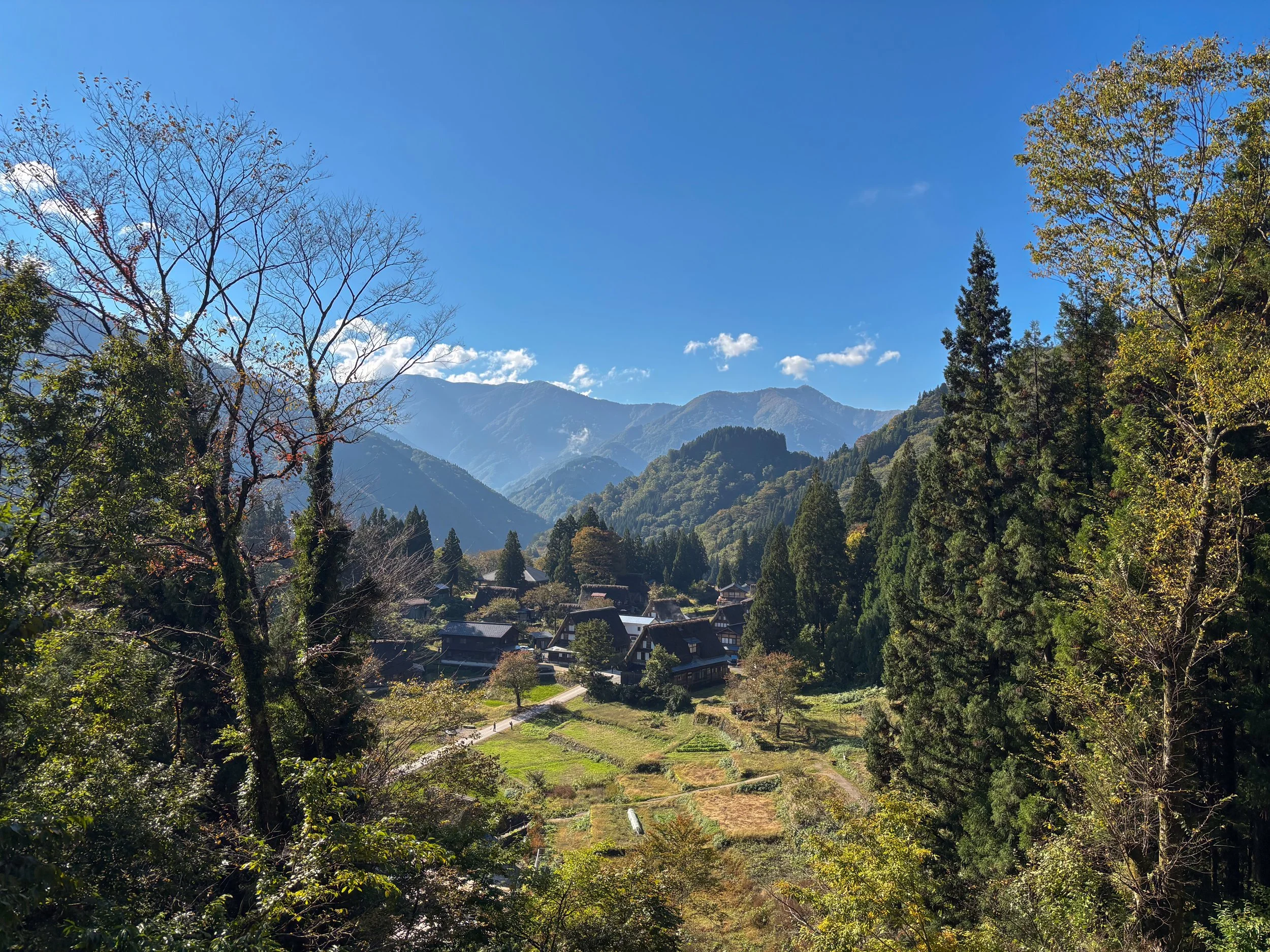
Little Toichiro would often drag his dad to witness the spectacle of me cleaning and oiling the drivetrain of my bike. I’d ask him to help me test the result and, as a recompense for a job well done, we’d share one of the bananas I’d bought from the shop. On the day of my departure, he appeared and, solemnly, offered me a persimmon.
Tatenoharahigashi.
Route 156. If loving you is a crime, consider me guilty. What’s not to love in a road sprinkled with fast downhills, sweeping curves and the sort of open-sided tunnels that allow plenty of sun to stream in, revealing a river the colour of mint flowing through a forest? That’s what Route 156 delivered for twenty, glorious kilometres before ending in the wide coastal plain that has Toyama at its end.
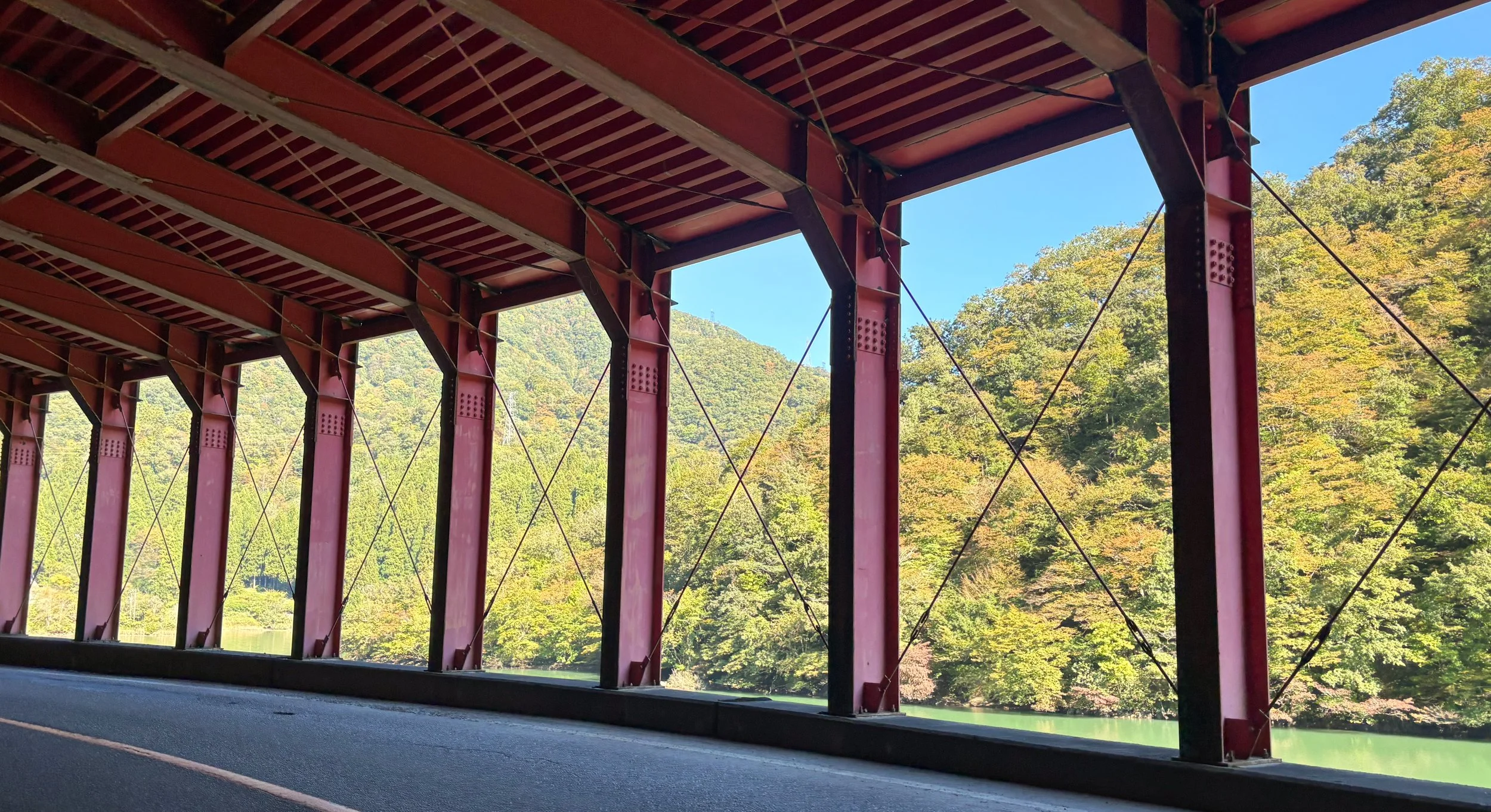
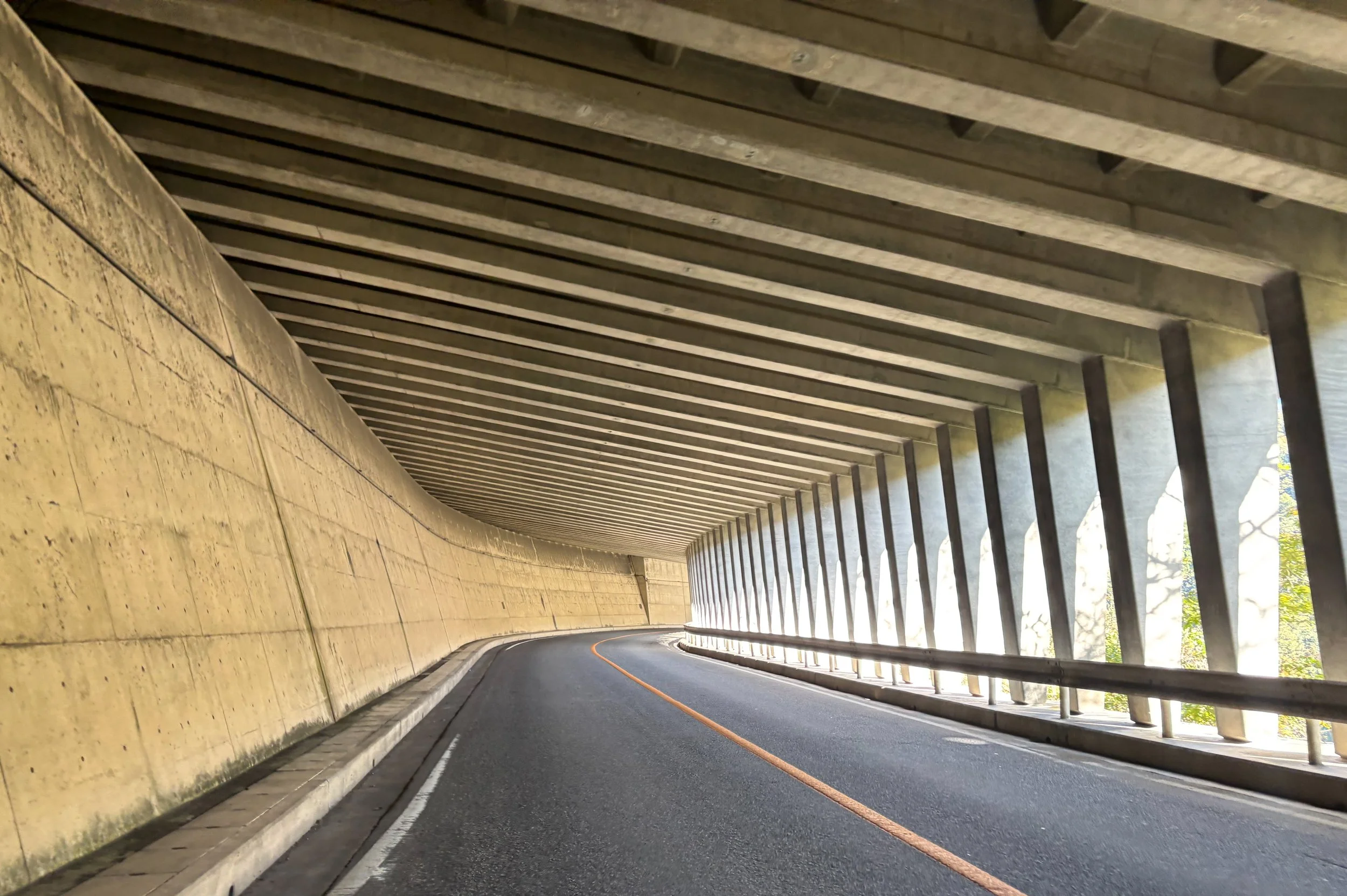
I once saw a photo of Tokyo Tower in the 1960s. The red-and-white behemoth rose over a landscape of rice paddies and delicate minka houses with tiled roofs, dark wood panels and sliding doors; that was the type of country I was now riding through, obviously without the Tour Eiffel-lookalike.
This part of Nanto was the kind of place people left, and it showed. Many homes looked abandoned – wood panels faded by sun and rain, tattered curtains, dusty greenhouses – and, out in the fields, only elderly people could be seen. The villages were empty, but for a few cars and the peripatetic postie sat astride his red moped. Who’d tend the fields once the current generation of farmers passed away and their offspring moved to the skyscrapers in Tokyo, just two hours away by shinkansen? The day was beautiful and the riding smooth, but I was growing increasingly melancholic.
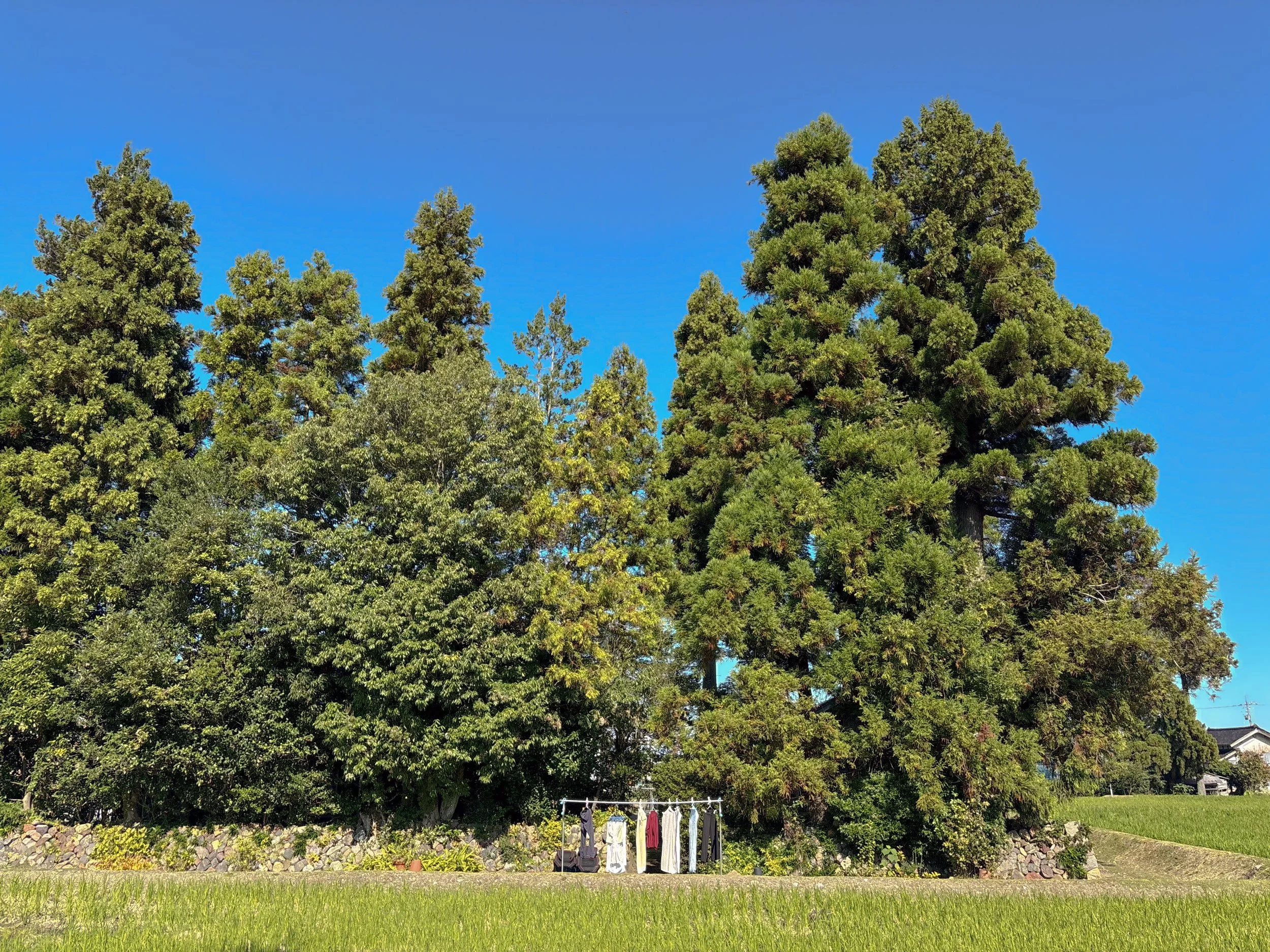
Yet not everything was lost. I stopped for lunch at a simple, hole-in-the-wall kind of place in Fukumitsu where a young lady served me the freshest salad with udon for the ridiculous sum of 1000 yen. “This place used to be a noodle bar”, she explained. “When the owner retired, a group of us took it over. We’re now running it as a community, otherwise there’d be no more restaurants”. Later, I was to discover that the young duo running my guesthouse, Koji and Piom, had taken up the side gig of roasting coffee after their supplier, a lady in her 80s, announced her intention to retire. “If we didn’t do it, then we’d have had to go to Kanazawa to buy our favourite roasts. Now it’s still here”.
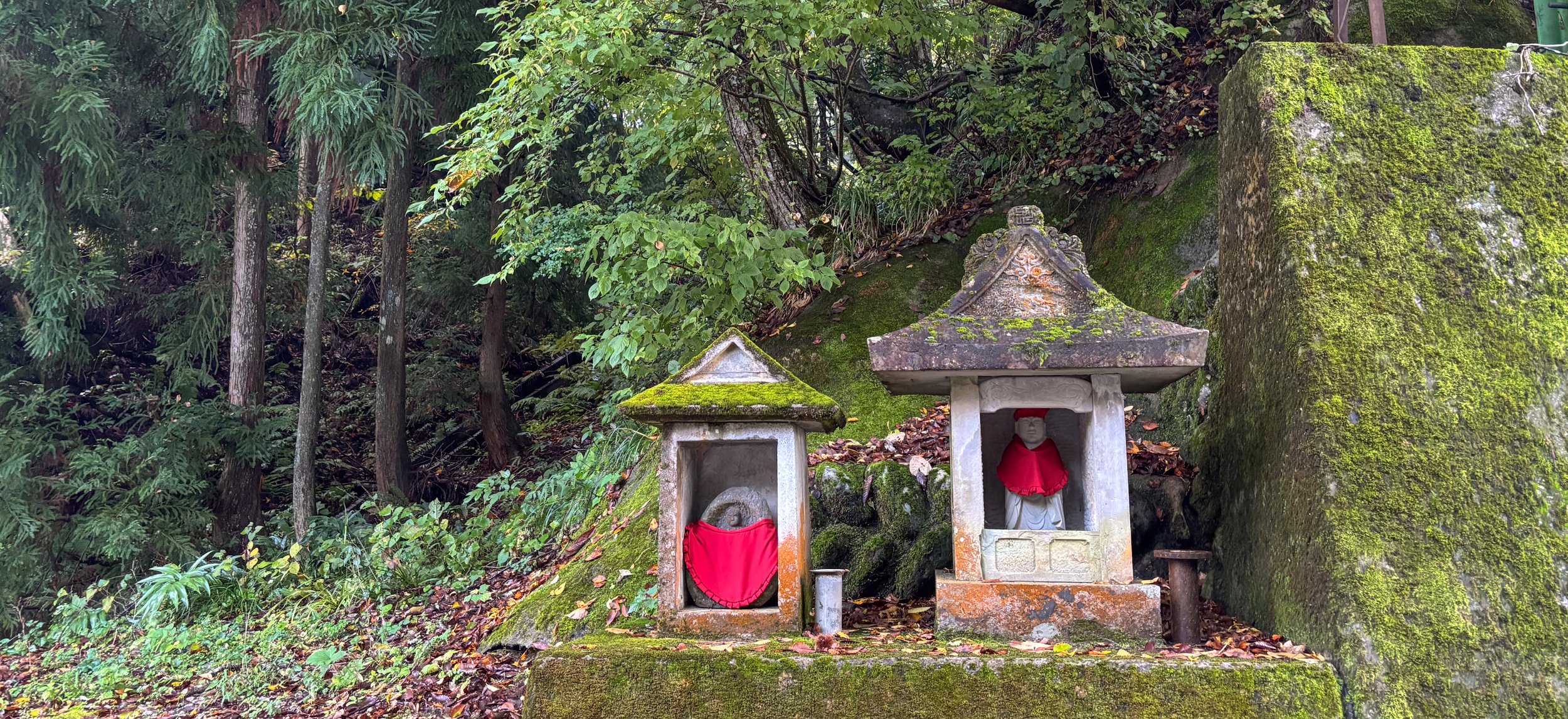
Kanazawa beckoned. Tomorrow was going to be my last day on the road, my last ride on a rindō, the last time passing through sleepy villages, the last time when I’d be looking at the horizon knowing that there’d be no skyscrapers to punctuate the skyline. Try as I might, I wouldn’t be able to resist the lure of the skyscrapers for long. I might not end up working in one, I might not be given a Patagonia vest emblazoned with the logo of my employer, but the reality is that I was going to be joining the likes of those whom I encountered on my way out of Tokyo.
But I’d have the memories of those days away from the skyscrapers, and the wish to return.